
Trade show marketing
Trade Show Marketing: What to Answer Before Booth Visitors Walk Away
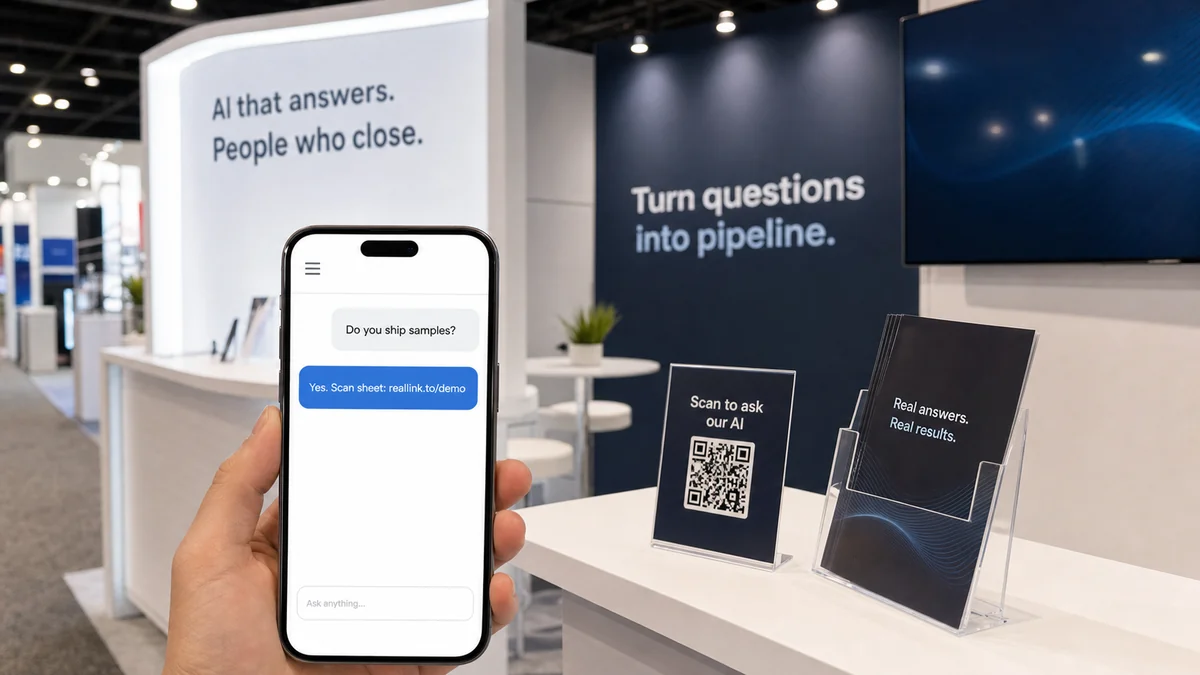
A trade show QR code should not just collect scans. It should answer the question that made someone stop at your booth in the first place.
TL;DR
Trade show marketing works better when your booth materials answer visitor questions before memory fades. Most exhibitors prepare banners, brochures, giveaways, and lead forms, but they underbuild the page after the scan. Your QR codes should answer product fit, pricing context, demo access, sample requests, dealer or wholesale terms, technical specs, shipping, language support, and the next step after the show. A static homepage is rarely the best destination. A focused answer page, FAQ page, or AI answer page is usually stronger.
What are the key takeaways for trade show exhibitors?
Trade show leads do not fail only because staff forget to follow up. They fail because visitors leave with weak memory, vague context, and unanswered questions. The best booth marketing makes the next step obvious while the visitor is still interested.
| Exhibitor problem | What visitors need | Better booth asset |
|---|---|---|
| Visitors scan but never reply. | A reason to remember the scan. | A QR page that answers the exact product or buying question. |
| Sales team gets low-quality badge scans. | A way to self-qualify by interest. | Separate QR links for demos, samples, dealer info, and support questions. |
| Brochures are too broad. | Specific answers for their role, market, or use case. | Short answer pages tied to each booth display or product zone. |
| International visitors hesitate. | Answers in their own language. | A multilingual answer page trained on approved business information. |
| Post-show follow-up feels generic. | Context from what they asked or scanned. | Question patterns that reveal what buyers wanted to know. |
Table of contents
What should trade show marketing answer first? Why do trade show leads go cold? What do most trade show marketing guides miss? What questions do booth visitors actually ask? What is the difference between a bad and better QR destination? What should you prepare before the show? What are concrete trade show QR examples? How can RealLink AI make this easier?What should trade show marketing answer first?
Trade show marketing should answer the visitor's next decision question: What is this, is it for me, what proof exists, what does it cost, can I see a demo, how do I get samples, and what should I do after the event?
That sounds obvious, but most booth materials stop too early. The banner gets attention. The brochure explains the company. The badge scan captures a name. None of those assets automatically removes doubt.
A stronger trade show setup treats every printed surface as a question trigger. The product display answers technical questions. The pricing handout explains buying context. The booth sign routes visitors to demo answers. The follow-up link keeps answering questions after the hall closes.
This approach aligns with Google's people-first content guidance: create content that helps people accomplish the task they came for. For exhibitors, the task is not simply "learn about our company." It is "decide whether this booth is relevant enough to continue the conversation."
Why do trade show leads go cold after the event?
Trade show leads go cold when the visitor cannot reconstruct the booth conversation later. They may remember the product category, but not the differentiator, pricing logic, fit, next step, or person they should contact.
Most trade show visitors collect too many names, brochures, QR scans, product sheets, and hallway conversations in one day. By the time they return to their hotel or office, your booth competes with every other vendor they met.
The problem is not always lead volume. It is context decay. A visitor may have been interested at 2:40 p.m., but at 8:30 p.m. they only see a generic email and a homepage link. If the question that made them stop is not answered again, the lead weakens.
For U.S. exhibitors, another risk is overpromising in the rush to stand out. The FTC's advertising guidance for small businesses is a useful reminder: marketing claims should be truthful, supportable, and clear. A helpful booth answer beats a flashy claim you cannot back up.
What do most trade show marketing guides miss?
Most trade show marketing guides focus on booth design, giveaways, lead forms, traffic, and follow-up cadence. Those matter, but they miss the answer layer: what happens when a visitor scans, leaves, and still has a buying question.
That missing layer is where many exhibitors lose money. A visitor does not scan because they love QR codes. They scan because they want a demo, spec sheet, price range, sample process, catalog, quote path, or proof that your product fits their problem.
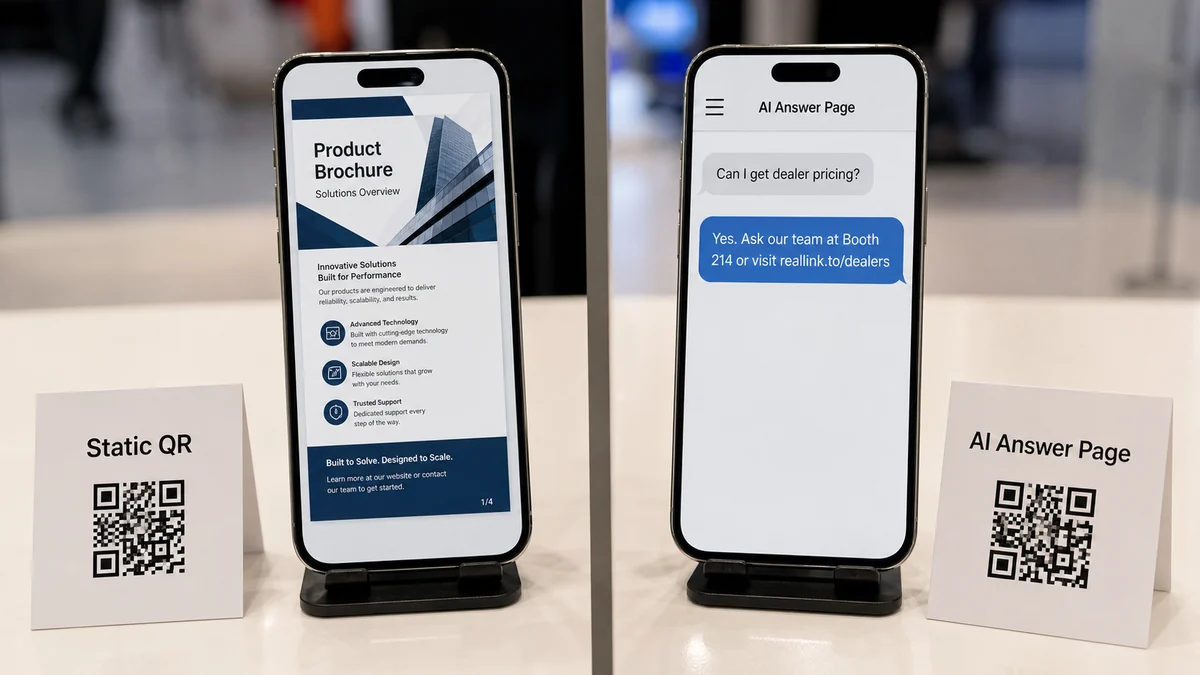
A QR code is not the strategy. The answer after the scan is.
What questions do booth visitors actually ask?
Booth visitors usually ask practical buying questions, not brand-positioning questions. They want to know whether the product fits their role, market, budget, timeline, technical stack, compliance needs, resale model, or language.
- What problem does this solve, in one sentence?
- Is this for my industry, company size, or buyer type?
- Can I see a demo video after I leave the booth?
- Do you sell direct, through distributors, or through dealers?
- Can I get sample pricing, wholesale terms, or a quote range?
- What information do you need before sending a quote?
- Do you ship to my state or country?
- Do you support my language, market, voltage, standard, or certification need?
- Who should I contact after the show?
- What happens if I scan this and come back later?
Those questions should shape your QR code destinations. If the booth is divided by product line, use different QR destinations. If international buyers are a priority, make multilingual answers easy. If demos are the hook, do not bury the video behind a generic navigation page.
What is a bad solution versus a better trade show solution?
A bad trade show QR setup sends every visitor to the same generic page. A better setup routes visitors to the answer they wanted: demo, sample, dealer info, quote steps, product fit, or post-show follow-up.
| Booth situation | Weak destination | Better destination |
|---|---|---|
| Visitor scans a banner QR code. | Homepage with broad company copy. | Short page: what you do, who it is for, demo video, and next step. |
| Visitor asks for dealer pricing. | PDF catalog with no dealer explanation. | Answer page explaining dealer process and the right contact URL. |
| Visitor wants technical specs. | Sales form that asks for contact details first. | Spec answer page with plain explanations and a contact path for edge cases. |
| Visitor speaks another language. | English-only brochure. | Multilingual answer page for product, shipping, samples, and follow-up questions. |
| Visitor scans after hours. | Booth staff is gone and the QR opens a static ad. | Answer page that explains booth hours, demo access, and post-show contact steps. |
Which QR destination should different exhibitors use?
The best QR destination depends on the visitor's intent. A manufacturer may need sample and distributor answers. A SaaS exhibitor may need demo and integration answers. A franchise team may need territory and qualification answers.
| Exhibitor type | Visitor intent | Recommended QR destination |
|---|---|---|
| B2B SaaS booth | Demo, integrations, security, pricing context. | AI answer page trained on demo, use cases, implementation, and next-step URLs. |
| Manufacturer or supplier | Specs, samples, MOQ, shipping, distributor path. | Product answer page with sample request instructions and spec links. |
| Wholesale or dealer program | Margin, territory, requirements, catalog access. | Dealer FAQ page or AI answer page with approved qualification answers. |
| Exporter or international seller | Language, region, shipping, certification, follow-up. | Multilingual AI answer page with market-specific answers and contact URLs. |
| Local service provider at a business expo | Availability, service area, pricing, proof. | Local service answer page linked from flyers, booth signs, and business cards. |
| Recruiting or franchise booth | Eligibility, location, cost, process, next step. | Question-led page that explains fit before asking for an application. |
What should you prepare before printing booth materials?
Before printing booth banners, brochures, table tents, and badge cards, write the answer plan. Decide what each QR code opens, what questions it answers, and what next step belongs after each answer.
- Choose one primary promise for the booth, not five competing headlines.
- List the top 10 questions visitors are likely to ask.
- Create separate QR destinations for demo, samples, pricing context, dealer info, and support when needed.
- Put QR codes near the physical thing they explain, not only on the back of a brochure.
- Use short labels: "Scan for demo", "Ask product questions", "Get sample steps", or "Dealer info".
- Make sure every page works on a phone with weak venue Wi-Fi.
- Train booth staff to say what happens after the visitor scans.
- Use truthful, supportable claims and avoid fake urgency or fake results.
- Review post-show question patterns before the next event.
What are concrete trade show QR code examples?
Strong trade show QR examples connect a physical booth moment to a specific answer. The scan should continue the conversation, not restart it from a generic homepage.
1. Product demo station
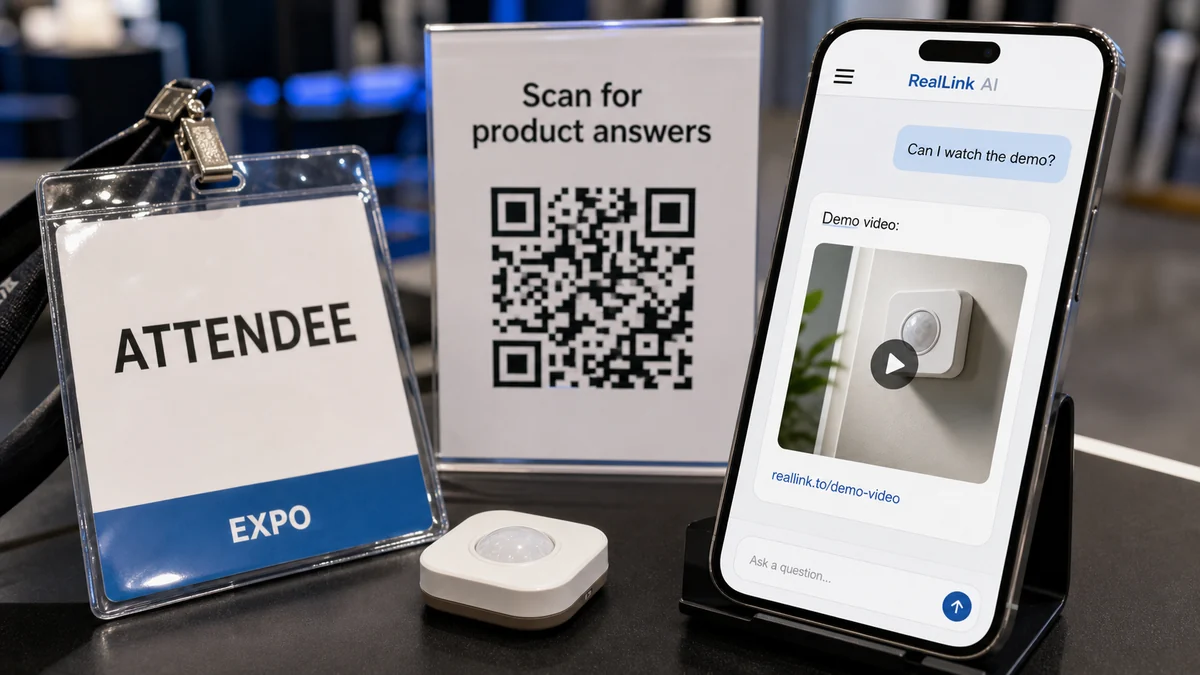
A QR sign beside the demo monitor opens a page where visitors can ask: "Can I watch this later?", "Does it integrate with our system?", and "Who should evaluate this on our team?" The answer can include a short demo video and a plain URL to schedule a deeper review.
2. Sample request counter
A manufacturer can place a QR code near physical samples. The page answers MOQ, shipping regions, sample timing, materials, and what information is needed before a quote. This prevents the sample table from becoming a pile of unqualified requests.
3. Dealer or distributor booth
If dealers are the real target, the QR destination should not look like a consumer landing page. It should answer dealer territory, application steps, catalog access, margin conversation boundaries, and the right post-show contact URL.
4. International buyer meeting
At global trade events, a multilingual answer page can help visitors ask in their own language. That matters when a buyer understands the product visually but hesitates over shipping, certification, support, or sales terms.
5. Business card follow-up
A booth rep's card QR can open a page specific to the event: "Met us at the expo? Ask about demos, samples, pricing context, or post-show follow-up." This is stronger than a generic profile link.
6. After-hours booth scan
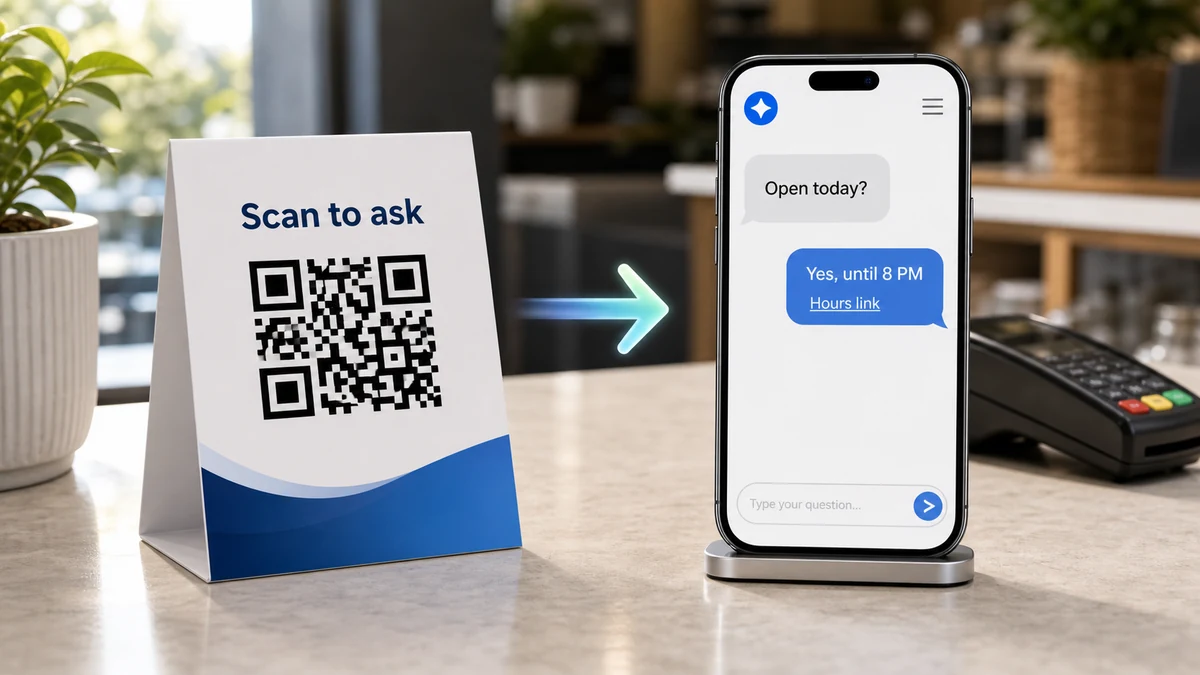
Visitors often scan after staff leave for the day. A booth sign can still answer hours, demo access, product questions, and the best way to reconnect tomorrow.
How can you do this without RealLink AI?
You can build a strong trade show answer system manually with focused landing pages, FAQ sections, demo video pages, downloadable spec sheets, email follow-up templates, and separate QR codes for each booth intent.
Start with a simple spreadsheet. Put every visitor question in column one, the approved answer in column two, the ideal QR destination in column three, and the next step in column four. Then build pages for the highest-intent questions.
This can work well if your team has time to maintain the pages. The weakness is that static pages do not adapt to the exact wording of each visitor's question, and they rarely reveal what people wanted to know unless you add separate tracking and review workflows.
How does RealLink AI make trade show follow-up easier?
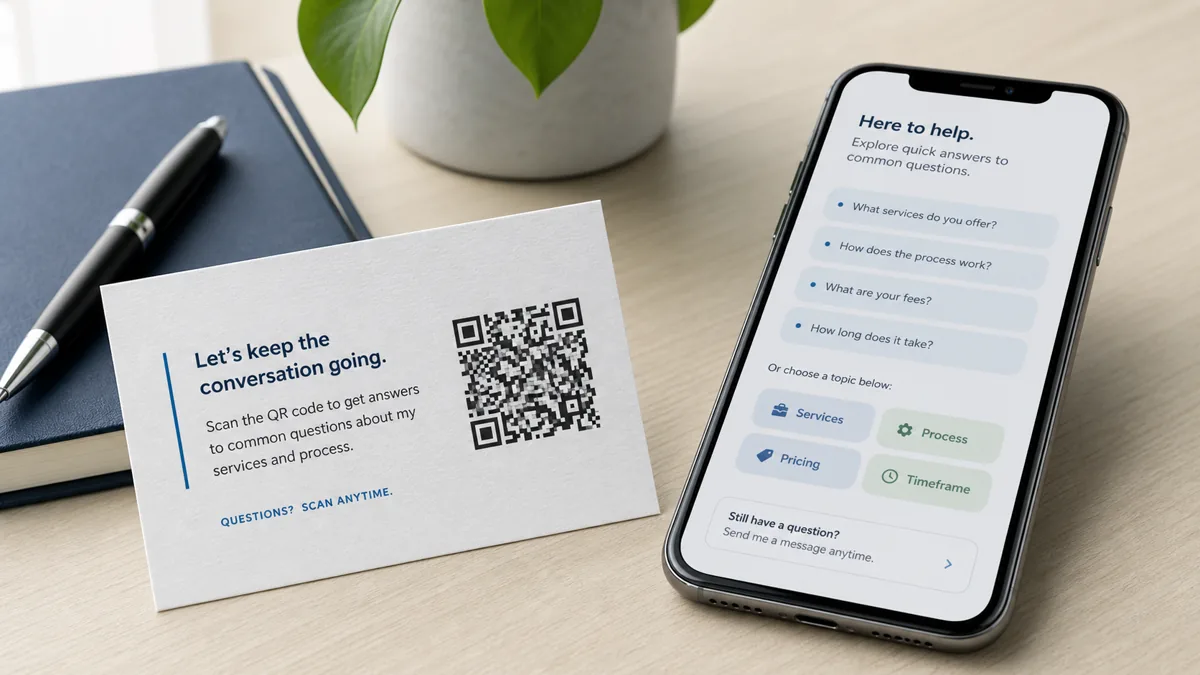
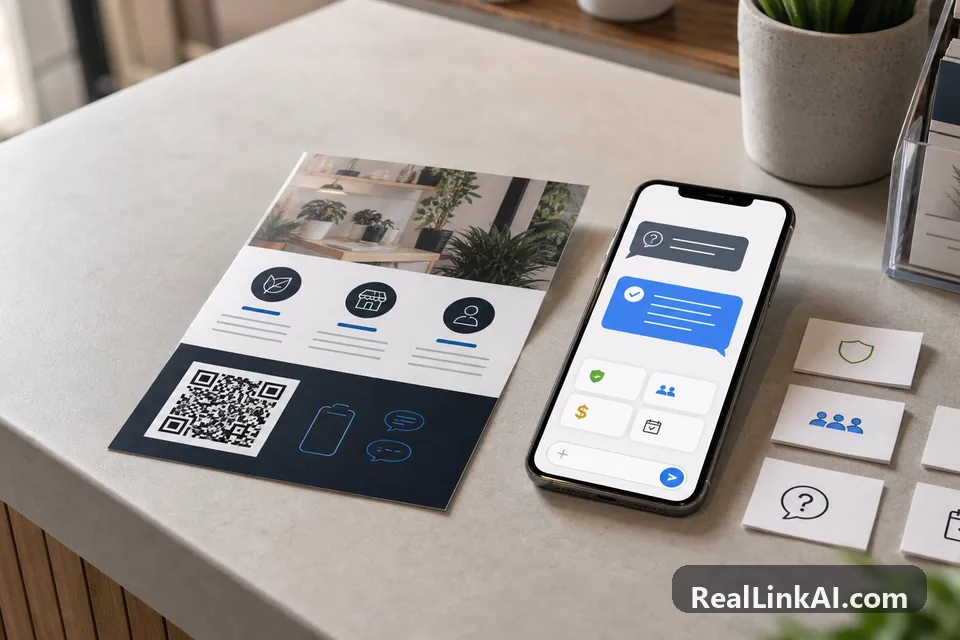
RealLink AI makes booth QR codes more useful by turning them into AI answer pages. Visitors can ask product, demo, sample, pricing-context, dealer, language, and follow-up questions after scanning, while your business learns which questions repeat.
RealLink AI is not a generic chatbot widget. It is a public AI answer page for the physical touchpoints you already bring to an event: booth signs, flyers, brochures, product tags, business cards, packaging, catalogs, and post-show links.
The customer-facing page keeps the experience simple: speech bubbles, plain answers, plain URL links, optional YouTube or TikTok embeds, a hamburger menu, and a bottom input. That matters at a trade show because visitors are moving fast and using phones in a noisy environment.
After the event, repeated questions become business data. If visitors keep asking about dealer pricing, your booth should make dealer information clearer. If they ask about shipping regions, your follow-up should address geography. If they ask for demos in another language, your next show may need multilingual signage.
What should you read next?
Use these related RealLink AI guides to plan the QR destination, customer answer flow, and follow-up system around your booth materials.
FAQ
What is the best trade show marketing idea for better leads?
The best trade show marketing idea is to answer the visitor's next question before they forget the booth conversation. Use QR codes, answer pages, demo links, sample steps, and follow-up content that match the reason they stopped.
What should a QR code at a trade show booth link to?
It should link to a specific answer page, not automatically to your homepage. Good destinations include demo videos, product fit answers, sample request steps, dealer information, technical specs, multilingual support, and post-show follow-up paths.
How do you make booth visitors scan a QR code?
Give the QR code a clear promise. "Scan for demo", "Ask product questions", "Get sample steps", or "Dealer info" is stronger than "Learn more". The label should tell visitors what they get immediately.
How do you capture leads without annoying visitors?
Offer useful information first. Visitors are more likely to engage when the scan helps them answer a real question. You can still provide a contact path, but the first value should be clarity.
Why do trade show leads go cold?
They go cold because the visitor forgets the context, receives generic follow-up, or never gets the answer that mattered. The more booths they visit, the more important your post-scan answer layer becomes.
Should exhibitors use one QR code or multiple QR codes?
Use one QR code when the booth has one simple offer. Use multiple QR codes when visitors have different intents, such as demos, samples, dealer information, specs, multilingual questions, or event follow-up.
Can an AI answer page replace booth staff?
No. Booth staff still matter. An AI answer page helps with simple repeated questions, after-hours scans, multilingual visitors, and follow-up context so humans can focus on higher-value conversations.
How should exhibitors use question data after the show?
Review the questions visitors asked most often. Use those patterns to improve booth copy, sales scripts, follow-up emails, product pages, pricing explanations, sample instructions, and next event materials.
Last updated and author/founder note
Last updated: 2026. This guide was prepared by RealLink AI for exhibitors and small business teams planning trade shows, expos, fairs, conventions, and local business events.
Founder note: Trade shows create attention, but attention expires quickly. The core idea is simple: do not let your booth materials go silent after the scan. Let visitors ask the question they still have.
Turn booth scans into answer points
If your trade show QR code only opens a homepage, visitors may still leave with the same questions. Create AI for your booth sign, brochure, product display, business card, or post-show follow-up link.