
Trade show preparation
Trade Show Preparation: Why Planning Is Not the Same as Strategy
Planning gets the booth ready. Strategy gets the buyer ready.
TL;DR
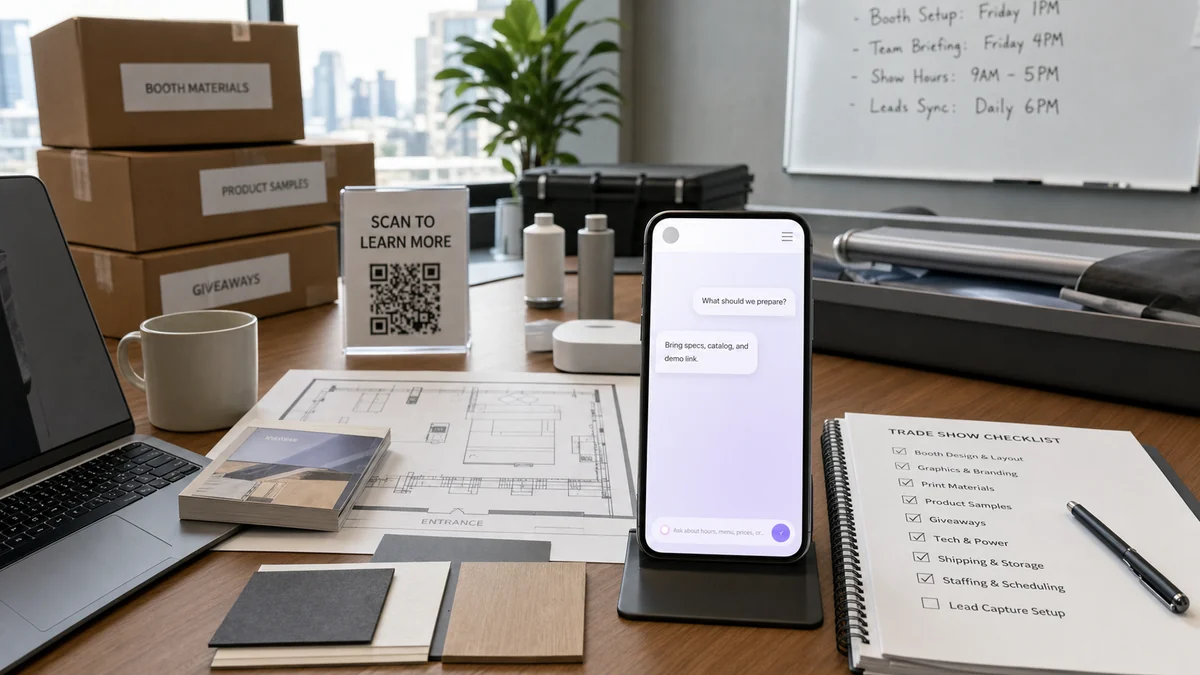
Trade show preparation usually starts with a checklist: booth, catalog, schedule, shipment, staff, scanner, and follow-up list. That is planning. Strategy is different. Strategy asks why visitors will stop, what they will doubt, what they need after a QR scan, and how the team will continue the conversation after the show. Planning feels comfortable because it controls visible outputs. Strategy feels uncomfortable because it deals with visitor behavior you cannot fully control. Successful exhibitors prepare both.
Key takeaways
| Topic | Why it matters |
|---|---|
| Planning controls outputs | Booth construction, printed materials, schedules, shipping, and staffing belong to the planning layer. |
| Strategy handles uncertainty | Visitor doubt, buying questions, comparison, and post-scan behavior belong to the strategy layer. |
| A checklist is necessary but incomplete | A perfect booth can still underperform if visitors do not understand why they should care. |
| QR codes need a reason | A booth QR code should answer the question the visitor had when they scanned it. |
| Follow-up starts before the show | The best follow-up is planned around visitor questions before the first badge is scanned. |
Table of contents
What does trade show preparation really mean?Why do exhibitors confuse planning and strategy?What belongs in the planning layer?What belongs in the strategy layer?Planning vs strategy tableWhat questions should every booth prepare to answer?Why is the QR code part of trade show strategy?Planning checklistStrategy checklistPreparation decision tablePractical examplesHow can you prepare without RealLink AI?How does RealLink AI help with trade show preparation?FAQWhat does trade show preparation really mean?
Trade show preparation is the work of getting both the booth and the buyer journey ready before an event. It includes logistics, staffing, printed materials, demos, lead capture, visitor messaging, QR destinations, and post-show follow-up. The common mistake is treating preparation as only a checklist.
A checklist gets the exhibit into the hall. A strategy helps a visitor understand why the exhibit matters. Both are needed, but they solve different problems.
The practical test is simple: if the task can be completed internally, it is probably planning. If it depends on how visitors think, compare, hesitate, scan, or respond, it belongs to strategy.
Why do exhibitors confuse planning and strategy?
Exhibitors confuse planning and strategy because planning produces visible progress. A booth rendering, printed catalog, shipping label, staff schedule, and badge scanner feel concrete. Strategy asks less comfortable questions about visitor doubt, unclear value, competition, pricing pressure, and weak follow-up.
Planning reduces internal anxiety. Strategy reduces visitor hesitation.
That is why teams often over-prepare the booth and under-prepare the conversation. They can prove the catalog is printed, but it is harder to prove the visitor understands the offer in ten seconds.
What belongs in the planning layer?
The planning layer includes the controlled parts of the event: booth build, show services, shipping, staff schedules, printed materials, demo equipment, travel, badges, meeting calendar, lead collection tools, and post-show ownership. These items are essential because execution problems can distract the team from selling.
Planning is not shallow. It is the operating system of the event. The danger is assuming that a well-run operation automatically creates qualified conversations.
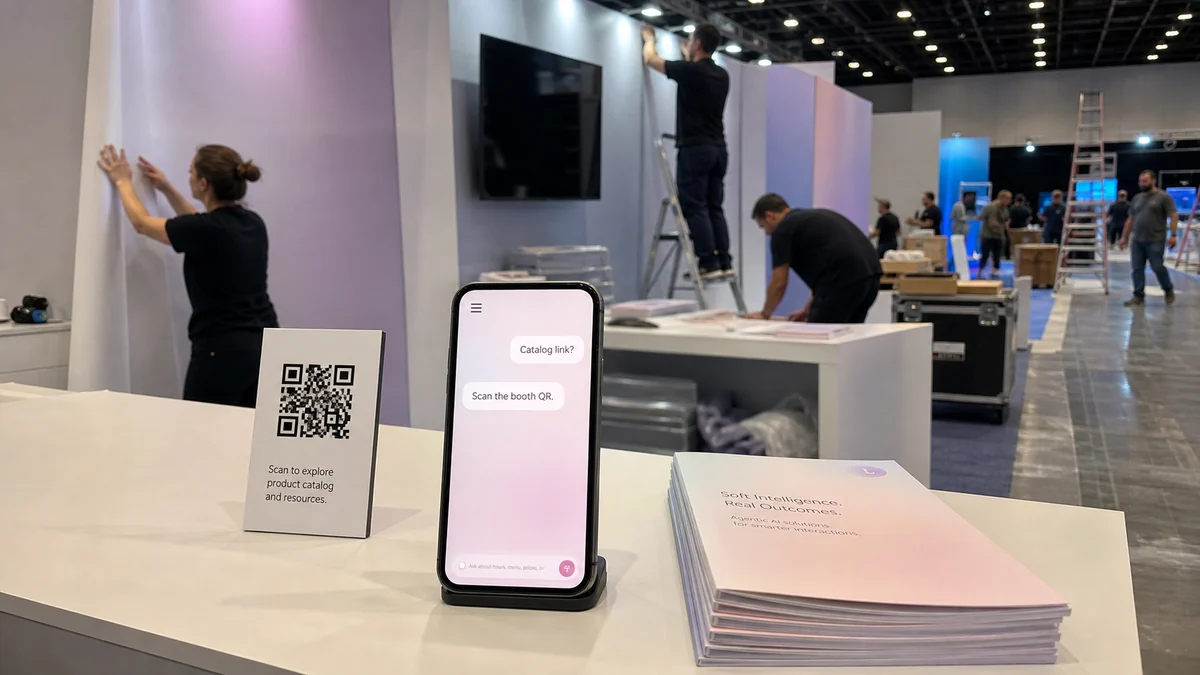
Use the planning layer to remove friction: the booth works, the catalogs arrive, the QR codes scan, staff know their roles, and the follow-up owner is clear before the show closes.
What belongs in the strategy layer?
The strategy layer includes the uncertain parts of the event: who should stop, why they should care, what they will doubt, how they compare alternatives, what answer should appear after a scan, and what next step makes sense for each visitor type.
Strategy is uncomfortable because it cannot be checked off like a shipment. It requires assumptions about buyers, competitors, objections, proof, and timing.
That discomfort is useful. It forces the team to prepare for the questions that decide whether a booth visit becomes a sales opportunity.
Planning vs strategy table
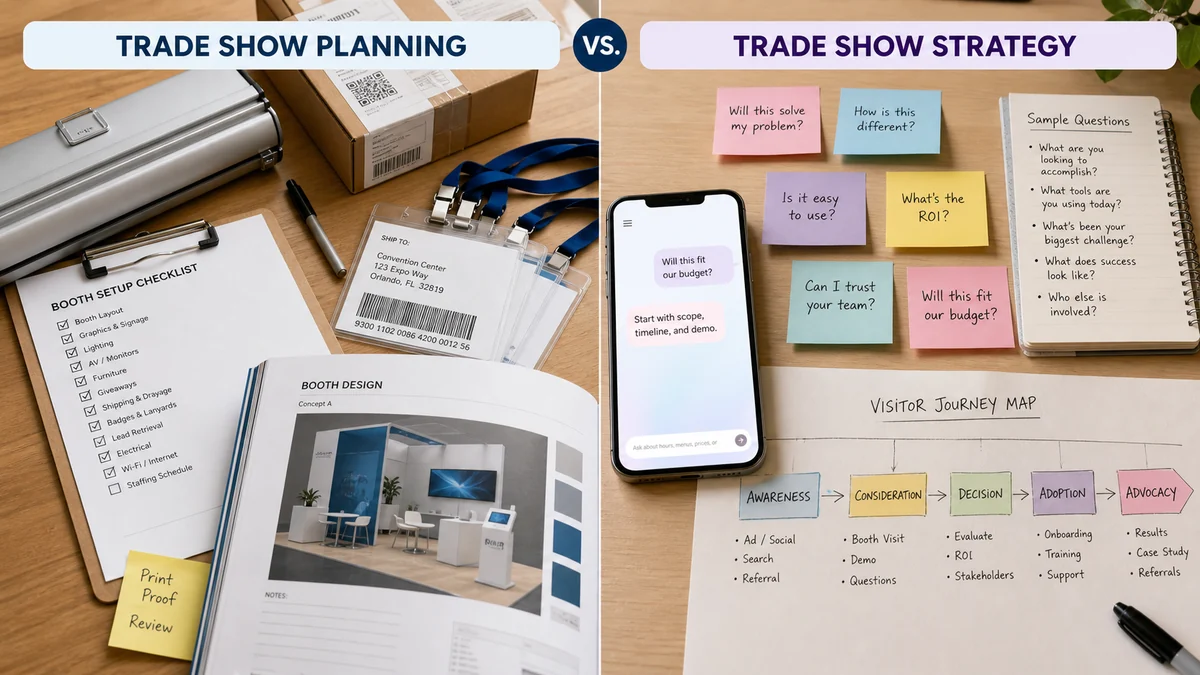
The same task can be handled as planning or strategy depending on the question you ask.
| Area | Planning question | Strategy question |
|---|---|---|
| Booth | Is the booth built and staffed? | Will the right visitor understand why to stop? |
| Catalog | Is the catalog printed? | Does it answer what buyers compare later? |
| QR code | Does the code scan? | Does the page answer the visitor's next question? |
| Lead capture | Can we collect names? | Can we preserve intent and follow-up context? |
| Follow-up | Who sends the email? | What should be said based on the visitor's doubt? |
What questions should every booth prepare to answer?
Every booth should prepare answers for fit, value, proof, price context, implementation, comparison, risk, and next step. Visitors may not ask all of these out loud, but these questions shape whether they stop, scan, talk, share, or leave.
- Who is this for?
- What problem does it solve?
- How is it different from the alternatives?
- What proof can I trust?
- What affects pricing or project scope?
- How hard is implementation?
- Can I show this to my team later?
- What should I do after I scan the QR code?
Why is the QR code part of trade show strategy?
A trade show QR code is strategic when it continues the visitor's question after the booth interaction. It is weak when it only opens a homepage, generic PDF, or contact form. The destination should match the moment of the scan.
A visitor scans because they want something: a catalog, demo video, price context, technical detail, sample request, case study, or a way to ask later.
The QR code is not the strategy. What happens after the scan is.
Planning checklist
Use this list to keep the controllable pieces from creating avoidable problems.
- Confirm booth size, services, power, internet, lighting, and setup times.
- Prepare catalogs, business cards, signage, QR codes, and product sheets.
- Create staff schedules, roles, talking points, and escalation rules.
- Pack demo equipment, chargers, samples, tools, and backup supplies.
- Define how leads will be captured, exported, assigned, and followed up.
Strategy checklist
Use this list to prepare for the parts you cannot fully control: visitor attention, doubt, and next action.
- Write the one-sentence reason a visitor should stop.
- List the top 20 doubts visitors may have before they trust the offer.
- Prepare answers for pricing context, proof, implementation, and comparison.
- Create QR destinations that match booth moments, not generic web pages.
- Plan follow-up categories by visitor question: demo, price, technical, sample, distributor, or partner.
Preparation decision table
Decide what each preparation area must do before, during, and after the show.
| Preparation area | Planning task | Strategic task |
|---|---|---|
| Message | Approve booth copy | Test whether a visitor understands it in 10 seconds |
| Staff | Create shift schedule | Train staff to identify visitor type and objection |
| Order catalogs | Place QR paths for questions the catalog cannot answer | |
| Demo | Prepare equipment | Decide which buyer question each demo proves |
| Post-show | Assign lead owner | Segment follow-up by question, not just badge scan |
Practical examples
The difference becomes clearer when you apply it to real booth situations.
Catalog-first booth
Planning prints a catalog. Strategy asks which visitor question the catalog cannot answer and gives that question a QR path.
Badge-scan booth
Planning scans as many badges as possible. Strategy captures why each person was interested enough to talk or scan.
Product demo booth
Planning checks the equipment. Strategy defines which problem the demo proves in under one minute.
Distributor booth
Planning prepares partner brochures. Strategy separates buyer, reseller, investor, and technical questions.
Post-show sales team
Planning exports leads. Strategy writes follow-up that continues the visitor's original question.
Run a 30-minute strategy workshop before booth design
The fastest way to separate planning from strategy is to hold one short workshop before approving booth graphics, QR destinations, and follow-up templates.
Start with the visitor, not the booth. Ask who must stop, what they already believe, what alternative they compare you against, and what doubt would make them walk away. Then write the first three questions that visitor is likely to ask after seeing the booth. Those questions should shape the headline, demo, QR label, answer page, and follow-up category.
Use a simple sequence. First, name the primary visitor role. Second, write the stopping reason in one sentence. Third, write the objection the visitor may not say out loud. Fourth, decide what proof belongs at the booth and what proof belongs after the scan. Fifth, decide what staff should do when the visitor asks a serious question. Sixth, write the first follow-up line before the show starts.
This workshop keeps the team honest. If nobody can write a clear follow-up line before the event, the booth message is probably still vague. If every answer depends on a salesperson being free, the QR destination is underused. If the catalog answers only product features and not buyer doubts, the printed material is planned but not strategic.
Common failure patterns when planning replaces strategy
Most weak trade show results do not come from one dramatic mistake. They come from small mismatches between the booth plan and the visitor's decision process.
- The beautiful booth with no stopping reason: the design looks premium, but visitors cannot tell why it matters in ten seconds.
- The QR code with no promise: the code scans, but the label says only "learn more," so visitors do not know what they will get.
- The badge scan with no memory: the team collects contact details but not the question, objection, role, or next step.
- The demo that proves the wrong thing: the equipment works, but the demo does not answer the buyer's real risk.
- The fast but generic follow-up: the email arrives quickly, yet ignores what the visitor asked at the booth.
Use these patterns as a pre-show audit. If one appears in your plan, fix it before printing, shipping, or training the team.
If you only have one hour before the show
Use the hour to check the visitor journey, not only the booth supplies.
Read the booth headline from ten feet away. Scan every QR code. Ask one person outside the team what they think the booth does. Write the three questions you hope visitors ask. Then write the three questions you are afraid they will ask. If the answer page, catalog, demo, and staff script cannot handle those six questions, fix that before optimizing anything else.
This quick audit is not a replacement for strategy, but it catches the most expensive gap: a booth that is ready for the exhibitor and confusing for the visitor.
How can you prepare without RealLink AI?
You can prepare without RealLink AI by building a dedicated event landing page, creating role-based FAQs, printing QR codes by booth zone, tagging leads by interest, training staff to capture one key question, and writing follow-up templates by visitor intent.
This works when the team is disciplined. The weakness is maintenance. Static pages and forms do not always capture the exact question a visitor had, and staff notes often become inconsistent when the booth gets busy.
How does RealLink AI help with trade show preparation?
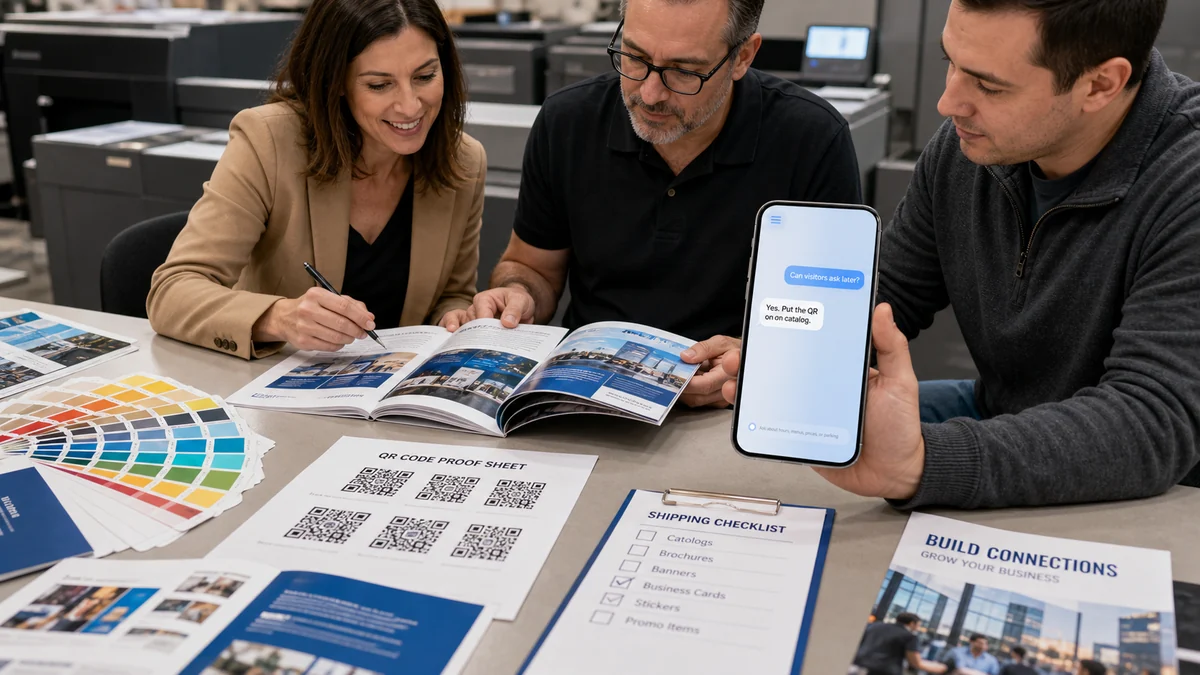
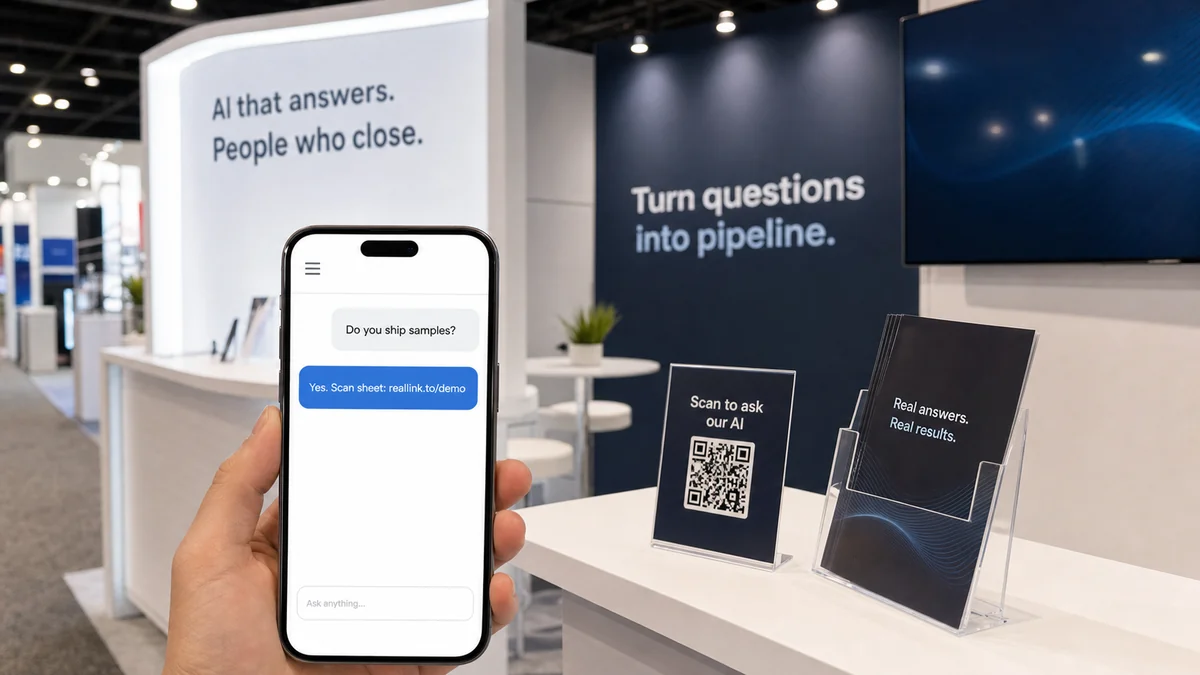
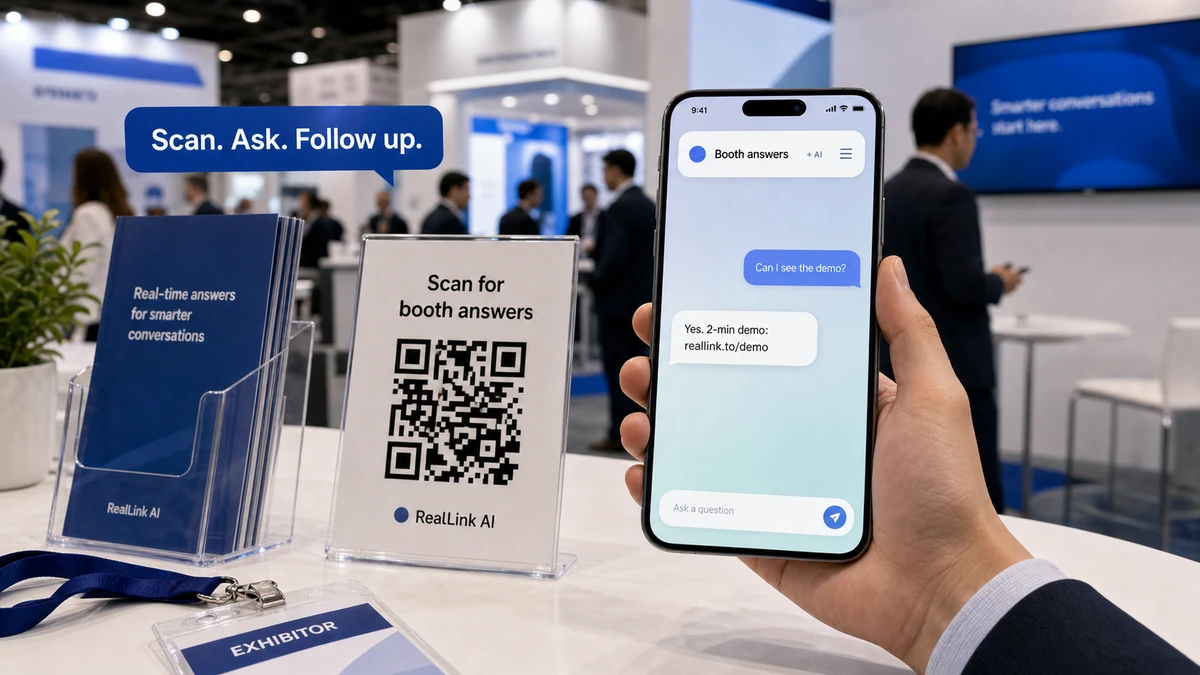
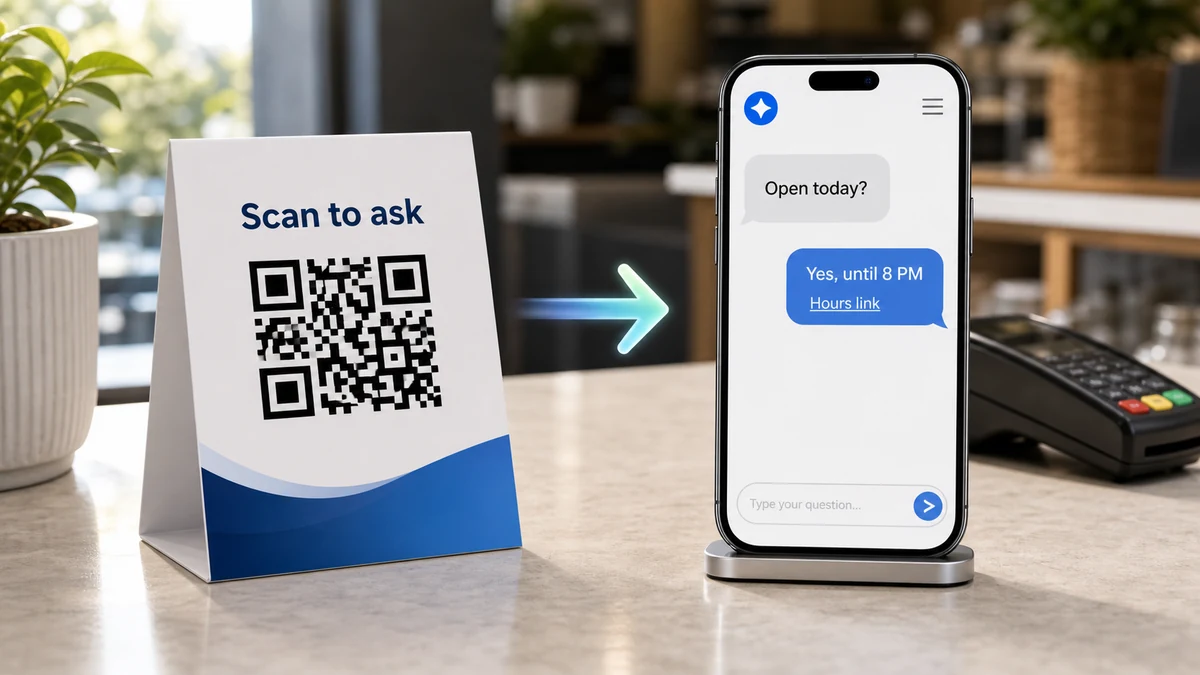
RealLink AI helps by turning a booth QR code into a public AI answer page. Visitors can ask questions after they scan, receive trained answers with plain text, plain URLs, or embedded video, and leave behind question patterns that help the team understand what visitors actually wanted to know.
RealLink AI should support the strategy, not replace it. The team still decides the message, claims, proof, and follow-up rules.
The visitor-facing experience stays simple: speech bubbles, plain answers, optional YouTube or TikTok embeds inside an answer bubble, a hamburger menu, and a bottom input.
What compliance and claim issues should U.S. exhibitors watch?
U.S. exhibitors should keep booth claims truthful, supportable, and clear. If the team collects contact details for follow-up, visitors should understand what happens next. Avoid fake urgency, unsupported performance claims, unclear opt-ins, and misleading QR destinations.
Google's people-first content guidance is a useful editorial standard: answer the task the visitor actually has. The FTC advertising FAQ for small business is a practical reminder that advertising claims should be truthful and not misleading.
What should you read next?
Use these guides to connect preparation, booth questions, and follow-up.
RealLink AI
Trade show booth questions
Use these guides to connect preparation, booth questions, and follow-up.
RealLink AI
Trade show lead follow-up
Use these guides to connect preparation, booth questions, and follow-up.
RealLink AI
QR Code Generator vs AI Answer Page
Use these guides to connect preparation, booth questions, and follow-up.
FAQ
What is trade show preparation?
Trade show preparation is the work of getting booth logistics, staff, materials, messaging, QR destinations, lead capture, and follow-up ready before an event.
What is the difference between trade show planning and trade show strategy?
Planning organizes controlled tasks. Strategy prepares for visitor behavior, doubt, comparison, and decision-making.
Why is a trade show checklist not enough?
A checklist prevents operational mistakes, but it cannot decide why visitors should stop, trust, scan, or continue the conversation.
What should a trade show booth QR code link to?
It should link to a focused page that answers booth-specific questions, not only a homepage or static PDF.
How early should trade show preparation start?
Logistics may need months, but strategy should start before booth design because audience, message, proof, and follow-up should shape the booth.
How do you measure whether preparation worked?
Measure qualified conversations, repeated questions, meeting requests, post-scan engagement, and follow-up response, not only traffic.
How can AI help with trade show preparation?
AI can help answer repeated visitor questions after a QR scan and show question patterns the team should address.
What should exhibitors avoid?
Avoid vague claims, QR codes without useful destinations, generic follow-up, unsupported promises, and collecting contact details without clear expectations.
Last updated and author/founder note
Last updated: 2026-06-03.
Founder note: Most trade show preparation fails quietly because the booth is planned for the exhibitor, not for the visitor's uncertainty.
Make your booth QR code answer questions
A trade show plan can get people to your booth. A RealLink AI answer page can help answer the questions they have after they scan.