
Trade show success checklist
2026 Trade Show Success Checklist: 5 Ways to Turn Booth Visitors Into Real Customers
Measure qualified conversations, commitments, completed follow-up, opportunities, revenue, and ROI instead of relying on booth traffic alone.
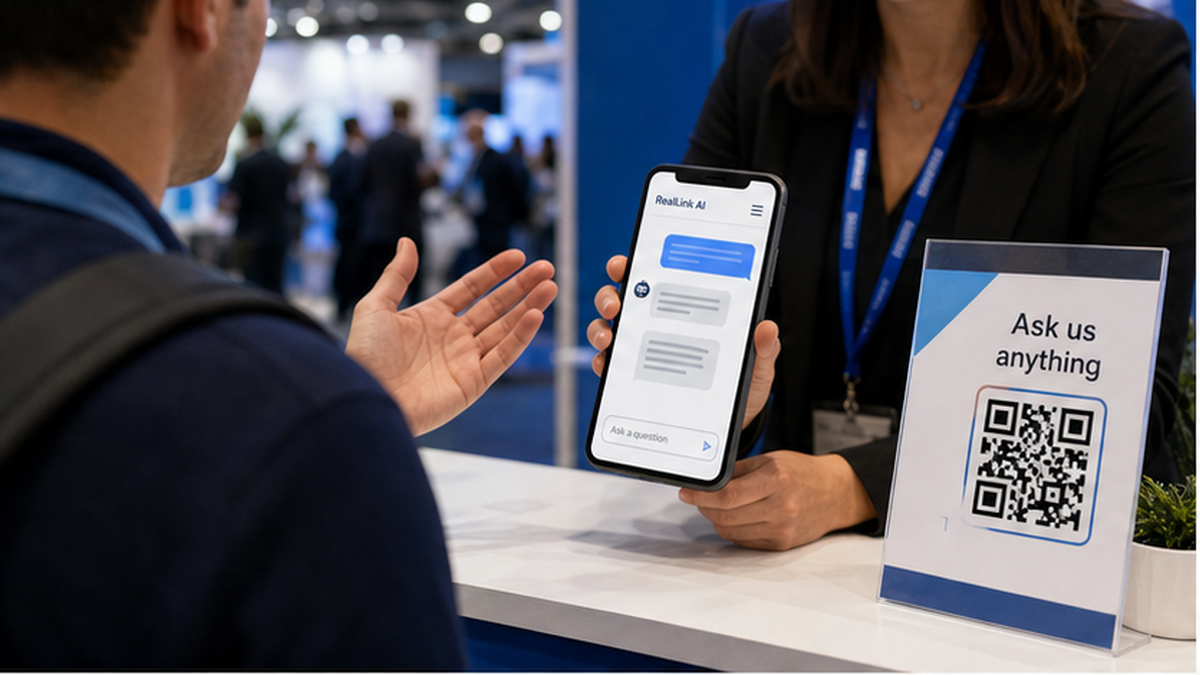
Direct answer
A trade show is successful when it produces the business outcome defined before the event, not merely when the booth is busy. Use a scorecard that connects total cost to target meetings, qualified conversations, promises completed, opportunities created or advanced, attributable revenue, and the final decision to repeat, change, or stop the event.
Key takeaways
| Do not stop at | Add this evidence |
|---|---|
| Foot traffic or badge scans | Visitor fit, need, role, timing, and a plausible next step |
| Conversation count | The question discussed, requested action, promise, owner, and due date |
| Emails sent | Promised action completed, response received, meeting held, or opportunity advanced |
| Pipeline total | Attribution method, stage, probability policy, revenue result, and measurement window |
Table of contents
Five trade show success checksDefine success before the eventUse a daily scorecardDefine a qualified conversationRecord promises and ownershipMeasure follow-up completionSeparate pipeline, revenue, and ROIRun a post-show decision reviewPractical examplesOfficial sourcesFAQFive trade show success checks
- Set the outcome and cost baseline. Choose the event's primary job, record the full budget, define the measurement window, and decide how financial attribution will work before the booth opens.
- Define a qualified conversation. Give staff a short rule based on visitor fit, need, role, timing, and a plausible next action. This prevents every scan from being counted as an equal lead.
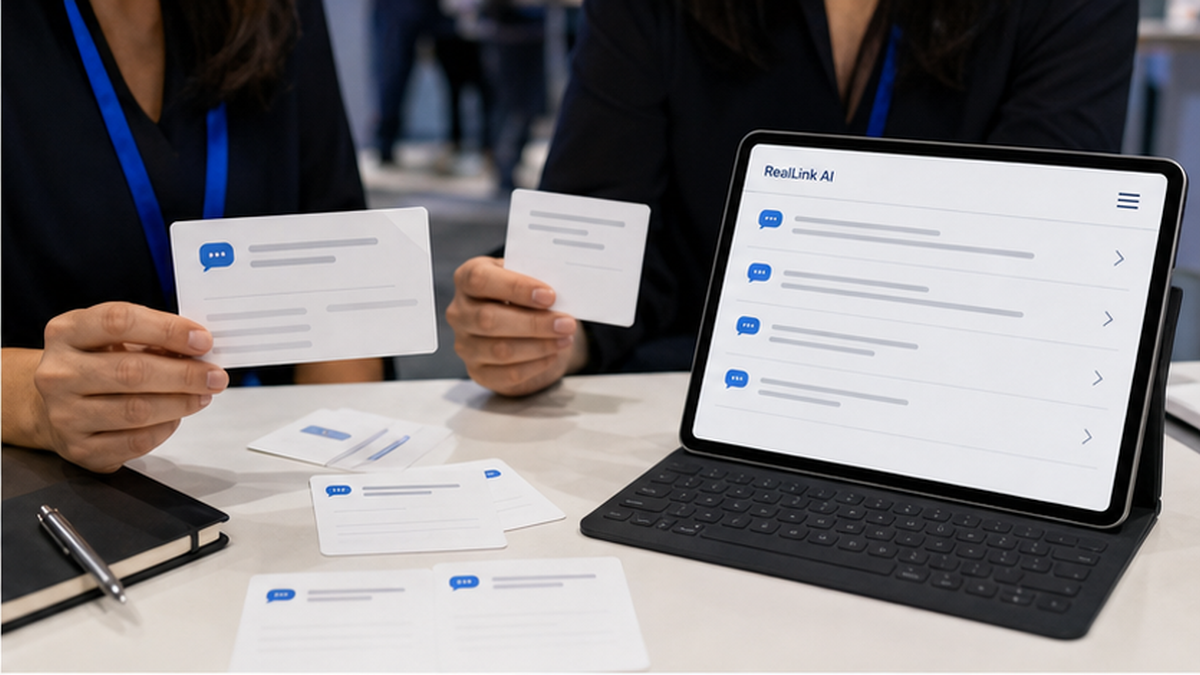
- Capture the commitment, not only the contact. Record what the visitor asked, what the team promised, who owns the next action, and when it is due.
- Complete follow-up by priority. Fulfill specific promises first, then work high-fit conversations, then place lower-intent contacts into an appropriate long-term path.
- Evaluate outcomes on scheduled dates. Review operations immediately, opportunities after the sales team has worked them, and revenue after the agreed attribution window.
Define success before the event
Choose one primary outcome and write the rule that proves it happened.
Examples include holding meetings with named target accounts, opening distributor reviews in selected territories, validating demand for a product line, collecting qualified sample requests, or advancing existing opportunities. "Generate awareness" is too vague unless the team defines the audience, observable action, and method of measurement.
Record the full cost baseline at the same time. Include exhibit space, booth production, organizer services, material handling, freight, labor, travel, lodging, equipment, internet, lead retrieval, giveaways, staff time where the company includes it, and post-show work. The U.S. Commercial Service recommends creating a draft budget, setting ROI benchmarks, and estimating the sales needed to cover event costs before committing.
Finally, choose the attribution window. A short buying cycle may support a 30- or 60-day checkpoint; complex B2B sales may need several scheduled reviews. Do not change the window later merely to make the result look better.
Use a daily scorecard the booth team can actually complete
A daily scorecard should take minutes, expose operational gaps, and preserve the information the sales team needs tomorrow.
| Metric | Definition to set before the show | What it tells you |
|---|---|---|
| Target meetings kept | Completed conversation with a named target account or partner | Whether pre-show outreach produced access |
| Qualified conversations | Meets the team's fit, need, role, timing, and next-step rule | Quality of booth traffic |
| Commitments created | Specific action with owner and due date | Amount of real follow-up work |
| Commitments completed | Promised item sent or action performed accurately | Execution reliability |
| Opportunities created or advanced | CRM stage change supported by the company's normal criteria | Commercial movement, not just activity |
| Repeated questions | Same underlying concern appears across relevant visitors | Message, proof, demo, or product-information gap |
| Operational failures | Demo, staffing, service, supply, or lead-capture issue with impact | What must change for the next day or event |
Raw traffic, dwell time, scans, downloads, and giveaway counts can remain as diagnostic signals. They become useful only when the team can connect them to a target audience or next action.
Define a qualified conversation
Qualification should be consistent enough for two staff members to score the same conversation similarly.
Use five dimensions: fit with the intended customer or partner profile; need the offer can reasonably address; role in research, recommendation, technical review, procurement, or decision; timing or trigger; and next step both sides understand. A visitor does not need to be ready to buy today, but the record should explain why another action is justified.
Question context helps. "Do you integrate with our ERP?" or "Can you supply this tolerance at our volume?" reveals more than a generic scan, but a question alone is not proof of purchase intent. Record the company context and requested action rather than assigning intent from wording alone.
Record promises and ownership before the visitor leaves
The most useful lead note states what happens next, who owns it, and when it is due.
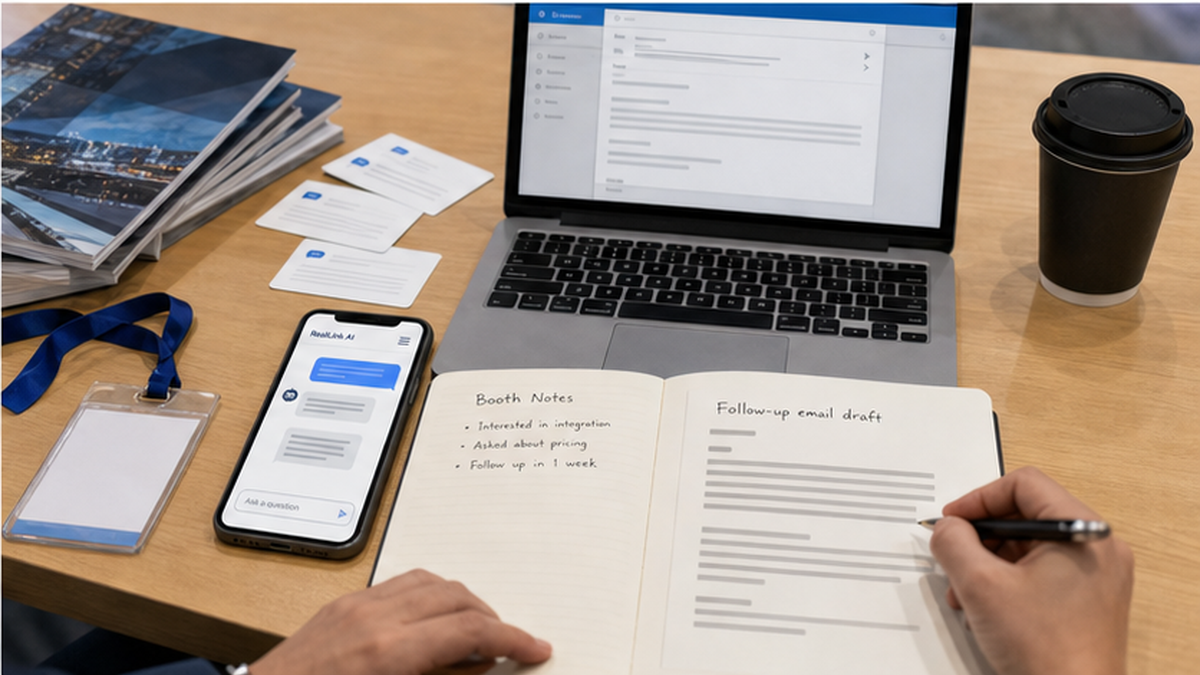
Use a compact handoff: visitor's goal or question; facts learned; requested action; exact promise made; owner; due date and time zone; evidence or document needed; and any boundary that prevents an immediate answer. Do not write "hot lead" without explaining the evidence.
At the end of each day, find records with no owner, no due date, or an unsupported promise. Repair them while booth staff still remember the conversation. If no one is authorized to promise price, stock, delivery, territory, certification, or compatibility, say that a review is required and record the review owner.
Measure follow-up completion, not email volume
A sent message is an activity. Success is fulfilling the promise and moving the right conversation to a useful next step.
Sort records into four queues. First, complete specific promises such as sending a test report or checking a technical question. Second, handle high-fit meetings, quotes, samples, and partner reviews. Third, provide useful information to credible longer-term prospects. Fourth, suppress duplicates, disqualified records, and contacts who did not ask for marketing.
Personalize the opening around the recorded context: "You asked whether model B-17 supports outdoor washdown" is useful only if that was actually discussed. Do not invent familiarity. If the primary purpose of the message is commercial, review the FTC's CAN-SPAM requirements; they apply to business-to-business commercial email as well.
Separate pipeline, revenue, and ROI
Pipeline is a forecast; revenue is an outcome; ROI is a calculation based on a defined return and total event cost.
| Measure | Use | Common mistake |
|---|---|---|
| Pipeline created | Shows potential value entering the sales process | Reporting the full amount as if it were revenue |
| Pipeline advanced | Shows movement in opportunities that existed before the event | Crediting the event without documenting its role |
| Attributed revenue | Shows closed business under the chosen attribution rule | Changing the window or including unrelated sales |
| Gross profit contribution | Better reflects economic return when margin data is available | Comparing revenue directly with cost |
| Event ROI | Compares defined return with the total investment | Hiding cost categories or mixing forecast and actual results |
A practical formula is (attributable gross profit minus total event cost) divided by total event cost, multiplied by 100. A company may use a different approved method, but it should define the numerator, cost base, attribution rule, and window before reviewing results. Keep pipeline and closed results on separate lines.
Run a post-show decision review on three dates
Do not wait until the next booth contract is due to decide whether the event worked.
- Within the first week: review operational execution, lead completeness, promises, recurring questions, target meetings, and immediate follow-up. U.S. Commercial Service guidance recommends evaluating results promptly while the experience is still fresh.
- At the first sales checkpoint: review meetings held, samples or quotes progressed, opportunities created or advanced, disqualifications, and lost reasons.
- At the attribution close: compare actual cost, pipeline, attributable revenue or gross profit, ROI, and the strategic value that the company decided to track separately.
End with three decisions: what to repeat, what to change, and what to stop. A busy show can still be a poor fit; a smaller show can be valuable if it produces the right meetings and the economics work.
Three practical scorecard examples
B2B software exhibitor
The primary outcome is advancing named accounts. The scorecard tracks target meetings kept, security or integration reviews requested, follow-up owners, meetings completed, opportunities advanced, and attributable gross profit over the chosen window.
Industrial supplier
The primary outcome is qualified application review. Staff record part family, use case, volume, tolerance, required evidence, destination, sample or quote request, technical owner, and decision date. Giveaway scans are not counted as qualified conversations.
Distributor recruitment event
The primary outcome is opening territory reviews with qualified partners. The record includes territory, customer base, current lines, service capability, decision role, requested materials, review owner, and whether the formal partner assessment occurred.
Official sources and current checks
This guide was reviewed on August 13, 2026 against the U.S. Commercial Service preparation guide, its guide to trade show success, and its post-show follow-up and evaluation guidance. Booth claims should be supportable under the FTC advertising guidance. Commercial email follow-up should be checked against the FTC CAN-SPAM guide, which states that business-to-business commercial email is covered. For contact-data practices, review the FTC's personal information guide and collect only what the business needs. This article provides general operational information, not legal or accounting advice.
What should you read next?
Use these companion guides to connect booth strategy, preparation, QR answer pages, and follow-up.
Related guide
Essential Trade Show Preparation Checklist
A 15-point checklist for booth logistics, QR answer pages, visitor questions, and follow-up.
Related guide
Trade show lead follow-up
Turn booth QR scans into sales conversations by preserving visitor question context.
Related guide
Trade show planning vs strategy
Prepare both the booth checklist and the visitor strategy behind a stronger trade show.
FAQ
What is a trade show success checklist?
It is a scorecard that connects the event goal to qualified conversations, documented commitments, completed follow-up, opportunities advanced, and financial results over an agreed measurement window.
Is dwell time a good trade show metric?
It is a diagnostic signal, not a primary business result. Pair it with visitor fit, the question or need discussed, the commitment made, and whether that commitment was completed.
Which trade show metrics should a small exhibitor track?
Track total event cost, target meetings kept, qualified conversations, next-step commitments, follow-up completion, opportunities created or advanced, and attributable revenue within a defined window.
How soon should trade show leads be followed up?
Use the deadline promised at the booth. Complete specific commitments first, then prioritize high-fit conversations; relevance and ownership matter more than sending one generic message to everyone at the same time.
How do you calculate trade show ROI?
Choose one documented financial method before the show, such as attributable gross profit minus total event cost divided by total event cost. Keep pipeline separate from closed revenue and record the attribution window and assumptions.
Last updated
Reviewed and substantially updated August 13, 2026.
Use the company's approved accounting and attribution method for financial reporting. Keep forecast pipeline separate from closed results and document assumptions.
Sponsored tool
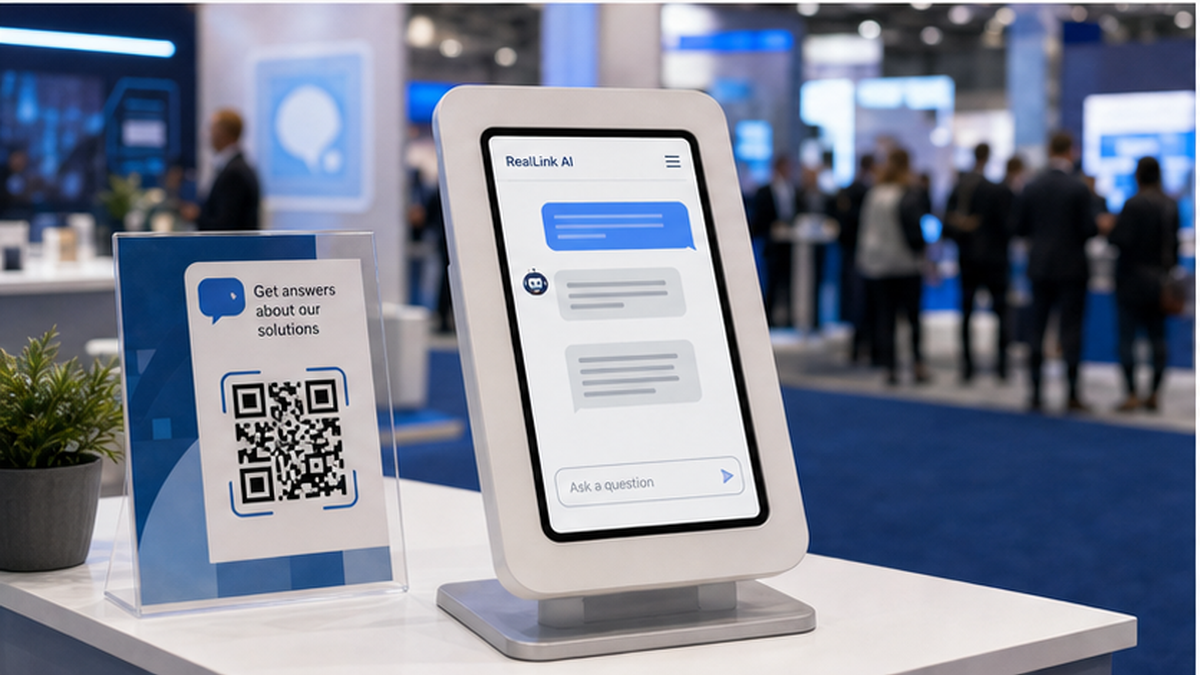
Create a booth AI answer page
RealLink AI lets a business publish a public AI answer page through a QR code or public link, using information the business provides. It can support multilingual answers and surface recurring question themes. It does not replace booth staff, qualify a lead by itself, send follow-up email, operate a CRM, confirm bookings, or calculate event ROI.