
Trade show strategy case study
Trade Show Strategy Case Study Part 3: The 72-Hour Follow-Up System
Trade show strategy case study part 3: a simple 72-hour follow-up system that turns booth questions into meetings, answers, and next-show learning.
Summary
Part 3 begins after the booth closes. Part 1 mapped buyer questions. Part 2 sorted visitors during the event. Part 3 is the operating system for the first 72 hours after the show, when the visitor still remembers the booth and the team still remembers the conversation.
The main idea is simple: do not send one generic thank-you email to every badge scan. Start from the question the visitor asked. A visitor who asked about samples needs a different message than a visitor who asked about technical fit, distributor terms, price range, or future education. The first 72 hours should turn scattered booth notes into a clear follow-up queue.
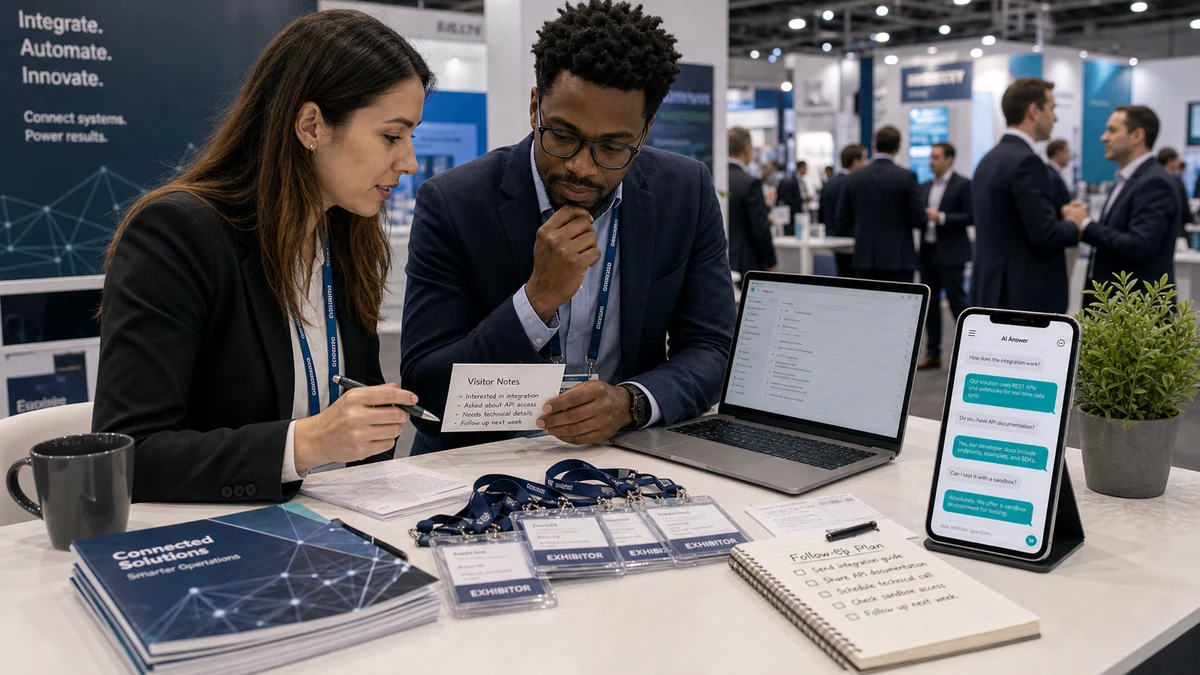
Case setup: the team had leads, but not enough context
The company in this composite case finished the show with a large lead list. At first, that felt like success. The problem appeared the next morning. The team had scans, cards, and a few notes, but many records were too vague. Some said “interested.” Some said “send deck.” Some had no question attached at all.
That made follow-up slow. Sales did not know who needed a sample. Technical staff did not know which visitor had asked about integration. The export manager could not tell which distributor conversations were serious. Marketing could not tell which booth message worked. The team had activity, but the next action was unclear.
The strategy changed when the team stopped treating the lead list as the final result. They treated it as raw material. Every visitor record had to be connected to one of three things: the question asked, the owner who should answer, and the next action. That is the heart of part 3.
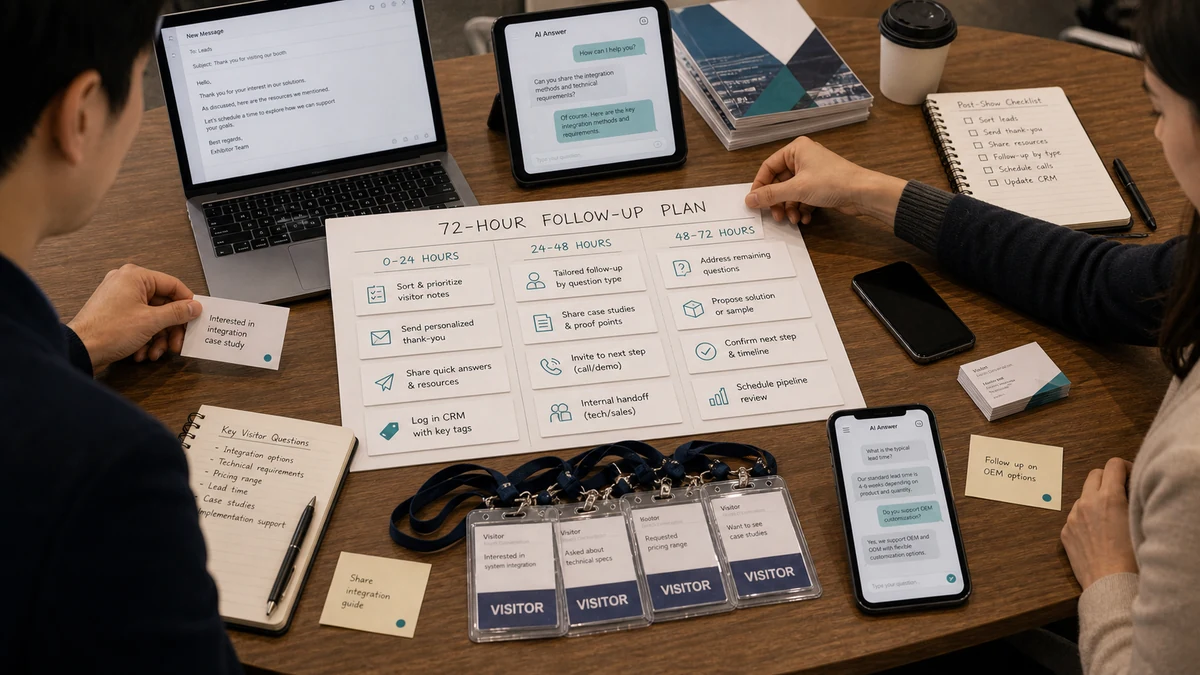
The 72-hour follow-up plan
The team used a simple clock. The first 12 hours were for cleaning notes. The next 12 hours were for sorting questions. The second day was for sending the first useful replies. The third day was for unresolved questions, meeting handoffs, and lessons for the next event.
This matters because booth memory fades quickly. If the team waits a week, the details disappear. The visitor also moves on. A fast but generic reply is not enough. The goal is a timely reply that proves the team listened.
| Time window | What the team does | Why it matters |
|---|---|---|
| 0-12 hours | Clean notes, remove duplicates, attach the visitor question when possible. | Memory is still fresh. |
| 12-24 hours | Sort visitors by question type and owner. | The right person can answer faster. |
| 24-48 hours | Send the first useful replies, not just a generic thank-you. | Visitors still remember the booth. |
| 48-72 hours | Handle unresolved questions, meeting handoffs, and next-show lessons. | The event becomes reusable learning. |
Follow up by question type, not by scan order
A scan order list is easy to export, but it is not a strategy. The visitor who scanned first is not always the visitor who needs the first answer. Question type is a better way to decide follow-up priority.
The team grouped questions into five practical queues: samples and delivery, technical fit, buying process, distribution or partner fit, and general education. Each queue had a different owner and a different first message. This made follow-up faster because no one had to rewrite the same thinking from scratch.
| Question type | First follow-up | Owner |
|---|---|---|
| Sample or delivery | Send sample process, timing, and next step. | Sales or operations |
| Technical fit | Send the technical answer and offer a review call. | Technical sales |
| Buying process | Send price range context, procurement step, or meeting option. | Sales |
| Distributor or partner | Send partner criteria and territory conversation path. | Partnership owner |
| General education | Send a useful guide and keep the relationship warm. | Marketing |
Write follow-up messages that sound human
The first follow-up does not need to be long. It needs to be specific. A good message starts with the visitor's question, gives the answer or next step, and avoids pretending that a real conversation happened if it did not.
The team used a three-line pattern. Line one named the question. Line two gave the useful answer, document, or next step. Line three offered one simple action. For example: “You asked about sample timing for the July project. I attached the sample process and the usual delivery window. If useful, we can review the product fit this week.”
This is not automation for the sake of automation. It is memory protection. The visitor feels that the booth conversation was not lost, and the team avoids sending a cold, generic deck to everyone.
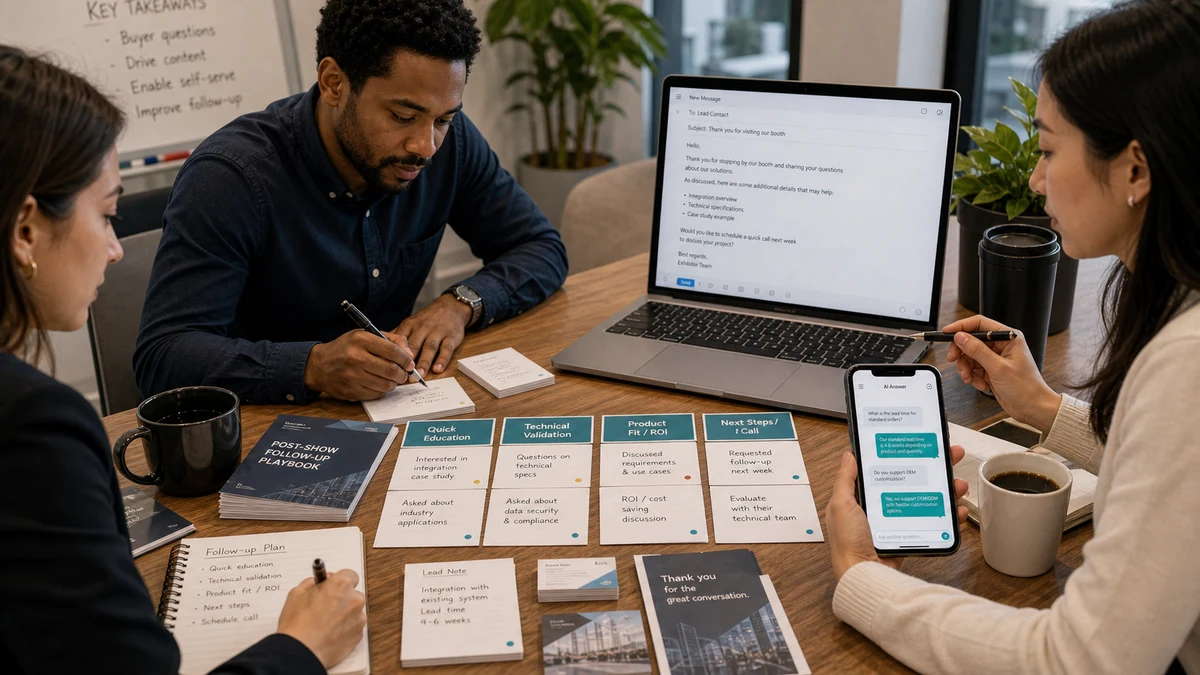
Keep the QR answer page alive after the show
Many visitors scan the booth QR code later, not only at the booth. They may open it from a hotel room, the train, an office desk, or while preparing an internal note. If the QR page dies when the booth closes, the follow-up path breaks.
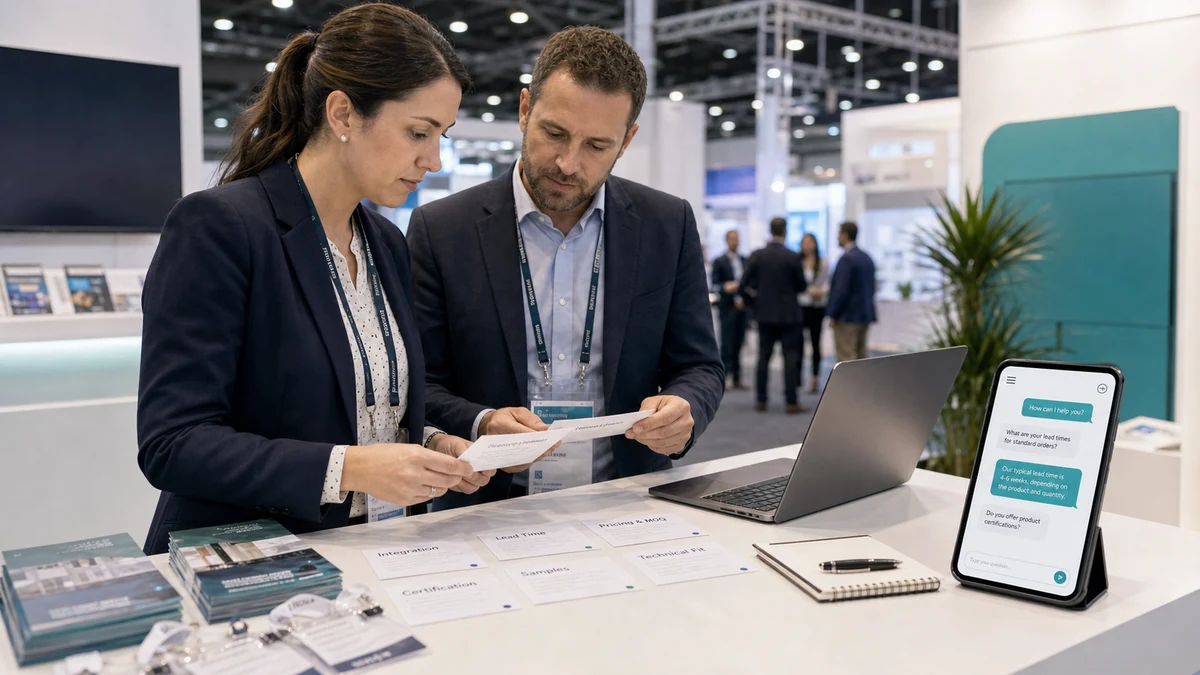
The team kept the QR answer page live for post-show questions. They updated it with the most common event questions, added links to useful documents, and made the next step clear. The page did not replace the sales team. It gave visitors a place to return when they remembered a question after the event.
Turn question patterns into next-show improvements
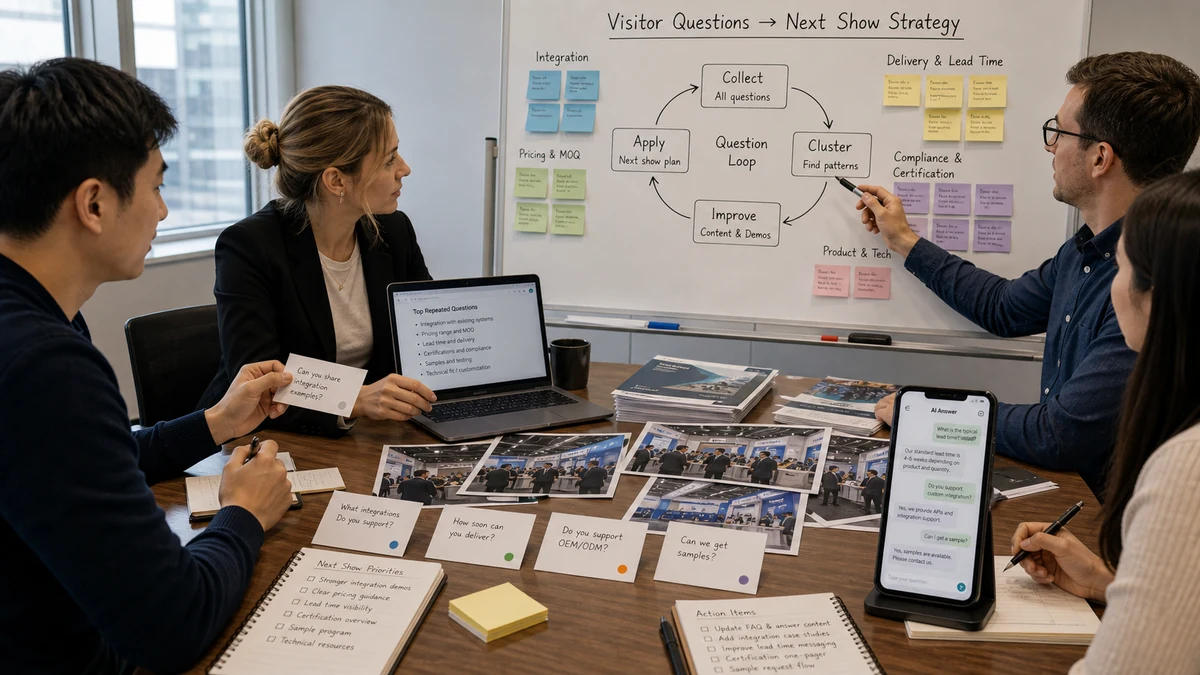
The final step was review. The team did not ask only, “How many leads did we get?” They asked, “Which questions appeared again and again?” Repeated questions are useful because they show where the booth message was unclear or where buyers had real concern.
If many visitors asked the same basic question, the next booth sign should answer it earlier. If many visitors asked for a document, the QR page should make that document easier to find. If technical questions came up before pricing questions, the next event should staff the technical owner earlier in the day.
This is how a trade show strategy becomes cumulative. One event teaches the next event. The booth does not start from zero each time. It starts with a stronger question map, a cleaner answer page, and better follow-up rules.
Local market notes without mixing languages
The 72-hour follow-up should use the language and business style of the market. In Korea, a useful follow-up often mentions minimum order quantity, delivery timing, certificates, samples, and export packaging in plain language. In Japan, internal approval material, technical department review, delivery timing, and personal information handling often need careful wording.
In Germany, evidence, data protection, technical reliability, and structured post-show communication matter. In France, small and midsize business needs, distributor fit, privacy rules, export documents, and natural post-show contact shape the message. The point is not to force foreign terms into every article. The point is to translate the business situation into the reader's language.
Where RealLink AI fits
RealLink AI helps with the part of follow-up that usually gets lost: repeated questions and question patterns. A public AI answer page behind a QR code can stay live after the booth closes. Visitors can return to it, ask common questions, and open documents without waiting for a staff member.
For the team, RealLink AI is not a magic sales claim. It is an operating layer. It helps preserve common questions, reduce repeated explanations, and show which topics deserve better follow-up. Serious negotiation, final pricing, legal review, and sensitive customer judgment still belong to people.
Case-study and privacy note
This is a composite strategy case, not a named customer result or guaranteed performance claim. If contact details, questions, or follow-up preferences are collected, explain the purpose and opt-out path. U.S. teams can review FTC CAN-SPAM guidance and Google people-first content guidance. This article is not legal advice.
Related strategy guides
Part 3 works best with the first two cases and the checklist.
FAQ
What is trade show strategy case study part 3 about?
It shows how to use the first 72 hours after a trade show to turn booth questions into better follow-up.
Why are the first 72 hours important?
The visitor still remembers the booth, and the team still remembers the conversation.
Should every lead get the same email?
No. The first message should reflect the visitor's question and likely next step.
What should stay live after the show?
The QR answer page should stay live so visitors can return, ask questions, and open useful documents.
How does RealLink AI help?
It keeps repeated answers available and helps the team see which questions appeared most often.
Last updated
Last updated: 2026-06-10.
Build the post-show QR answer path
Use RealLink AI to keep repeated questions alive after the booth closes.