
Trade show strategy case study
Trade Show Strategy Case Study Part 2: Turn Booth Flow Into Follow-Up
A simple case study for sorting booth visitors, using a QR answer page, and sending better post-show follow-up.
Summary
Part 2 is about a simple problem: after a busy trade show, most teams cannot remember which visitor mattered most. They have badge scans, business cards, and notes, but the story behind each person is weak. This article shows an easier way to run the booth. Do not treat every visitor the same. Separate people who only browse, people who ask one simple question, people who may become customers, and people who need a same-day handoff. Then connect each group to the right QR answer page, staff response, note, and follow-up message.
Case setup: the booth looked busy, but the team was guessing
The company in this case already had a buyer-question map from part 1. The next problem was deciding what to do with different kinds of visitors during the show.
On the first morning, everyone received nearly the same explanation. A student, a casual researcher, a buyer, a technical evaluator, and a distributor candidate all moved through the same brochure conversation. Staff spent too much time on light interest and sometimes missed visitors with a real project. At the end of the day, the lead list looked full, but the team could not quickly answer one question: who should we contact first?
The fix was not complicated. The booth team agreed to sort visitors by what they asked and what they seemed ready to do next. The strategy changed from “explain everything to everyone” to “listen for the signal, then guide the visitor to the right next step.”
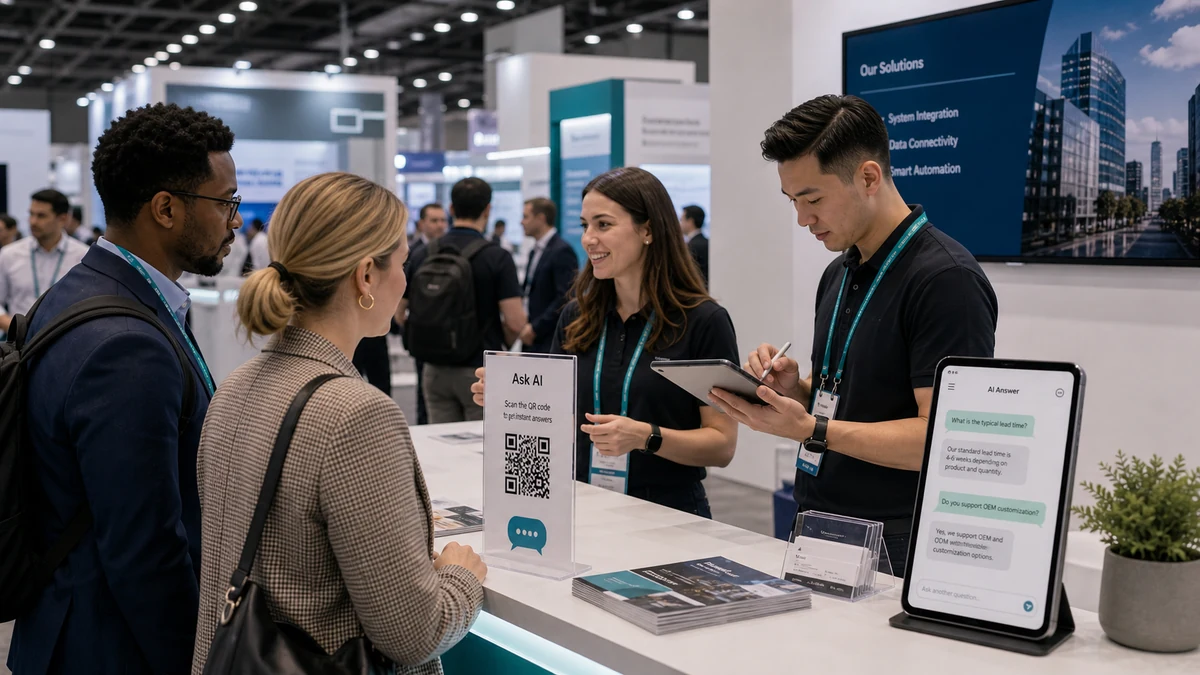
Four visitor groups to separate at the booth
A practical booth flow can start with four simple groups: browser, quick-question visitor, possible customer, and priority handoff.
| Visitor group | Signal at the booth | What staff should do | What happens after the show |
|---|---|---|---|
| Browser | Looks around or scans the QR code without a conversation. | Make the QR answer page easy to find. | Send light educational material if contact was shared. |
| Quick question | Asks one basic question about use, documents, price range, or timing. | Answer briefly and point to the detailed QR answer page. | Send the relevant answer or page link. |
| Possible customer | Has a role, project, timing, budget, or buying reason. | Write down the exact question and next step. | Follow up within 24 to 48 hours with the question in the first line. |
| Priority handoff | Needs a buyer, technical, export, distributor, or sample conversation now. | Pass the person to the right owner during the show. | The owner sends a personal follow-up, not a generic deck. |
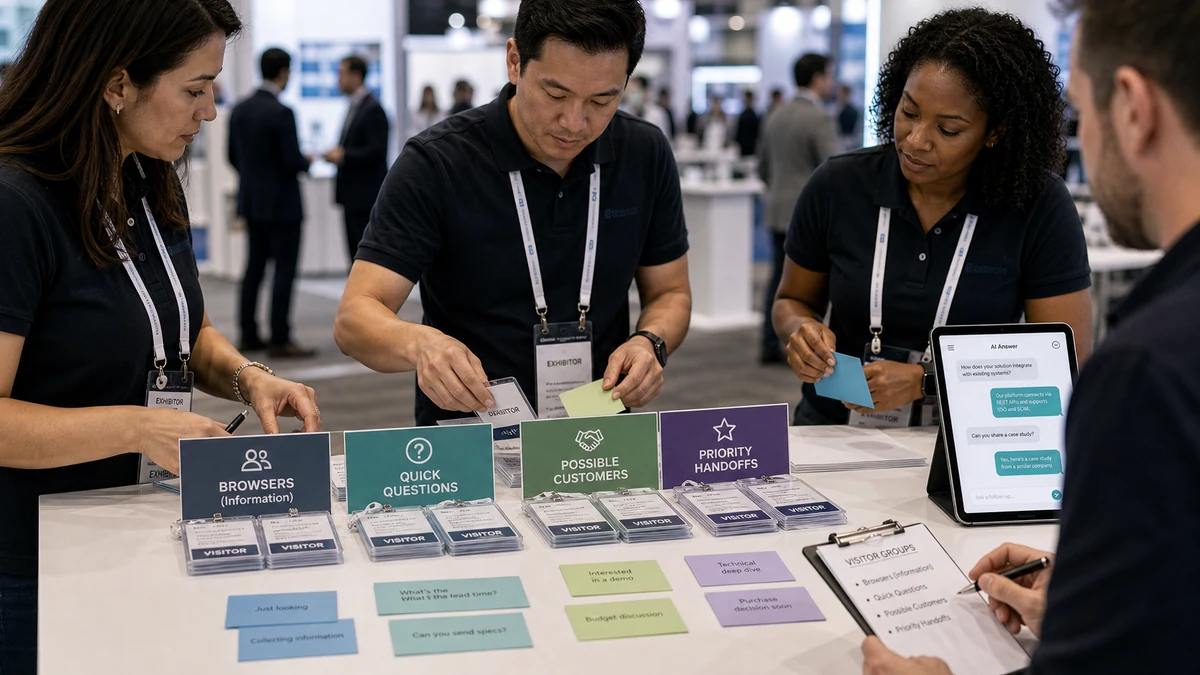
Use questions, not badge scans, to decide priority
A badge scan only proves someone passed by. A question tells you why they stopped.
High-priority visitors ask about a real project, a deadline, a technical requirement, a sample, or a buying process. Medium-priority visitors ask a clear question but are still learning. Low-priority visitors may only want general information. This does not mean low-priority visitors are useless. It means the team should not give every person the same amount of sales time.
This is easier for staff because they do not need to judge personality. They only need to capture the signal. “Can this connect to our current system?” is a stronger signal than “What does your company do?” “Can we receive samples next month?” is stronger than “Do you have a brochure?” The question becomes the sorting rule.
A simple daily rhythm during the event
The team kept the system simple enough to repeat every day of the show.
- Morning: Review yesterday's repeated questions and choose who owns buyer, technical, sample, export, and distributor questions.
- Midday: Check whether visitors are using the QR answer page or asking the same thing again at the counter.
- Before closing: Sort the day's visitors into the four groups while memory is fresh.
- Same day: Send priority visitors to the right person before the team leaves the venue.
- Next morning: Update the booth script, QR answer page, or printed guide based on real questions.
The point is not to create more reporting. The point is to prevent the team from discovering important questions only after the show is over.
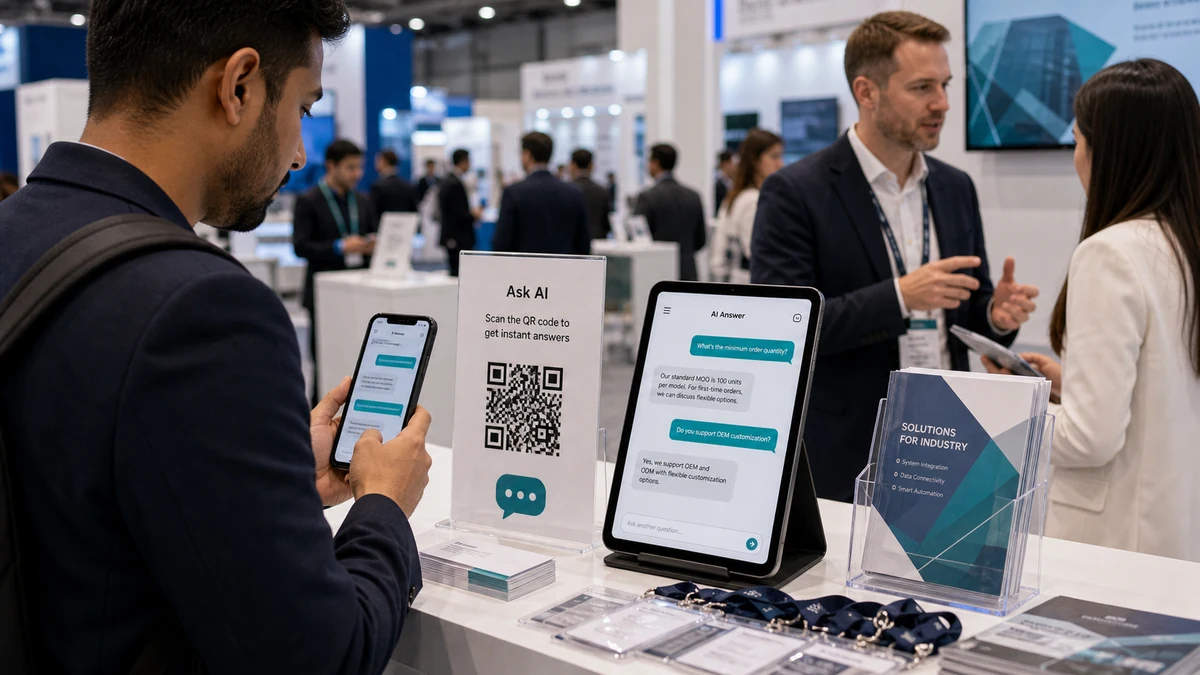
What the QR answer page should do
The QR answer page should handle repeated questions so staff can spend time on visitors who need a real conversation.
The page can answer common questions about use cases, documents, samples, price range, delivery timing, and next steps. It should not pretend to close complex deals by itself. It works best as a clear, public answer point that visitors can open without waiting for staff.
This also helps quieter visitors. Some people do not want a long booth conversation first. They want to read, compare, and then ask a sharper question. The QR page gives them that path, and the team can later see which topics created the most interest.
After the show: turn booth notes into the next message
The follow-up should not start from the same template for every visitor. It should start from the question that made the visitor stop.
A technical visitor should receive a message that mentions the technical question. A buyer should receive timing, sample, or price-range context. A distributor candidate should receive partner criteria. A casual researcher should receive helpful material with a lower-pressure next step. This is the simplest rule in the whole strategy: the visitor's question decides the follow-up.
Local market notes without mixing languages
Visitor signals change by market, so the examples should be expressed in the language of the page.
In Korea, minimum order quantity, delivery timing, certificates, export packaging, and sample timing can show serious buying intent. In Japan, internal approval material, technical department review, delivery timing, and personal information handling often decide whether the next meeting can happen. In Germany, evidence, privacy compliance, technical reliability, and post-show follow-up are strong signals. In France, small and midsize company needs, distributor fit, privacy rules, export documents, and post-show contact shape the follow-up path.
Where RealLink AI fits
RealLink AI gives visitors a public answer page behind a QR code and helps the team keep track of repeated question patterns.
It is useful for repeated answers, multilingual visitors, document links, scans after the show, and simple next-step guidance. It should not replace human judgment for serious negotiations, final pricing, legal review, or sensitive customer issues. Its strongest role is operational: reduce repeated explanations and make it easier to notice serious visitor questions.
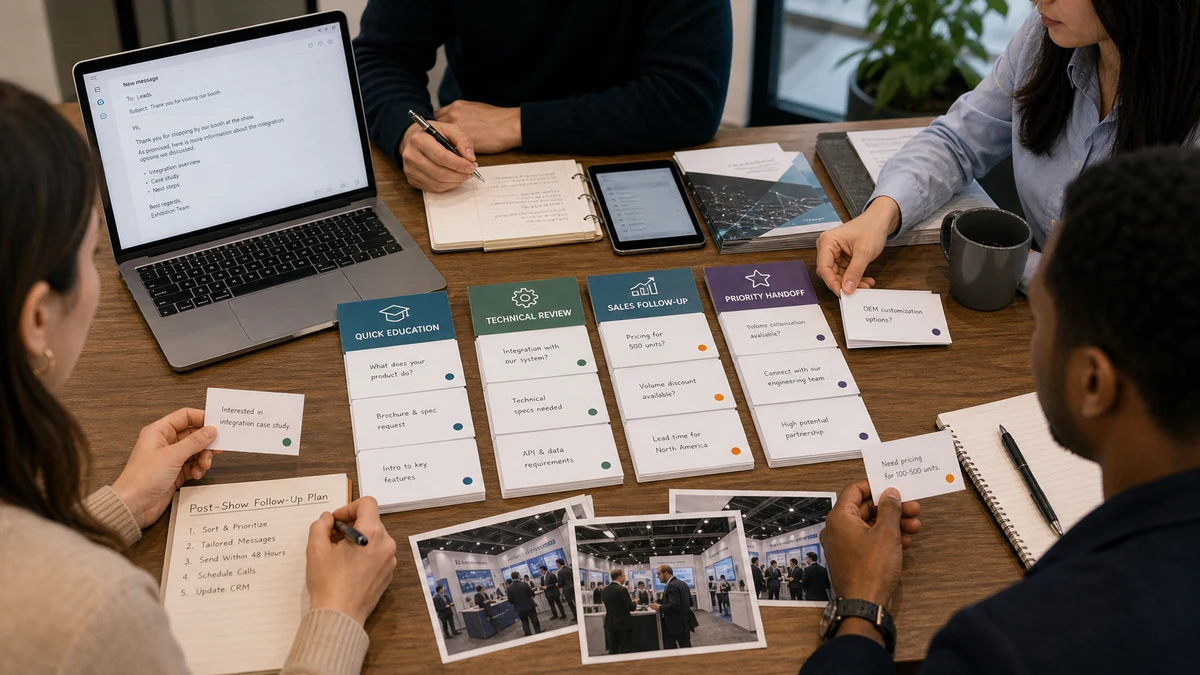
Three field rules that made this easier
The team used three rules that any exhibitor can copy without a complex system.
First, staff wrote down the visitor's exact question, not a vague note such as “interested.” A short question like “Can this connect to our current system?” is enough to guide the right follow-up. Second, the QR code appeared in more than one place: at the first conversation point, near printed material, and at the counter where staff took notes. Third, the first follow-up sentence reflected the question. Instead of a generic thank-you email, the message started with the visitor's topic and offered one next step.
This is why the strategy becomes easier, not harder. The booth does not need to capture everything. It only needs to keep the reason each serious visitor stopped.
Case-study and privacy note
This is a composite strategy case, not a named customer result or guaranteed performance claim. If visitor questions and contact details are collected, explain follow-up expectations and opt-out paths. U.S. teams can review FTC advertising guidance, the FTC CAN-SPAM guide, and Google's people-first content guidance. This article is not legal advice.
Related strategy guides
Part 2 complements part 1, the checklist, and mistake-prevention guide.
FAQ
What is trade show strategy case study part 2 about?
It explains how to sort booth visitors into simple groups and follow up based on what they asked.
How is part 2 different from part 1?
Part 1 maps buyer questions. Part 2 shows how to use those questions during the event and after the show.
What should staff write down?
Write the visitor's exact question, role if known, urgency, and the next step.
Should every visitor get the same follow-up?
No. The first follow-up should match the visitor's question and level of interest.
How does RealLink AI help?
It answers repeated QR questions and helps the team notice which topics visitors ask about most.
Last updated
Last updated: 2026-06-09.
Build the QR answer path for booth flow
Use RealLink AI to answer repeated questions and route serious booth visitors to follow-up.