
Trade show risk and recovery
Trade Show Booth Failure: The Question Gap That Makes Booth Budget Disappear
The nightmare is not an empty booth. It is a busy booth that produces names, smiles, and scans, but no usable buyer context.
TL;DR
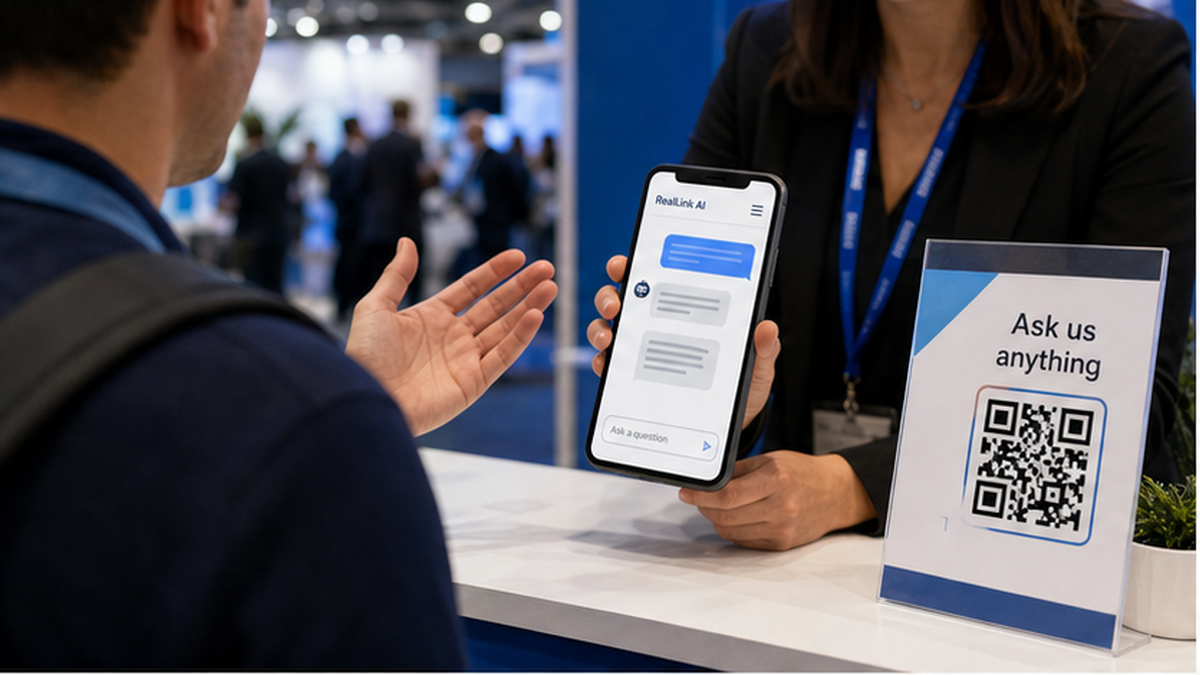
The trade show nightmare is spending booth budget, collecting badge scans, and realizing later that nobody remembers what serious buyers actually asked. Fix it by preparing the questions before the show, giving visitors a QR answer page after the scan, capturing one context note per serious conversation, and following up by question theme instead of sending the same message to everyone.
Key takeaways
| Risk | How to prevent it |
|---|---|
| Badge scans with no memory | Capture the visitor role, question, urgency, and next step. |
| Visitors leave with unanswered doubt | Use a booth-specific QR answer page, not a generic homepage. |
| Staff are too busy to answer basics | Let visitors ask routine questions through a self-service answer point. |
| Follow-up feels cold | Segment follow-up by demo, price, proof, sample, distributor, technical, or timing question. |
The fear: a busy booth that still fails
The most painful trade show failure is not always an empty aisle. It is a booth that looks alive during the event and feels hollow afterward.
The team comes home tired. The scanner exported contacts. The booth photos look good. The sales team has a spreadsheet. But when someone asks, "Which buyers had real urgency?" the room gets quiet. One person remembers a procurement question. Another remembers someone asking about integration. Nobody knows which badge scan matched which question. The follow-up email becomes generic because the context disappeared.
This is the fear exhibitors rarely say out loud: the company paid for the booth, travel, hotel, samples, shipping, printing, and staff time, but the buyer's real doubt evaporated before sales could use it. The booth did not fail because nobody came. It failed because the questions that mattered were not preserved.
Why this happens
The gap appears because exhibitors prepare the booth as a display, while visitors experience it as a decision moment.
Before the show, teams focus on the visible checklist: booth build, banners, catalog, shipment, samples, badges, travel, uniforms, and meeting calendar. Those tasks are necessary. But they do not answer the questions that decide whether a visitor becomes a customer: Is this for my company? What does it cost? Can I trust the claim? How hard is implementation? Who handles my region? What should I send to my technical team? What happens after I scan?
When those questions are not prepared, staff improvise. Improvisation can work when the booth is quiet. It collapses when three people arrive at once, the best technical person is in another conversation, the buyer does not want to talk yet, or the visitor scans the QR code after leaving. That is when a booth needs an answer path that does not depend on perfect timing.
Warning signs before the show
You can often see the failure before the booth opens. Look for the signals that the team has prepared materials but not visitor uncertainty.
- The QR code label says only "Learn more" or "Scan me."
- The QR destination is the homepage, a long PDF, or a generic contact form.
- Staff can explain the product, but cannot agree on the top buyer doubts.
- The lead form captures company and email, but not the question that created interest.
- Follow-up templates are written by attendance status, not question theme.
- Technical, pricing, sample, and distributor questions have no owner.
- No one has decided what to do with after-hours scans.
If three of these are true, the booth may still look professional, but the customer journey is fragile.
5-step rescue plan
The goal is not to scare the team. The goal is to make the invisible risk operational.
- Write the 20 questions you fear most. Include pricing context, proof, implementation, compatibility, sample requests, shipping, distributor terms, procurement, and technical risk.
- Turn those questions into booth zones. Decide which questions belong on signs, which belong in the catalog, which belong in the demo, and which belong after the QR scan.
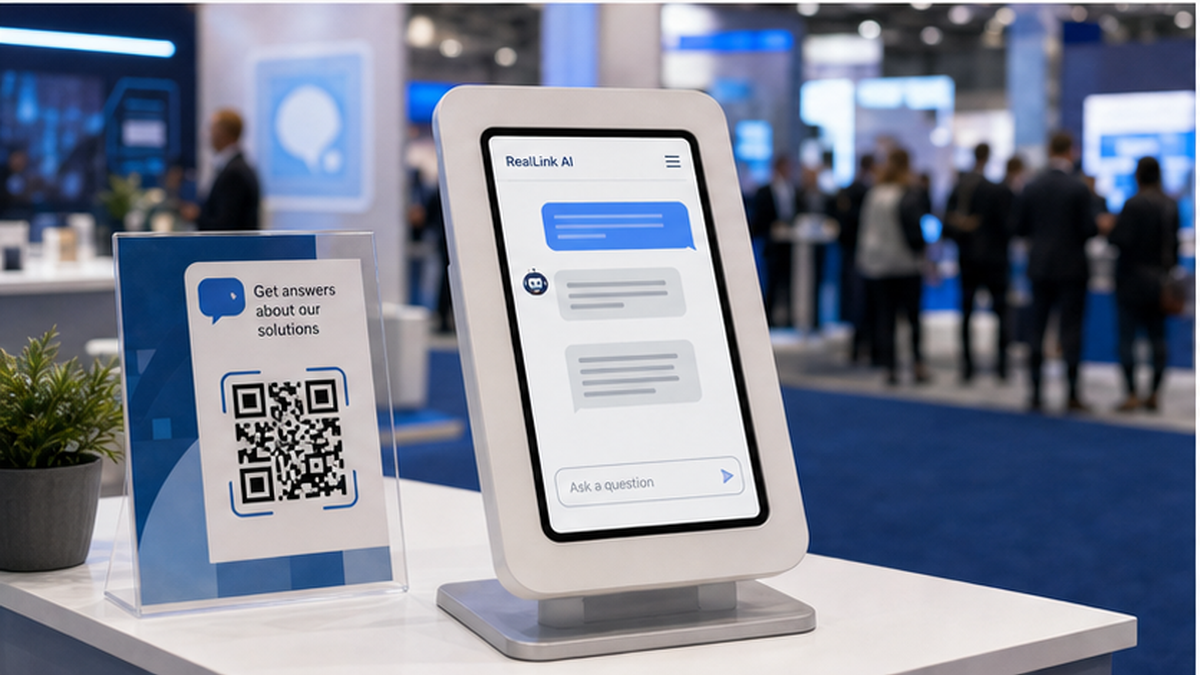
- Create a booth-specific QR answer page. The page should answer approved trade show questions in plain language and route sensitive or final decisions to a person.
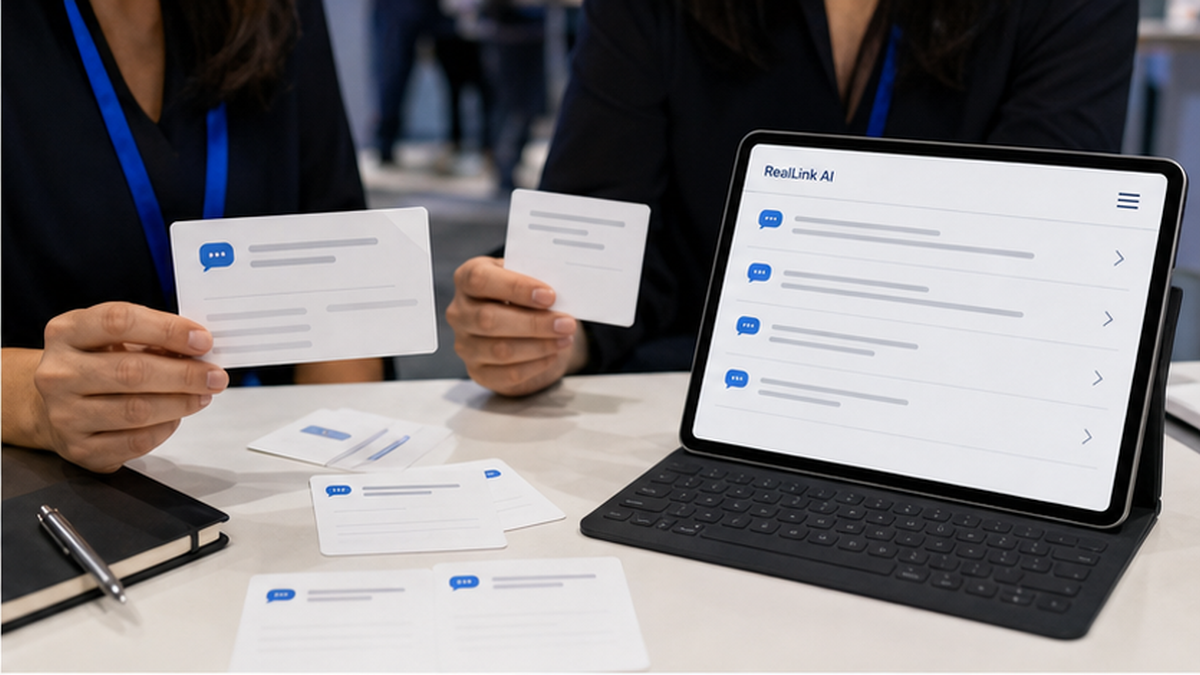
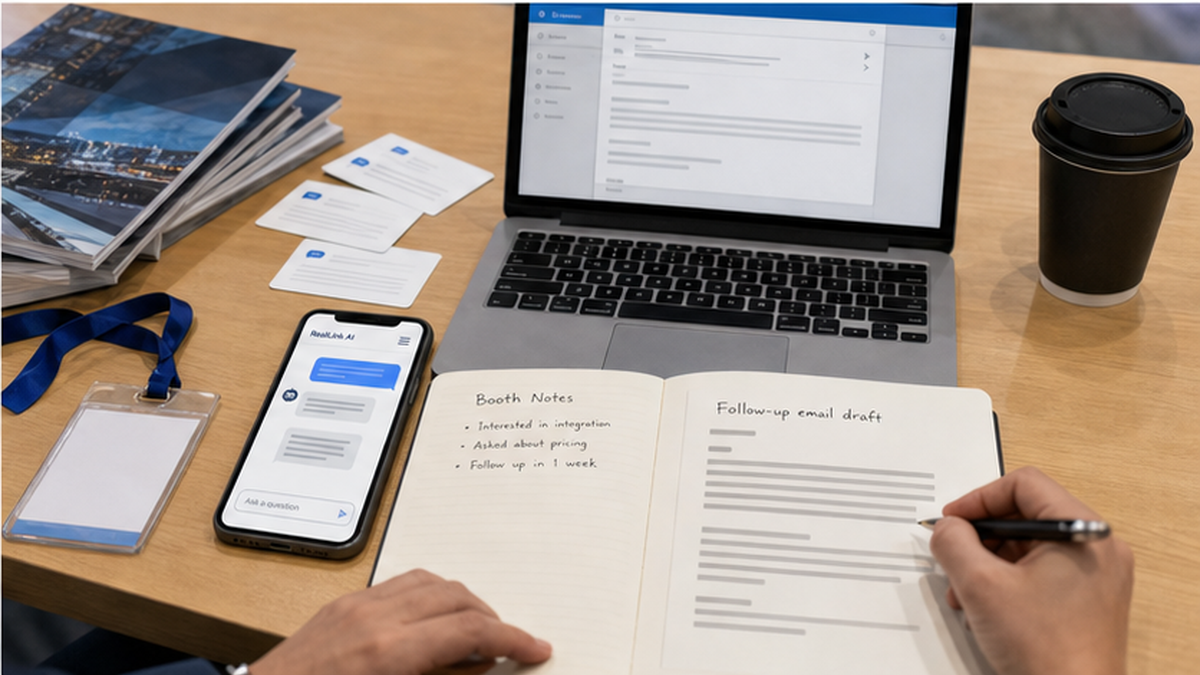
- Capture one context note per serious conversation. A note like "technical buyer, asked about SOC 2 and Salesforce" is stronger than a clean badge scan with no memory.
- Follow up by question, not by attendance. Send the proof, pricing context, sample path, documentation, or meeting request that matches the visitor's actual concern.
What each team member must capture
A booth team does not need long notes. It needs the right minimum context.
The greeter should notice visitor type: buyer, technical evaluator, distributor, partner, student, press, or casual passerby. The product specialist should capture the question: proof, integration, MOQ, certification, implementation, sample, or timing. The sales owner should capture the next step: send documentation, book demo, route to distributor manager, prepare quote, or wait until the visitor's internal meeting. The manager should review repeated questions each day and adjust the booth message while the show is still running.
This small discipline changes the emotional tone of the event. Instead of hoping the booth "felt good," the team can see what buyers were afraid to decide without.
Examples by booth type
B2B software booth
The fear is that visitors like the demo but disappear during security review. Prepare answers for integration, data handling, implementation timeline, and who attends the technical call.
Manufacturing exhibitor
The fear is that procurement asks about MOQ, lead time, certifications, and samples, but the details never reach the right salesperson. Capture product line, region, quantity range, and sample request.
Food or product booth
The fear is that buyers enjoy the sample but never understand case packs, allergen statements, wholesale path, or reorder process. Put these answers behind the QR code and follow up by buyer type.
How to reduce the risk without RealLink AI
You can reduce booth failure without RealLink AI by building a dedicated event landing page, writing a booth FAQ, creating a staff note template, and tagging leads by question type.
This works if the team is disciplined. Print a one-page question map. Put QR labels near each booth zone. Use CRM fields for visitor role, question, urgency, and next step. Review the top repeated questions after each day. The weakness is maintenance: static pages and rushed staff notes often miss the exact question a visitor wanted to ask when the booth was busy.
Where RealLink AI helps
RealLink AI helps by turning the booth QR code into a public AI answer page. Visitors can scan, ask in natural language, receive approved speech-bubble answers, and leave behind question patterns the team can review.
RealLink AI is not a replacement for booth staff. It is the answer layer for repeated, approved, question-heavy moments: pricing context, use cases, sample path, documentation links, multilingual questions, and next-step guidance. Staff still handle trust, demos, negotiations, final quotes, complaints, and sensitive cases.
The quiet conclusion is this: if the scariest trade show risk is losing the buyer's question, the safest preparation is to give every serious question a place to land.
Claim and privacy checks
Fear-based writing should not become fear-mongering. Keep claims truthful, supported, and specific. If you collect contact details for follow-up, tell visitors what they should expect and include unsubscribe or opt-out paths for marketing messages. For U.S. exhibitors, review FTC advertising guidance, the FTC CAN-SPAM guide, and Google's people-first content guidance. This article is not legal advice.
Related trade show guides
Continue the series with practical preparation, success, and follow-up guides.
FAQ
What is trade show booth failure?
It is when a booth creates activity but fails to preserve the visitor questions, proof needs, and next steps that make follow-up useful.
Why are badge scans not enough?
A badge scan identifies a person, but it usually does not capture why they cared, what they doubted, or what should happen next.
What is the question gap?
The question gap is the distance between what visitors need to know and what the booth, QR page, staff notes, and follow-up actually answer.
Can RealLink AI replace booth staff?
No. RealLink AI helps with repeated approved answers and question patterns. Staff still handle trust, demos, negotiation, and sensitive issues.
What should exhibitors do after the show?
Group leads by question theme and send follow-up that continues the visitor’s original concern.
Last updated
Last updated: 2026-06-04.
Create a safer booth answer path
Use RealLink AI to make your booth QR code answer repeated questions and preserve the context your sales team needs after the show.