Tokyo Big Sight preparation checklist
Tokyo Big Sight Exhibitor Checklist: 15 Preparation Tips for Trade Shows in Japan
A pure, non-promotional checklist for exhibitors preparing for Tokyo Big Sight: venue movement, Yurikamome and Rinkai access, booth setup, documentation, Japanese buyer questions, quality proof, localization, staffing, and follow-up.
Summary
A pure, non-promotional checklist for exhibitors preparing for Tokyo Big Sight: venue movement, Yurikamome and Rinkai access, booth setup, documentation, Japanese buyer questions, quality proof, localization, staffing, and follow-up.
Tokyo Big Sight rewards exhibitors who prepare for multi-area movement, detailed Japanese buyer questions, quality proof, local partner concerns, and precise follow-up.

What makes Tokyo Big Sight different for exhibitors
Tokyo Big Sight rewards exhibitors who prepare for multi-area movement, detailed Japanese buyer questions, quality proof, local partner concerns, and precise follow-up.
Tokyo Big Sight is a major exhibition center with 16 exhibition halls, about 300 annual events, 24 conference rooms, and 115,420 square meters of total exhibition area according to its official English site. The venue is served by Yurikamome and Rinkai Line access, which makes it reachable for domestic and international visitors.
The venue can concentrate many buyer types: engineers, procurement teams, distributors, retailers, media, design buyers, food buyers, technology evaluators, and conference attendees. A good booth plan should help each visitor understand the category quickly and then find the right proof.
Japanese buyers may ask detailed questions before they are ready for a sales conversation. Prepare for precision, documentation, trust, local fit, and clean handoff.
15-point Tokyo Big Sight exhibitor checklist
Use this checklist before the show opens: route, message, Japanese proof, staff roles, samples, meetings, and follow-up should be ready before visitors arrive.
This checklist is practical and non-promotional. It does not replace the official exhibitor manual, organizer rules, contractor deadlines, freight instructions, safety requirements, booth construction rules, or privacy requirements.
Run the list at least two weeks before the event, before travel, and the evening before the floor opens. Tokyo events can move quickly, and small preparation gaps can make a serious buyer lose confidence.
If your team is small, combine roles. Do not skip ownership. One person can own several tasks, but every critical item needs a named owner.
- Confirm hall, booth number, entrances, station route, meeting rooms, registration, and service access.
- Write one short location sentence for email, calendar invites, messages, and staff replies.
- Clarify the booth message: category, buyer outcome, strongest proof, and next step.
- Prepare a 20-second aisle explanation and a five-minute evaluation conversation path.
- Group products by category, specification, use case, buyer role, or Japanese market fit.
- Prepare product sheets, specifications, quality proof, test reports, and comparison sheets.
- Prepare Japanese FAQ, labels, packaging notes, manuals, and localization status.
- Mark public documents and review-only documents.
- Assign greeting, qualification, demo, specialist, meeting, interpreter, and note roles.
- Prepare samples, chargers, adapters, displays, demo backups, and restock supplies.
- Build walking buffers for visitors moving between halls or sessions.
- Prepare follow-up templates by product, proof request, localization need, and buyer role.
- Check privacy, badge scanning, consent, photography, and organizer rules.
- Review repeated questions each evening and adjust booth materials before the next day.
- Assign owners for technical proof, Japanese materials, distributor questions, samples, and quotes.

Plan hall movement, stations, and meeting routes
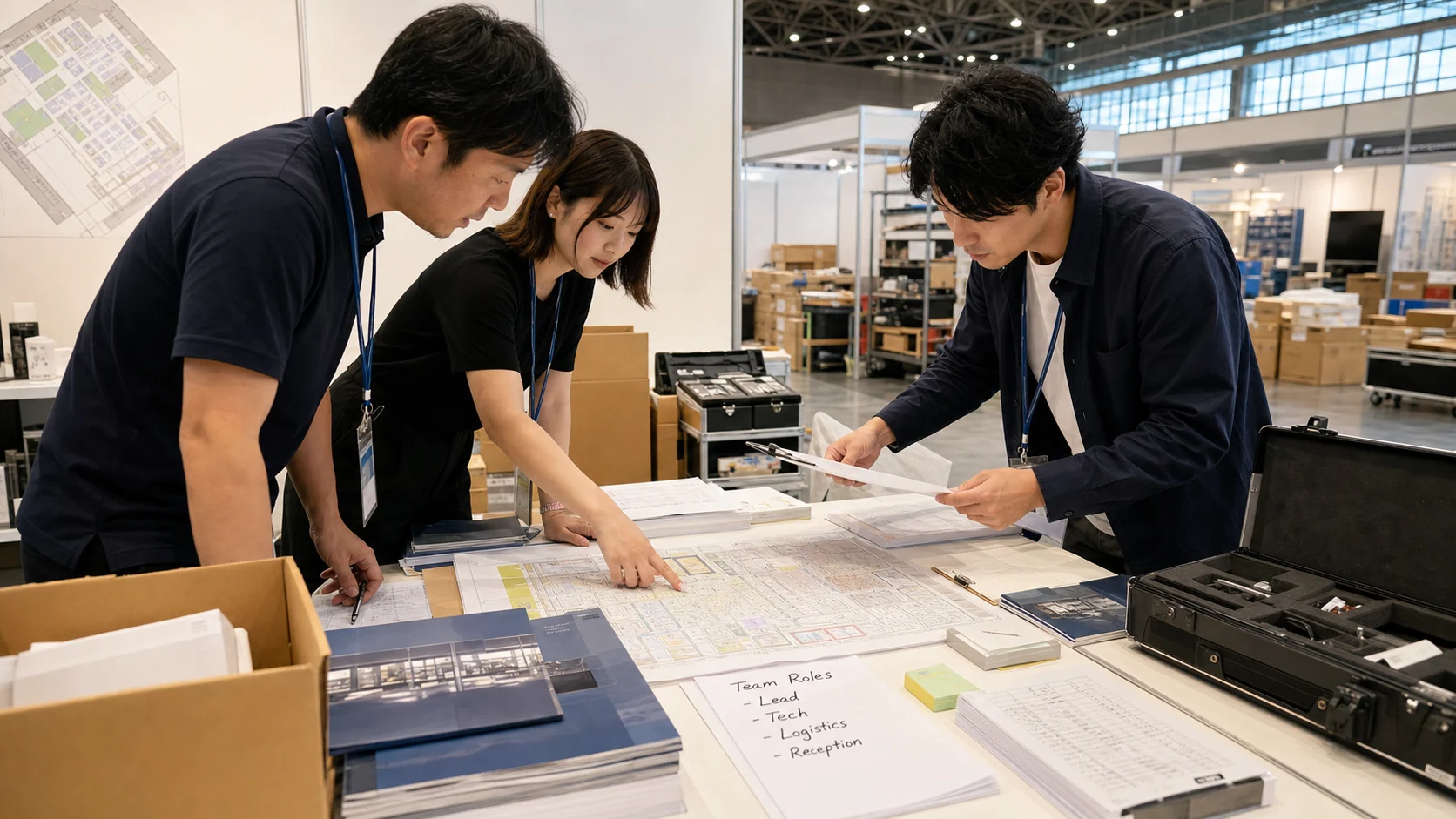
Before writing booth scripts, map how visitors will reach you from Tokyo Big Sight Station, Kokusai-Tenjijo Station, hall entrances, conference rooms, and nearby competitor zones.
Start with the official floor plan and your exact hall and booth number. Mark entrances, station routes, registration, conference rooms, rest areas, food areas, competitor clusters, partner booths, and meeting points.
Write a short location sentence for email, calendar invites, messaging apps, and staff replies. Include the hall, booth, nearby landmark, station route, and backup meeting point.
Build walking buffers into important meetings. Visitors may cross from another hall, finish a seminar late, or bring a colleague. A realistic schedule protects high-value conversations.
Build a booth for detail-oriented Japanese buyer comparison
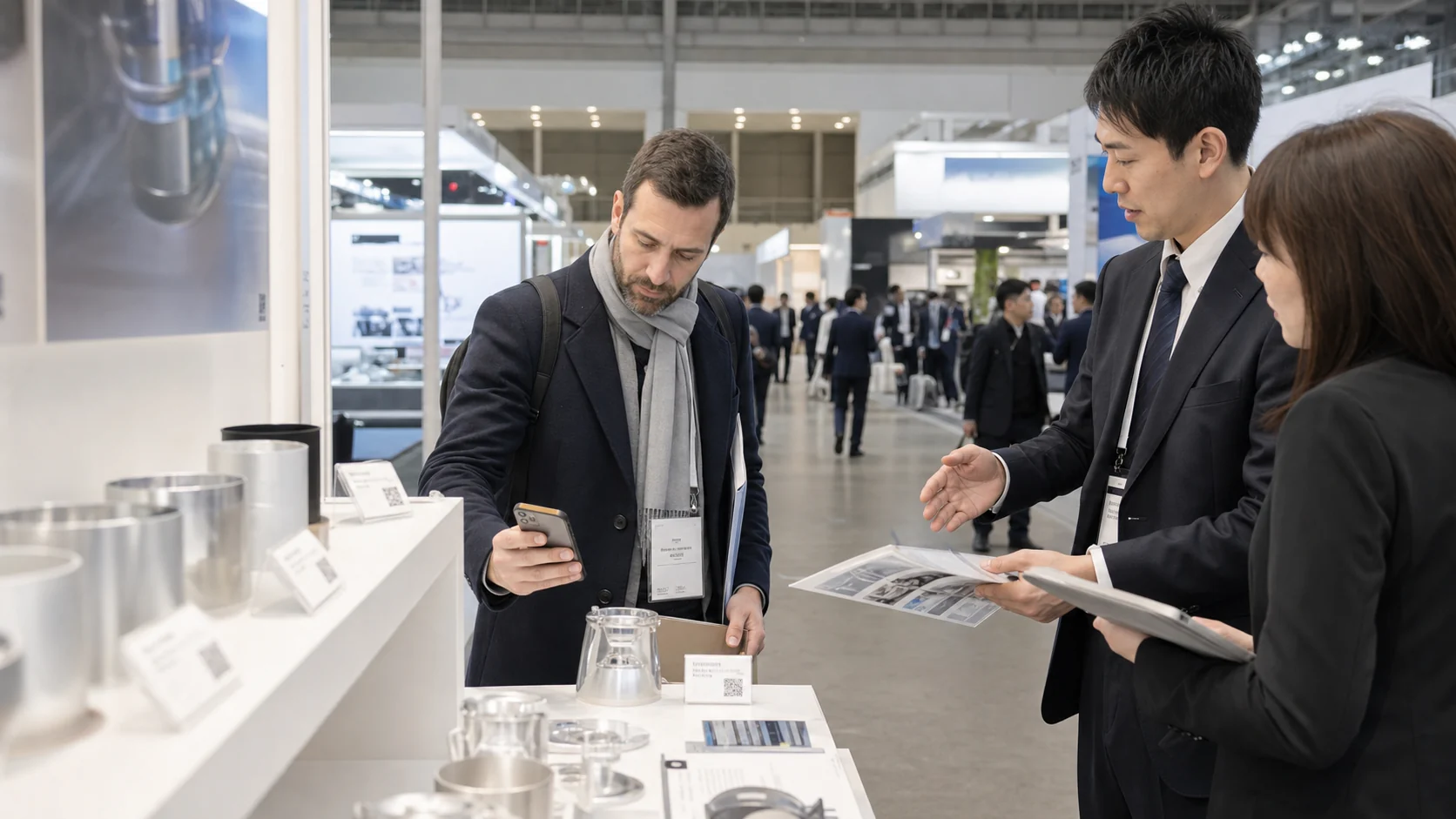
A Tokyo Big Sight booth should explain category, product difference, proof location, and next step before the visitor commits to a long discussion.
Use a clear front message. A visitor should understand the category, buyer outcome, and strongest proof in a few seconds. Avoid internal slogans that do not explain the product.
Create a fast aisle path and a deeper evaluation path. The fast path answers what this is and why it matters. The deep path handles specifications, quality proof, Japanese materials, samples, maintenance, and local partner questions.
Keep the entrance open and the product grouping logical. If the booth is crowded, detail-oriented visitors may leave before asking the question that would have qualified them.

Prepare Japanese documentation, quality proof, and samples
At Tokyo Big Sight, documentation readiness often decides whether a buyer can continue evaluation after the show.
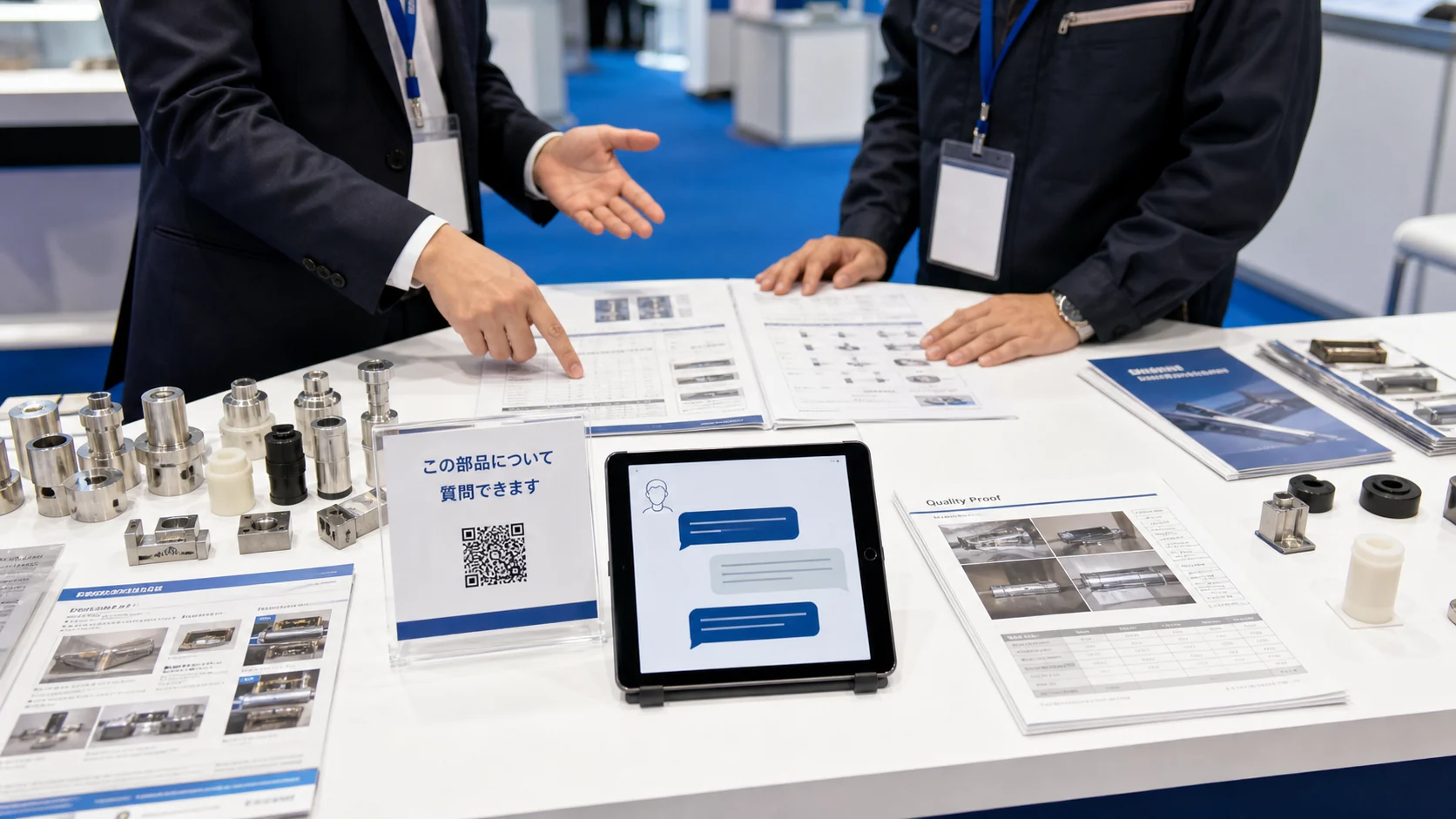
Prepare product sheets, specifications, quality certificates, test reports, sample policy, warranty terms, maintenance process, Japanese FAQ, localization status, distribution notes, quote flow, and delivery constraints.
For industrial or technical products, prepare drawings, compatibility notes, material explanations, spare-parts information, and installation examples. For food, design, or consumer products, prepare label, packaging, ingredient, safety, retail-readiness, and local-distribution materials.
Mark which documents are public and which require NDA, compliance review, technical owner approval, or account approval. Booth staff should know the next step instead of guessing.
Set a staffing rhythm for detailed questions
The staff plan should protect greeting, qualification, interpreter support, specialist access, meeting discipline, and evening review.
Assign greeting, qualification, demo owner, technical specialist, Japanese documentation owner, distributor owner, meeting owner, and note owner roles. Small teams can combine roles, but responsibilities should be clear.
Train the team to ask precise qualification questions: What product are you evaluating? What specification matters? Is the concern quality, localization, delivery, installation, warranty, or partner support? Who reviews the details after the show?
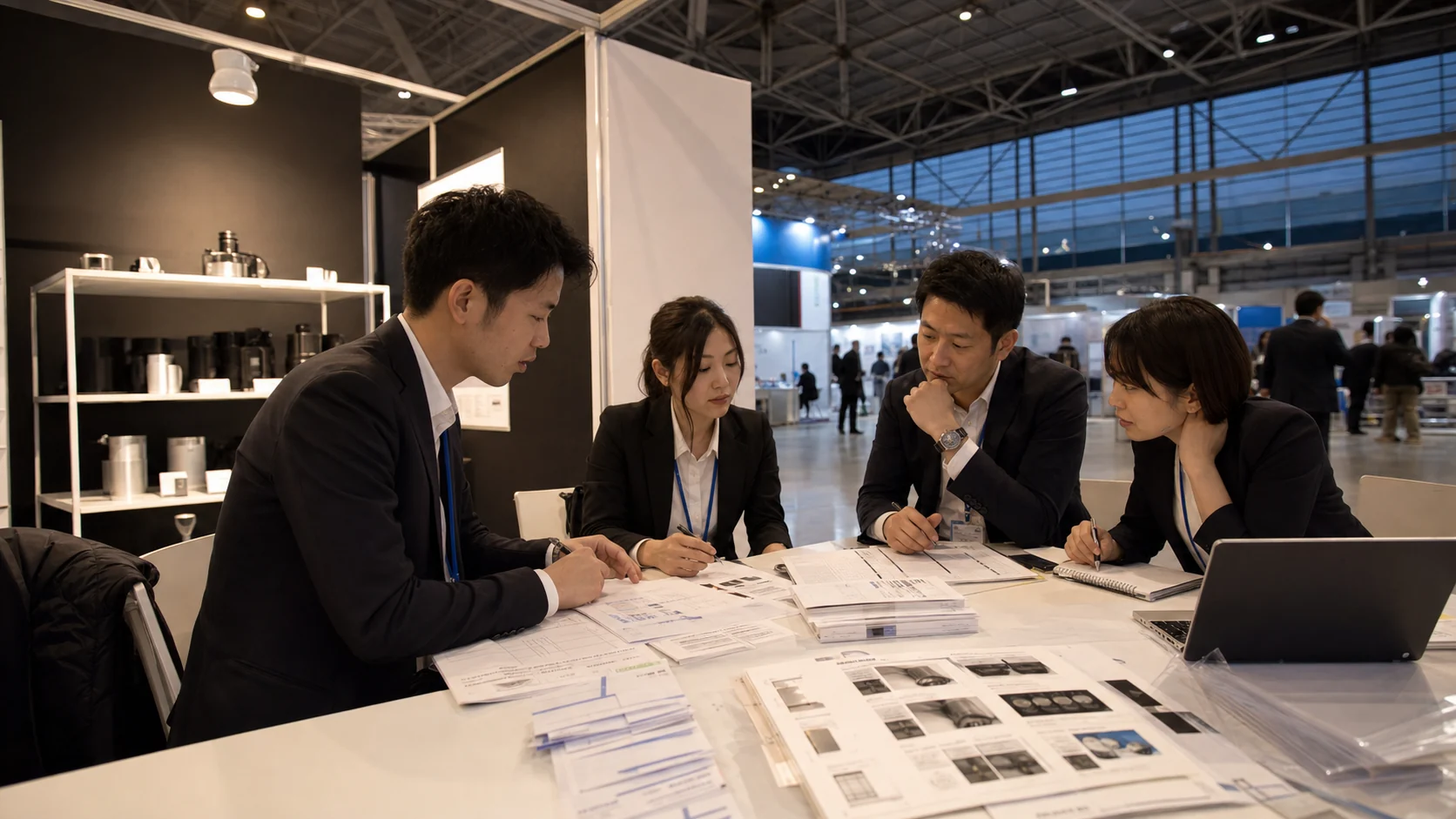
Run a morning briefing and evening debrief. Review scheduled meetings, VIPs, proof documents, repeated questions, missed materials, next-day booth changes, and high-priority follow-up.

Tokyo Big Sight exhibitor mistakes to avoid
Most Tokyo Big Sight mistakes are ordinary preparation gaps that reduce trust: vague positioning, missing proof, weak localization, and flat lead records.
The first mistake is not making the category clear. The second is not preparing detailed proof. The third is assuming English-only material is enough for every conversation. The fourth is letting technical questions depend on whoever happens to be nearby.
Another common mistake is collecting leads without question context. A name and company are not enough. You need product interest, question type, proof request, localization need, owner, and next step.
The final mistake is waiting until the end of the show to learn. Review questions every evening and adjust the booth while the event is still happening.
A simple Tokyo Big Sight success playbook
A strong Tokyo Big Sight plan combines route clarity, proof readiness, Japanese materials, role ownership, daily learning, and question-specific follow-up.
Imagine a manufacturer preparing for Tokyo Big Sight. Two weeks before the event, the team maps station routes, hall entrances, competitor areas, and meeting points. It prepares Japanese FAQ, technical sheets, quality proof, sample policy, and local partner notes.
On day one, the booth front explains the category clearly. The greeter routes traffic. The qualifier asks product, specification, country or market, and proof need. The specialist handles deep technical questions. The note owner records the exact question and next step.
That evening, the team sees repeated questions about Japanese documentation, tolerance, warranty, and local support. The next morning, those answers move closer to the booth front. That is how a checklist becomes better event performance.
Sources and quality note
This guide uses official Tokyo Big Sight and Business Events Tokyo venue references, then turns those facts into practical exhibitor workflow guidance.
Venue context includes the official Tokyo Big Sight hall, access, facilities, and Business Events Tokyo venue profile. Always adapt this guidance to the official exhibitor manual, organizer rules, contractor deadlines, booth construction rules, safety requirements, privacy rules, and document approval workflow.
Tokyo Big Sight official site | Tokyo Big Sight visitor access | Tokyo Big Sight facilities | Business Events Tokyo venue profile | UFI Global Exhibition Industry Statistics
FAQ
What is the most important Tokyo Big Sight exhibitor tip?
Prepare for detailed Japanese buyer comparison, not just booth traffic. Make category, proof, local fit, and next step clear.
How early should exhibitors prepare?
Start at least two weeks before the show, then review before travel and the evening before the floor opens.
What documents should be ready?
Prepare specifications, quality proof, test reports, Japanese FAQ, labels, manuals, sample policy, warranty notes, distributor criteria, and delivery constraints.
How should booth staff be organized?
Assign greeting, qualification, demo, technical specialist, Japanese documentation, meeting, interpreter, and note responsibilities.
Should this checklist replace the official exhibitor manual?
No. Always follow the official exhibitor manual, organizer rules, contractor deadlines, freight requirements, booth construction rules, and safety instructions.
Last updated
Last updated: 2026-06-15.
Next step: turn Tokyo Big Sight booth conversations into a follow-up system
Once the preparation checklist is clear, design how the team will capture country questions, language needs, product proof requests, sample interest, and follow-up priority.