RealLink AI

KINTEX preparation checklist

KINTEX Exhibitor Checklist: 15 Preparation Tips for Korea Trade Shows

A pure, non-promotional checklist for exhibitors preparing for KINTEX: hall movement, KINTEX 1 and 2 planning, access, booth setup, export documents, samples, multilingual buyer support, staffing, logistics, and follow-up.

Summary

A pure, non-promotional checklist for exhibitors preparing for KINTEX: hall movement, KINTEX 1 and 2 planning, access, booth setup, export documents, samples, multilingual buyer support, staffing, logistics, and follow-up.

KINTEX is not only a large hall; it is a multi-hall export venue where exhibitors must manage visitor movement, conference overlap, Korean product proof, samples, and overseas buyer expectations.

KINTEX exhibitor team preparing booth checklist
KINTEX is not only a large hall; it is a multi-hall export venue where exhibitors must manage visitor movement, conference overlap, Korean product proof, samples, and overseas buyer expectations.

What makes KINTEX different for exhibitors

KINTEX is not only a large hall; it is a multi-hall export venue where exhibitors must manage visitor movement, conference overlap, Korean product proof, samples, and overseas buyer expectations.

KINTEX's official exhibition hall overview describes 108,011 square meters of exhibition space across KINTEX 1 and KINTEX 2, with 10 halls, movable partitions, a 100 meter connecting path, large parking capacity, and floor load levels that support heavy equipment in many halls.

That means the practical challenge is not simply building a booth. Your team needs to help visitors find you, understand the product category quickly, compare proof, schedule meetings, remember samples, and continue the conversation after leaving Goyang.

The best KINTEX plan treats the venue as a sequence: pre-show appointment setting, arrival instructions, booth front message, product proof, sample workflow, meeting-room handoff, and post-show follow-up.

KINTEX exhibitor 15-point checklist

Use this KINTEX checklist to prepare the booth, documents, team roles, product proof, samples, logistics, and post-show workflow before visitors arrive.

Start with the basics: hall, booth number, entrance, parking or transit route, meeting location, freight timing, setup deadline, organizer manual, contractor rules, and emergency contact list. Small logistics errors become big problems when the show is large and the team is split across halls.

Then prepare the buyer-facing layer: one sentence that explains who the booth helps, visible product categories, clear sample rules, multilingual documents, proof folders, and a simple route for scheduled buyers who arrive from another hall or conference room.

Finally, prepare the operating rhythm. Assign greeter, qualifier, demo owner, technical owner, export-document owner, sample owner, interpreter or language support, meeting owner, and follow-up owner.

  1. Confirm hall, booth number, KINTEX 1 or 2 location, nearest entrance, parking, transit route, meeting rooms, freight access, and service route.
  2. Write one short location sentence for email, WhatsApp, KakaoTalk, calendar invites, and staff replies.
  3. Clarify the booth message: product category, buyer outcome, export readiness, proof, and next step.
  4. Prepare a 20-second aisle explanation and a deeper five-minute buyer evaluation path.
  5. Group products by application, buyer role, country relevance, specification, or decision stage.
  6. Prepare product sheets, certificates, test reports, sample policy, MOQ range, lead-time range, and distributor material.
  7. Prepare English and priority-market summaries for labels, catalog pages, manuals, safety notes, and FAQs.
  8. Separate public documents from controlled documents that require NDA, technical review, or manager approval.
  9. Assign greeting, qualification, demo, technical proof, document, sample, meeting, language, and follow-up owners.
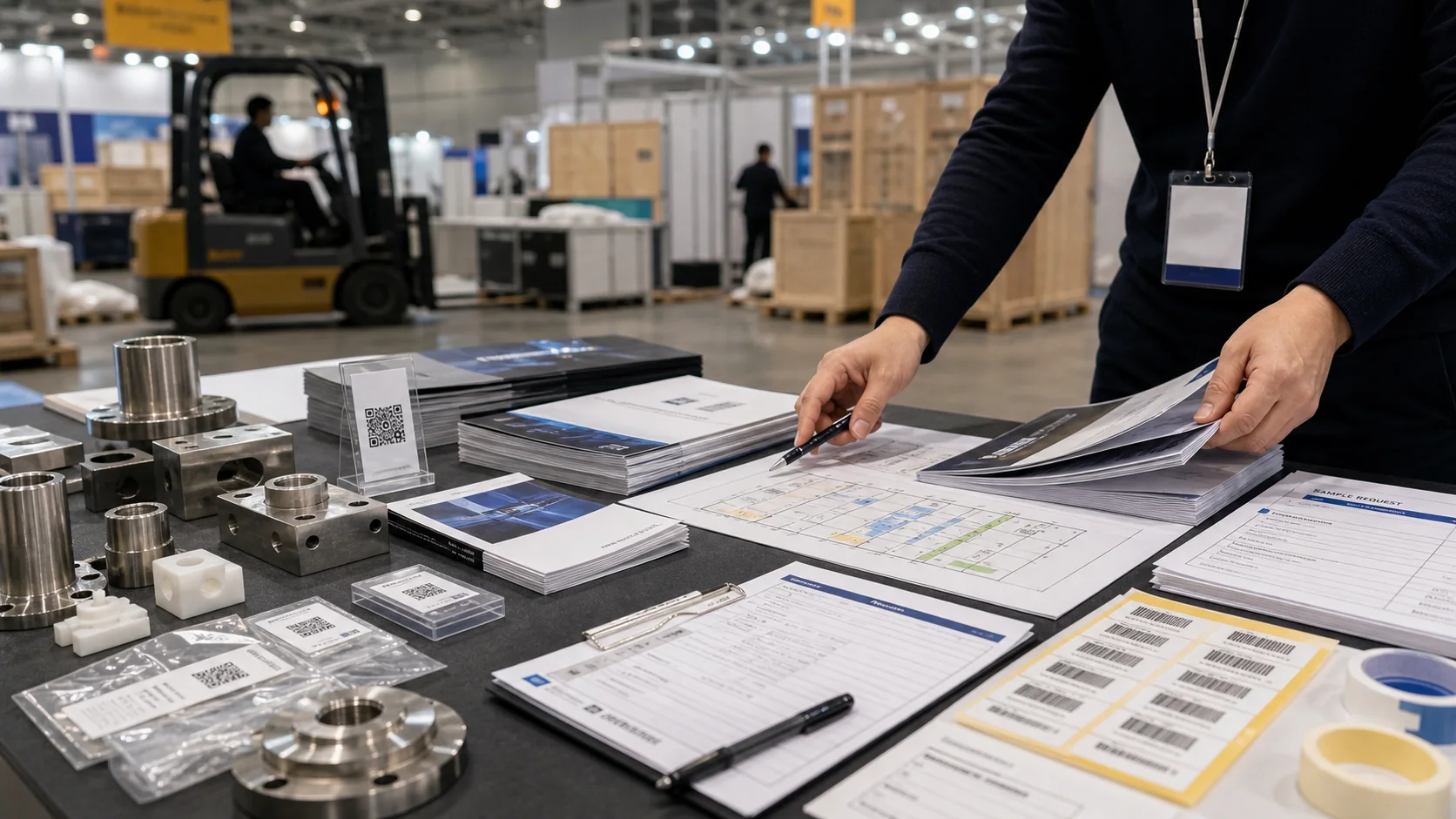
  10. Prepare samples, sample labels, chargers, adapters, demo backups, replenishment items, and storage rules.
  11. Build meeting buffers for visitors moving between KINTEX 1, KINTEX 2, conference rooms, parking, and transit.
  12. Prepare follow-up templates by product, certificate request, sample request, distributor question, and technical question.
  13. Check privacy, badge scanning, consent, photography, organizer rules, contractor deadlines, and safety requirements.
  14. Review repeated questions every evening and adjust booth materials before the next morning.
  15. Assign owners for certification proof, export documents, localization, distributor questions, sample shipping, and quotes.
KINTEX exhibitor 15-point checklist
Use this KINTEX checklist to prepare the booth, documents, team roles, product proof, samples, logistics, and post-show workflow before visitors arrive.

Plan halls, access routes, and meeting movement

A KINTEX floor plan should show the booth, nearest entrances, KINTEX 1 or 2 context, meeting rooms, freight access, parking, public transport route, and backup meeting point.

Do not assume visitors know the venue. Write a short location sentence that staff can paste into email, KakaoTalk, WhatsApp, calendar invites, and LinkedIn messages. Include hall number, booth number, nearby entrance, and a plain landmark.

If your event uses both KINTEX 1 and KINTEX 2, give scheduled buyers more time between meetings. The official site notes a connecting path between the two buildings, but visitors still need to navigate crowds, badge checks, coffee stops, and unfamiliar signage.

For international buyers, include public transport and taxi instructions in simple language. If the buyer is carrying samples or product documents, also explain where to meet and how to avoid unnecessary walking.

Build a booth for export-buyer decisions

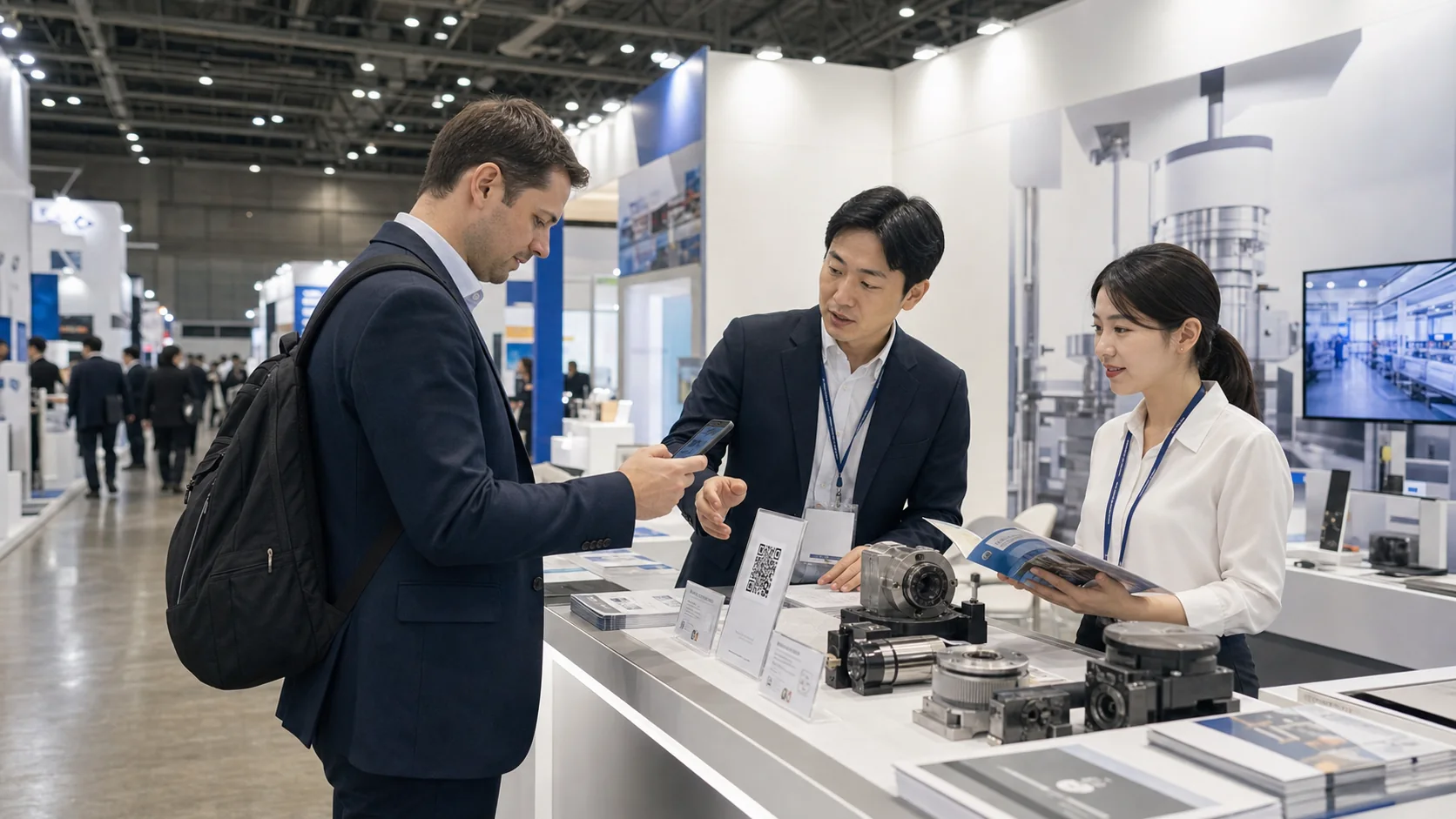
A KINTEX booth should make the product category, export readiness, proof, sample rules, and next step understandable within the first 20 seconds.

Many KINTEX visitors are comparing Korean suppliers. The booth front should not rely only on a brand logo. Use category labels, use-case labels, country-ready claims that can be proven, and visible product groupings so a visitor can decide whether to stop.

Prepare two conversation depths. The first is a 20-second aisle explanation: who the product is for, what outcome it creates, and what proof is available. The second is a five-minute evaluation path: specification, certificate, sample, MOQ, delivery, localization, and next meeting.

If you sell multiple product lines, do not let every product fight for the same attention. Group by buyer role, application, country relevance, or decision stage. This helps staff qualify faster and helps visitors remember what they saw.

Build a booth for export-buyer decisions
A KINTEX booth should make the product category, export readiness, proof, sample rules, and next step understandable within the first 20 seconds.

Prepare export documents, samples, and multilingual materials

KINTEX exhibitors should prepare product sheets, certificates, sample policy, MOQ and lead-time ranges, labels, manuals, safety notes, and approved case examples before the show opens.

A strong booth can lose momentum if documents are not ready. Prepare English product sheets, certificate summaries, test reports, ingredient or material notes, warranty terms, installation notes, distributor criteria, sample rules, and quote workflow before the first visitor arrives.

Separate public documents from controlled documents. Booth staff should know what can be shown immediately, what can be emailed after approval, and what requires an NDA or technical owner. This prevents accidental over-sharing and slow follow-up.

For K-beauty, K-food, consumer goods, industrial products, and technology, translation quality matters. Even a short English, Japanese, Chinese, Arabic, or market-specific summary can improve trust if it is accurate and tied to the right product.

Run the team around repeated buyer questions

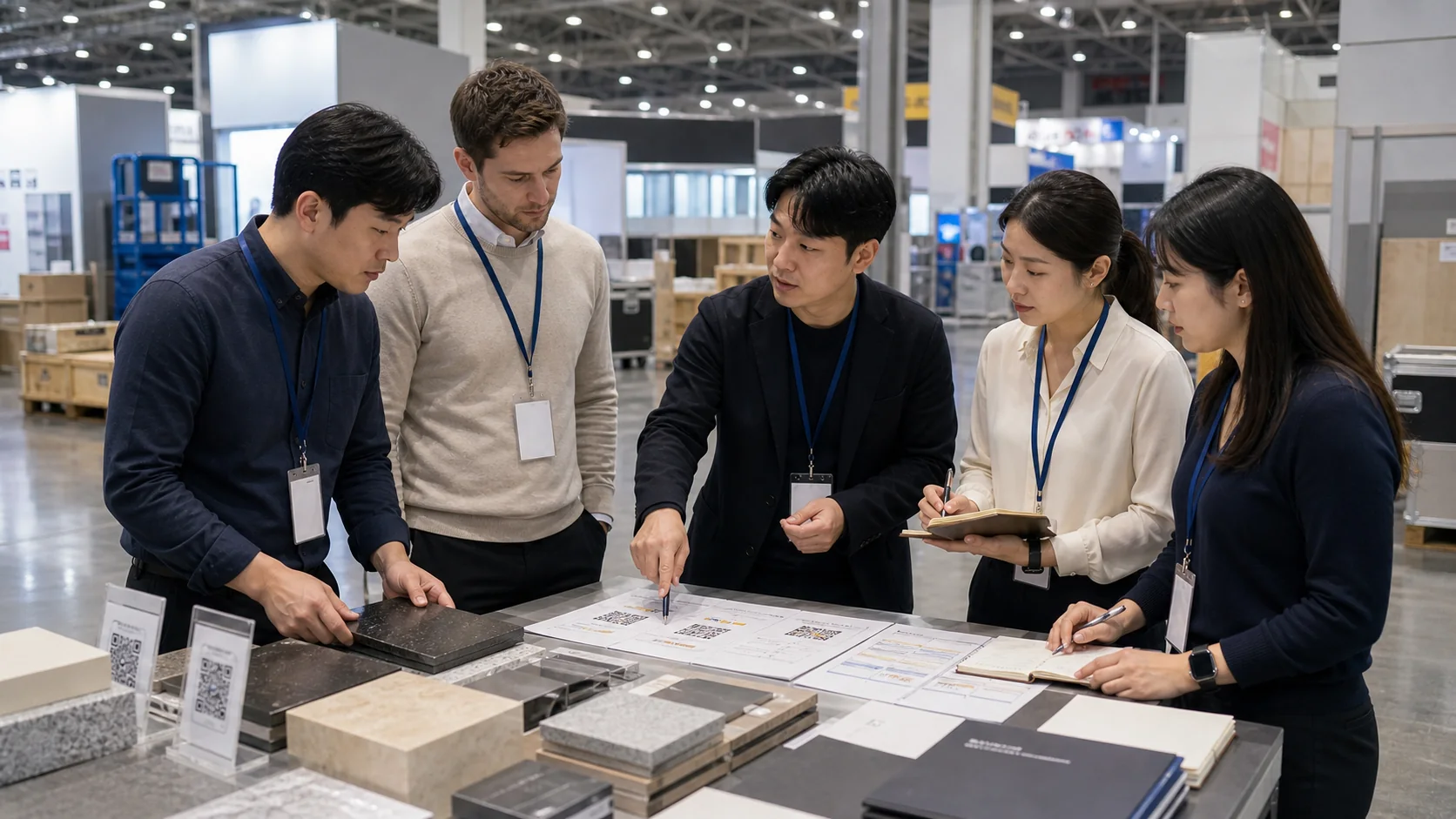
KINTEX staffing works best when each person owns a role: greeting, qualification, demo, technical proof, documents, language support, samples, meetings, and follow-up.

Do not let every staff member answer every question from memory. Give each person a lane. One person handles quick qualification. One handles demos. One handles product proof. One manages samples. One manages scheduled meetings. One watches repeated questions and missing materials.

Hold a short briefing before doors open. Review the daily target buyers, priority products, proof limits, sample rules, meeting schedule, language needs, and escalation rules. Repeat the briefing at the end of the day with actual questions from visitors.

When a question repeats, change the booth. Move the answer closer to the front, add a small card, adjust the demo script, prepare a faster document handoff, or route that question to the right specialist.

Run the team around repeated buyer questions
KINTEX staffing works best when each person owns a role: greeting, qualification, demo, technical proof, documents, language support, samples, meetings, and follow-up.

KINTEX exhibitor mistakes to avoid

Common KINTEX mistakes include vague booth messages, missing English proof, unclear sample rules, weak location instructions, no meeting buffer, and generic post-show follow-up.

The first mistake is assuming brand recognition will do the work. At a large venue, visitors are scanning quickly. If the booth does not explain the category and outcome immediately, qualified buyers may walk past.

The second mistake is treating samples as casual giveaways. Samples should have a policy, tracking, product name, contact route, and follow-up owner. Otherwise the sample leaves the booth but the buyer's question does not return.

The third mistake is sending the same thank-you email to every lead. KINTEX follow-up should match the question: certificate, sample, MOQ, label, installation, distributor, OEM/ODM, or technical proof.

A simple KINTEX booth success playbook

The safest KINTEX playbook is to prepare location, proof, staff roles, sample flow, daily question review, and follow-up lanes before the show starts.

Two weeks before the event, lock the booth message, product categories, proof folders, multilingual summaries, sample policy, staff roles, and meeting calendar. One week before the event, test the route instructions, demo backups, document access, and follow-up templates.

On setup day, walk the route like a visitor. Check signage, entrances, booth visibility, meeting point, storage, power, internet, sample location, and staff briefing space. If a buyer cannot find the booth or understand the first message, fix it before opening.

During the event, review repeated questions every evening. The next morning, move the answer forward, adjust the script, assign owner follow-up, and prepare the documents that visitors kept asking for. That is how a checklist becomes better results during the show.

Sources and quality note

This guide uses official KINTEX exhibition hall, conference room, directions, and event references, then turns those facts into practical exhibitor workflow guidance.

Venue context includes the official KINTEX exhibition hall, conference room, directions, and event information. Always adapt this guidance to the official exhibitor manual, organizer rules, contractor deadlines, booth construction rules, safety requirements, privacy rules, and document approval workflow.

FAQ

What is the most important KINTEX exhibitor tip?

Do not prepare only for traffic. Prepare for export-buyer decisions: location, product category, proof, samples, documents, staff roles, and follow-up.

How early should exhibitors prepare?

Start at least two weeks before the event, then re-check route instructions, documents, samples, and staff roles before setup day.

What documents should be ready?

Prepare product sheets, certificates, test reports, sample policy, MOQ, lead time, export document notes, multilingual summaries, distributor criteria, and approved case examples.

How should KINTEX staff be organized?

Assign roles for greeting, qualification, demo, technical proof, documents, samples, language support, meetings, and follow-up ownership.

Does this checklist replace the official exhibitor manual?

No. Always follow the official exhibitor manual, organizer rules, contractor deadlines, booth construction rules, freight guidance, privacy rules, and safety requirements.

Last updated

Last updated: 2026-06-15.

Next step: turn KINTEX booth conversations into a follow-up system

Once the preparation checklist is clear, design how the team will capture country questions, language needs, product proof requests, sample interest, and follow-up priority.

Read the KINTEX buyer-question guide