Venue-based exhibitor question capture
Tokyo Big Sight Exhibitor Guide: Capturing Detail-Oriented Product Questions from Japanese Buyers
A practical guide for exhibitors at Tokyo Big Sight who need to turn booth traffic, product demos, catalog scans, quality questions, localization concerns, and Japanese buyer detail into usable intent data.
Summary
A practical guide for exhibitors at Tokyo Big Sight who need to turn booth traffic, product demos, catalog scans, quality questions, localization concerns, and Japanese buyer detail into usable intent data.
At Tokyo Big Sight, the strongest lead signal is often the detailed product question: specification, quality proof, localization, maintenance, delivery, or local partner readiness.

Why Tokyo Big Sight exhibitors should think beyond booth traffic
At Tokyo Big Sight, the strongest lead signal is often the detailed product question: specification, quality proof, localization, maintenance, delivery, or local partner readiness.
Tokyo Big Sight is one of Japan's leading exhibition centers. Its official English site describes 16 exhibition halls, about 300 events per year, 24 conference rooms, and 115,420 square meters of total exhibition area. Business Events Tokyo also presents it as a major venue with 16 exhibition halls and 24 conference facilities.
That scale matters because visitors may compare suppliers across East, West, South, and conference areas, then review details later from a catalog or internal meeting. A badge scan can tell you who visited; it cannot tell you whether the buyer worried about tolerance, material, Japanese labeling, installation, warranty, distribution, or after-sales support.
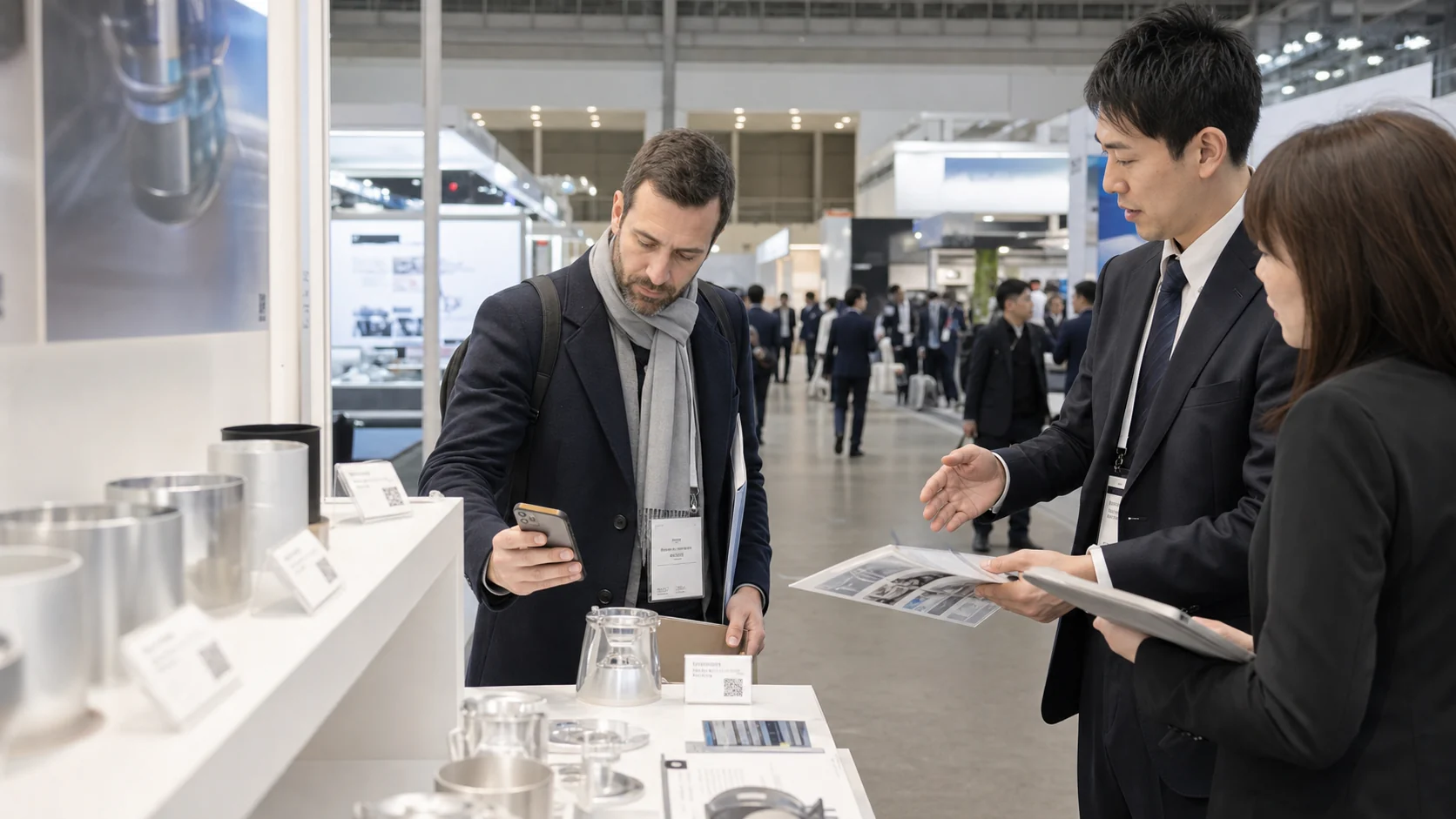
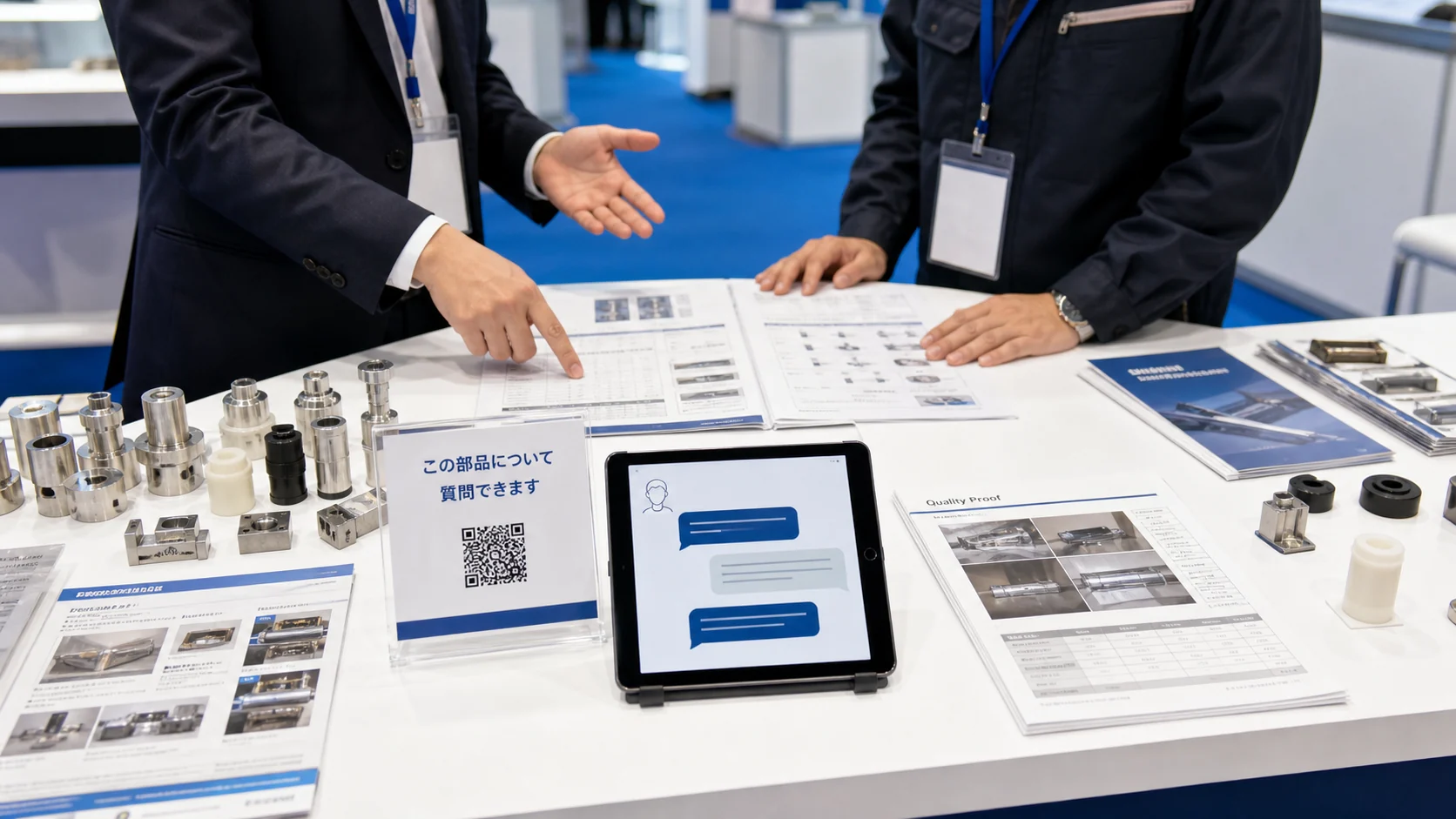
The practical goal is to keep the question attached to the lead. Booth QR, product QR, catalog QR, sample QR, spec-sheet QR, and meeting follow-up QR should preserve what the visitor was trying to verify.
Where buyer questions disappear at Tokyo Big Sight
Tokyo Big Sight questions disappear when detailed Japanese buyer concerns are split between booth demos, product sheets, interpreter notes, catalog review, and post-show internal comparison.
Tokyo Big Sight is easy to reach by Yurikamome and Rinkai Line, and official access information notes approximate walking times from Tokyo Big Sight Station and Kokusai-Tenjijo Station. That accessibility increases mixed traffic: scheduled buyers, casual visitors, press, distributors, engineers, retail buyers, and conference attendees.
The question leak happens when the first conversation is too quick. A visitor asks for a detail, receives a paper catalog, and leaves. Later, the sales team has the name but not the exact issue. Was it product tolerance, food ingredient detail, warranty, local certification, Japanese instruction material, or distributor support?
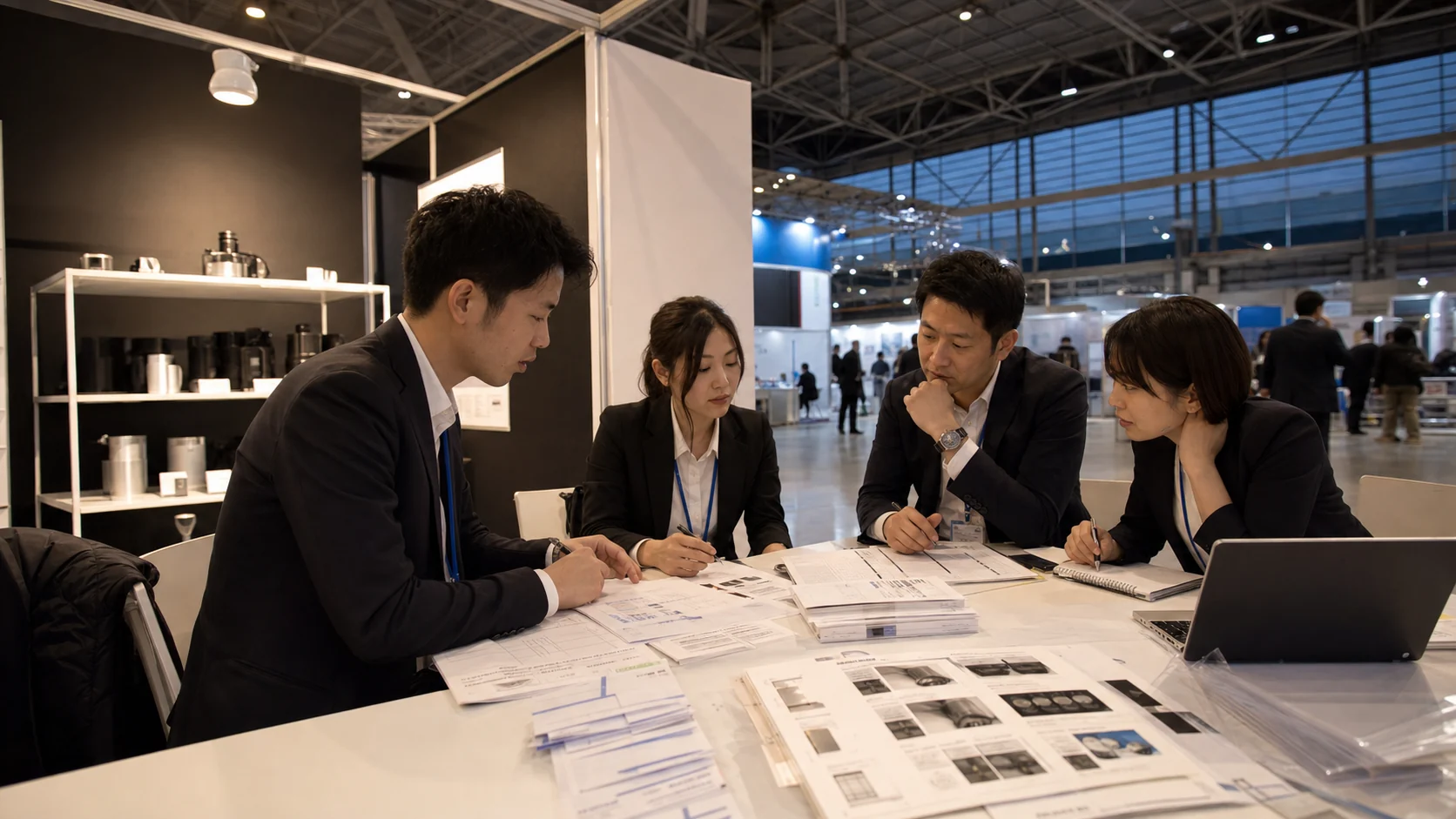
The leak is especially serious when a translator, technical specialist, and sales person each remember a different part of the conversation. One structured question record is more useful than three partial memories.

Best QR placements for Tokyo Big Sight exhibitors
The best Tokyo Big Sight QR map separates booth entry, product display, spec sheet, demo station, sample, Japanese FAQ, distributor packet, and meeting follow-up.
A single homepage QR is too broad for detail-oriented Japanese buyers. If a visitor scans beside a product, the answer page should know the product. If a buyer scans a spec sheet, the follow-up should know the specification category. If a local partner scans a distributor packet, the sales team should know that the visitor was not only browsing.
Use QR points where decisions happen: product labels, catalog product pages, demo monitors, sample packaging, technical proof binders, quality documents, Japanese-language FAQ cards, meeting room handouts, and post-show emails.
Each QR should answer something useful immediately. The scan should reduce friction for the visitor and preserve buyer intent for the team.
Buyer questions Tokyo Big Sight exhibitors should capture
The most valuable Tokyo Big Sight lead signals often involve specification detail, quality proof, Japanese localization, local partner fit, delivery reliability, and after-sales support.
Before the event opens, define the questions your team expects. Tokyo events can attract buyers who compare product detail carefully. A short product pitch is not enough when the visitor needs evidence, precision, materials, process, compliance, maintenance, or Japanese documentation.
Technology buyers may ask about integration, data handling, implementation timeline, and local support. Industrial buyers may ask about tolerance, durability, maintenance, spare parts, and test reports. Food, design, and consumer product buyers may ask about labeling, packaging, ingredients, retail readiness, and local distribution.
Treat those questions as lead signals. A visitor asking for a Japanese manual or local repair process is often deeper in evaluation than a visitor who only takes a brochure.
| Question category | Example buyer question | What it reveals |
|---|---|---|
| Specification detail | What is the tolerance, material, capacity, or compatibility? | Technical evaluation is active. |
| Quality proof | Can you share a test report, inspection process, or warranty detail? | The buyer needs trust evidence. |
| Localization | Do you have Japanese labels, manuals, packaging, or support? | Market-entry readiness matters. |
| Local partner | Do you already work with a distributor, installer, or service partner in Japan? | Channel fit may decide next steps. |
| Post-show review | Can you send the exact spec sheet after the show? | The buyer is comparing internally. |

Question-matched proof checklist
A useful Tokyo Big Sight follow-up matches proof to the question: spec sheets for technical questions, test reports for quality questions, Japanese materials for localization questions, and partner documents for distribution questions.
Prepare proof before the booth opens. Japanese buyers may expect precise answers, clear documents, consistent terminology, and trustworthy next steps. If the team cannot explain where the evidence lives, the opportunity loses momentum.
Prepare product specifications, test reports, material notes, comparison sheets, warranty terms, maintenance process, sample policy, Japanese FAQ, local partner notes, shipping and delivery constraints, and approved case examples.
Separate public proof from controlled proof. Some documents can be shown at the booth. Others may require NDA, legal review, or technical owner approval. The follow-up workflow should make that clear.
- Product specifications, tolerances, drawings, materials, compatibility notes, and comparison sheets.
- Quality certificates, test reports, inspection process, warranty terms, and case examples.
- Japanese FAQ, labels, packaging notes, instruction materials, safety notes, and localization status.
- Local partner, distributor, installer, service, maintenance, and spare-parts information.
- Sample policy, quote workflow, delivery lead time, meeting owner, and approved follow-up materials.
Post-show follow-up using buyer questions
After Tokyo Big Sight, follow-up should be prioritized by question depth, proof request, Japanese localization need, product category, technical owner, and local partner fit.
A generic thank-you message is weak after a detail-heavy Tokyo conversation. The first follow-up should reference what the visitor asked: specification, quality report, Japanese label, installation, maintenance, warranty, delivery, distributor terms, or demo comparison.
Segment leads into practical lanes. Technical detail goes to specialists. Quality proof goes to product or compliance owners. Localization requests go to marketing or Japan-market owners. Distributor questions go to channel owners. Sample and quote questions go to sales operations.
Late catalog scans are useful. A visitor may scan from a train, hotel, office, or internal review after the show. Those scans reveal which product details survived the initial booth conversation.

How RealLink AI can help
RealLink AI turns booth, catalog, product demo, sample, and spec-sheet QR scans into multilingual buyer Q&A and product-level intent data.
A business card tells you who visited. A buyer question tells you what they care about. At Tokyo Big Sight, that question may reveal specification depth, quality concerns, Japanese localization needs, local partner interest, or after-sales support risk.
With RealLink AI, exhibitors can create public AI answer points for booth signs, demo stations, catalog pages, product tags, sample labels, spec sheets, and meeting materials. Visitors ask questions during or after the event, and the team can see which products, languages, proof requests, and follow-up categories show real intent.
RealLink AI does not replace technical review, compliance approval, pricing judgment, legal review, or sales ownership. It keeps repeated answers available and prevents high-intent questions from disappearing after a busy Tokyo event.
Sources and quality note
This guide uses official Tokyo Big Sight and Business Events Tokyo venue references, then turns those facts into practical exhibitor workflow guidance.
Venue context includes the official Tokyo Big Sight hall, access, facilities, and Business Events Tokyo venue profile. Always adapt this guidance to the official exhibitor manual, organizer rules, contractor deadlines, booth construction rules, safety requirements, privacy rules, and document approval workflow.
Tokyo Big Sight official site | Tokyo Big Sight visitor access | Tokyo Big Sight facilities | Business Events Tokyo venue profile | UFI Global Exhibition Industry Statistics
FAQ
Why should Tokyo Big Sight exhibitors use more than one QR code?
Because product, specification, quality, localization, sample, distributor, and meeting questions happen at different moments. Separate QR points preserve context.
What buyer questions matter most at Tokyo Big Sight?
Specification detail, quality proof, Japanese localization, local support, delivery, warranty, sample policy, and distributor fit are especially useful.
Where should QR codes be placed?
Use booth entry, product display, demo station, catalog page, spec sheet, sample label, Japanese FAQ card, distributor packet, and meeting follow-up QR points.
How should follow-up be prioritized after Tokyo Big Sight?
Prioritize by question depth, proof request, product category, Japanese localization need, local partner fit, sample interest, and urgency.
Does RealLink AI replace sales or technical teams?
No. RealLink AI captures and organizes buyer questions. Human teams still handle technical approval, pricing, compliance, contracts, and sensitive account decisions.
Last updated
Last updated: 2026-06-15.
Turn Tokyo Big Sight scans into buyer-question data
Want your booth, catalog, demo, or sample QR to answer buyer questions during and after the show? Create a RealLink AI answer point.