
Venue-based exhibitor question capture
Singapore EXPO Exhibitor Guide: Capturing Multilingual Buyer Questions for Southeast Asia
A practical guide for exhibitors at Singapore EXPO who need to turn booth traffic, catalog scans, product demos, country questions, and ASEAN distributor interest into usable buyer intent data.
Summary
At Singapore EXPO, the valuable signal is not only who visited the booth, but which country, language, product category, proof request, or partner question shaped the visit.
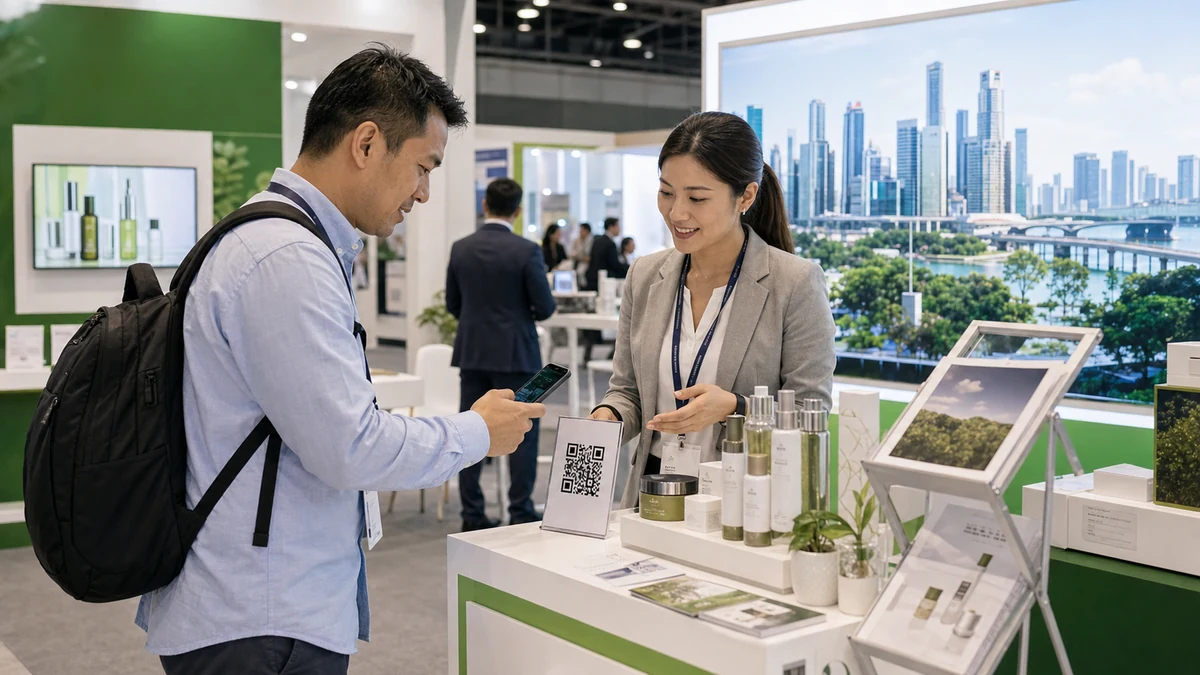
Why Singapore EXPO exhibitors should think beyond booth traffic
Singapore EXPO is Singapore's largest purpose-built MICE venue, with official venue information describing 10 halls, 32 meeting rooms, and 123,000 sqm of indoor and outdoor event space. The venue is also connected to the Changi precinct, EXPO MRT, major expressways, and visitor amenities that support large trade shows.
That scale creates a specific exhibitor problem. Visitors may compare suppliers across several halls, move between a conference programme and an exhibition booth, or review a catalog after leaving the venue. A badge scan alone rarely explains whether the visitor was asking about ASEAN distribution, import readiness, technical integration, samples, food and hospitality supply, or enterprise procurement.
The better approach is to capture the buyer question at the moment it appears. When a visitor scans from a booth sign, product display, catalog page, demo station, distributor sheet, or meeting follow-up card, the team should know what the visitor was trying to decide.
Where buyer questions disappear at Singapore EXPO
Singapore EXPO questions often disappear when multilingual visitors, conference attendees, trade professionals, and regional distributors move between halls, meeting rooms, MRT access, and post-show catalog review.
The venue's ground-level halls and meeting-room wing make it easy for events to combine exhibition, conference, product demonstration, and meeting activity. That is useful for organizers, but it also means exhibitors need to manage several question moments at once.
At Singapore EXPO, a buyer may ask a quick product question in the aisle, a technical question during a demo, a country-specific question in a meeting room, and a shipping question later from a catalog. If those moments all become one flat lead record, the sales team loses the signal.
The most important leak is language and country context. Singapore events can attract Southeast Asian and international buyers. A lead from Indonesia, Vietnam, Malaysia, Thailand, Japan, Australia, or India may need different documentation, distribution terms, logistics, or follow-up language.
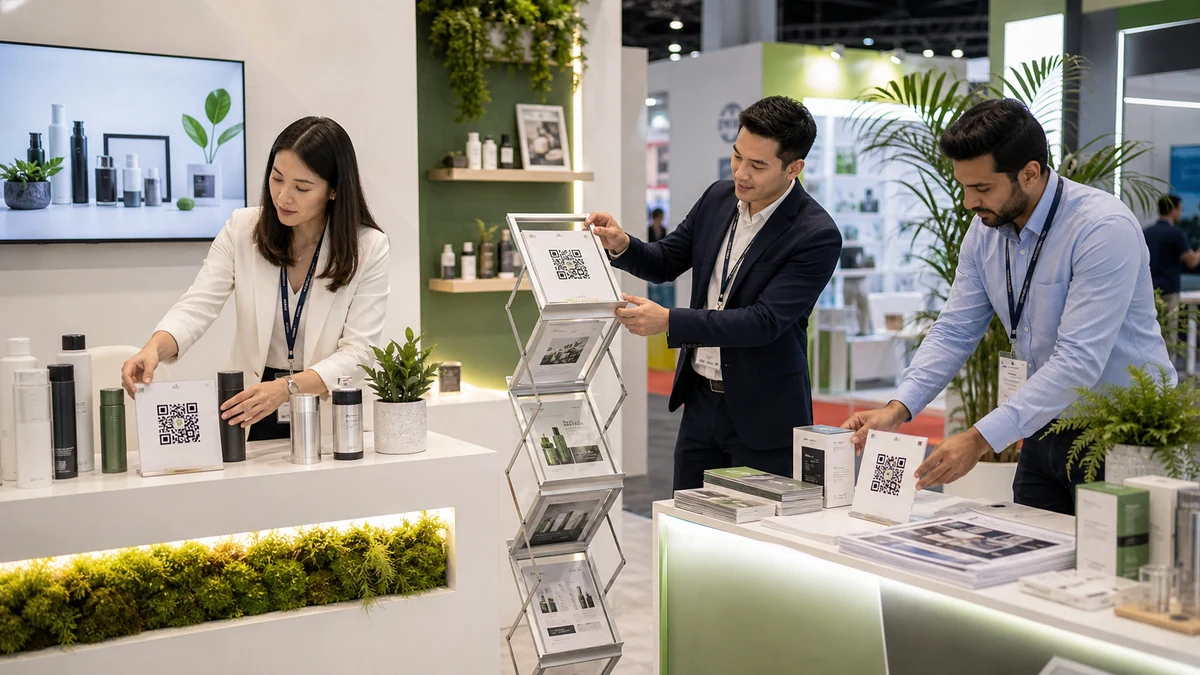
Best QR placements for Singapore EXPO exhibitors
Use a Singapore EXPO QR map that separates booth entry, product demo, catalog, sample, distributor, and meeting questions instead of sending every visitor to one homepage.
The strongest QR setup is not one QR code on a poster. It is a map of answer points that match the visitor's moment. A trade professional scanning during ATxEnterprise may need integration proof. A food and hospitality buyer at FHA may ask about shelf life, sample handling, certification, and distribution. A logistics buyer at CeMAT may need implementation examples, warehouse fit, or service coverage.
Place QR codes where questions naturally happen: booth entry, demo station, product display, catalog product page, sample label, distributor packet, meeting room handout, and post-show follow-up email. Each destination should answer the immediate question and preserve context for the team.
Avoid generic QR destinations. A homepage QR makes the visitor restart the conversation. A product-specific or role-specific QR keeps the buying question attached to the lead.
Buyer questions Singapore EXPO exhibitors should capture
The best Singapore EXPO lead signals often involve country coverage, ASEAN distribution, product proof, technical fit, sample policy, and follow-up ownership.
Before the show opens, define the question categories that matter. Singapore EXPO hosts events across technology, food and hospitality, logistics, aviation maintenance, consumer categories, and conferences. Each category produces different decision questions.
Technology buyers may ask about integration, data security, enterprise deployment, and local support. Food and hospitality buyers may ask about samples, shelf life, halal or food safety proof, supply consistency, and distributor terms. Logistics and industrial buyers may ask about warehouse fit, service territory, proof of performance, and implementation timeline.
Those differences should shape follow-up. A distributor question should go to a channel owner. A technical question should go to a specialist. A sample request should go to operations. A country-specific buyer should receive a localized response when possible.
| Question category | Example buyer question | What it reveals |
|---|---|---|
| ASEAN distribution | Do you already have a distributor in my country? | Partner or channel opportunity. |
| Technical fit | Can this integrate with our existing system or operation? | Specialist follow-up is needed. |
| Food and hospitality proof | Can you provide sample policy, shelf life, safety, or supply documents? | Documentation and operations readiness. |
| Logistics and service | Can you ship, install, support, or train teams in our market? | Country-specific service signal. |
| Enterprise buying | Who should join the next meeting from procurement or technical teams? | Account-based follow-up opportunity. |
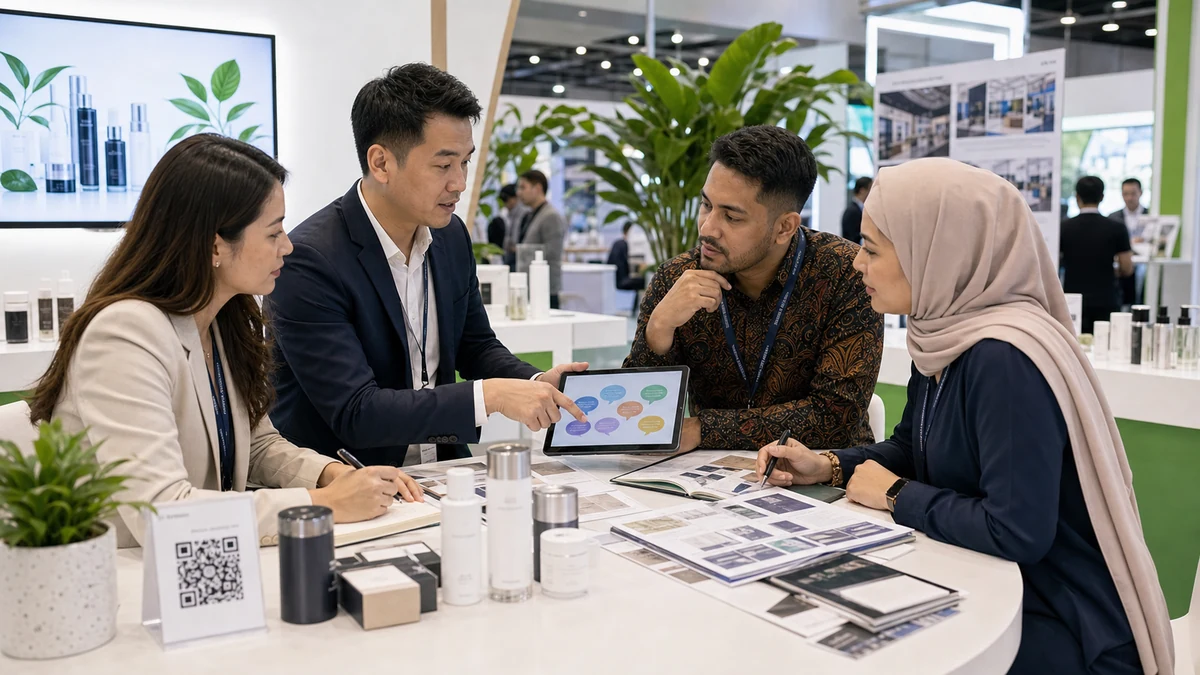
Question-matched proof checklist
A useful Singapore EXPO follow-up attaches the right proof to the right question: country readiness for country questions, technical proof for technical questions, and sample policy for sample questions.
Prepare proof assets before the team arrives at the venue. Do not wait until a qualified visitor asks for documents. Singapore EXPO events can move quickly because exhibition, conference, meeting, and networking activity may happen in the same day.
Build proof by buyer role. Importers need documentation and logistics. Distributors need margin, territory, support, and onboarding context. Technical evaluators need specifications, integration examples, demo videos, and implementation proof. Food or hospitality buyers need samples, safety documents, supply terms, and category fit.
Proof should be approved for sharing. If a document requires legal, compliance, or account review, make that workflow clear so booth staff do not promise something they cannot send.
- Country-ready product sheets, distributor criteria, shipping limits, and service coverage notes.
- Technical specifications, integration diagrams, demo videos, security notes, and implementation examples.
- Sample request process, shelf-life details, food safety documents, warranty notes, and quality proof.
- Meeting-owner assignments, regional owner list, quote workflow, and post-show response timing.
- English plus localized summaries for markets where language affects trust or speed.
Post-show follow-up using buyer questions
After Singapore EXPO, follow-up should be prioritized by question type, country, language, product category, proof request, and partner fit.
A simple thank-you email is weak after a serious Singapore trade show. Buyers have usually compared multiple suppliers. The best first line references what the visitor asked: integration, distributor terms, sample policy, country support, food safety proof, implementation timeline, or meeting availability.
Segment leads into practical lanes. Country and distributor questions go to regional owners. Technical proof questions go to specialists. Sample and quote questions go to sales operations. Conference-driven enterprise questions go to account owners. General visitors go into nurture.
Late catalog scans matter too. A visitor may scan from a hotel, airport, or office after the event. Those scans can reveal which products stayed interesting after the booth conversation ended.
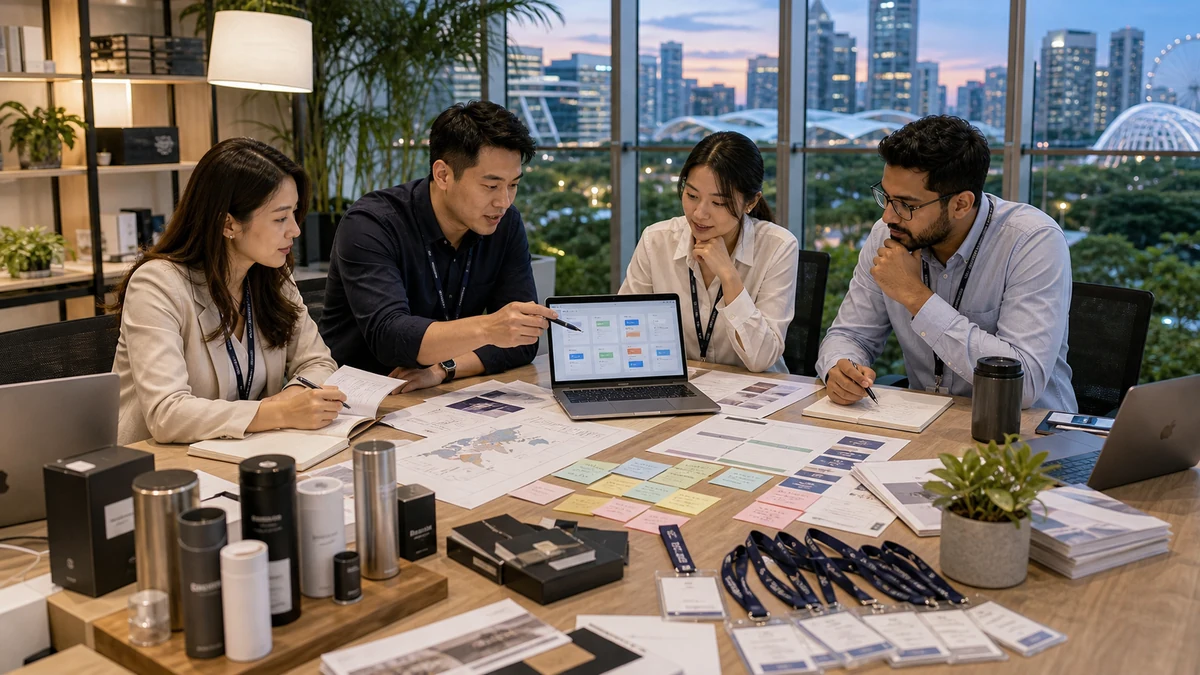
How RealLink AI can help
RealLink AI turns booth, catalog, product demo, and sample QR scans into multilingual buyer Q&A and product-level intent data.
A business card tells you who visited. A buyer question tells you what they care about. At Singapore EXPO, that question may reveal country fit, ASEAN distribution interest, technical proof needs, sample readiness, food and hospitality requirements, or enterprise evaluation criteria.
With RealLink AI, exhibitors can create public AI answer points for booth signs, demo stations, catalog pages, sample labels, distributor packets, and meeting materials. Visitors ask questions during or after the event, and the team can see which products, languages, countries, and proof requests produced the strongest buying signals.
RealLink AI does not replace legal review, compliance approval, pricing judgment, or sales ownership. It keeps repeated answers available and prevents high-intent buyer questions from disappearing after a busy Singapore event.
Sources and quality note
This guide uses official Singapore EXPO and Singapore Tourism Board venue references, then turns those facts into practical exhibitor workflow guidance.
Event examples include ATxEnterprise, FHA-Food & Beverage, CeMAT SOUTHEAST ASIA, and MRO Asia-Pacific. Always adapt this guidance to the official exhibitor manual, organizer rules, contractor deadlines, safety requirements, privacy rules, and document approval workflow.
Singapore EXPO venue spaces | Singapore EXPO events | Singapore Tourism Board MICE venue profile | ATxEnterprise 2026 at Singapore EXPO | FHA-Food & Beverage 2026 at Singapore EXPO | CeMAT SOUTHEAST ASIA 2026 at Singapore EXPO | MRO Asia-Pacific at Singapore EXPO | UFI Global Exhibition Industry Statistics
Related Singapore EXPO planning guides
Use these guides to connect venue preparation, question capture, and follow-up.
Related guide
Singapore EXPO Exhibitor Checklist
Use the pure preparation checklist before building the buyer-question workflow.
Related guide
Trade Show Preparation Checklist
Plan booth readiness, assets, staffing, and follow-up.
Related guide
Trade Show Lead Follow-Up
Turn booth scans into better sales conversations.
FAQ
Why should Singapore EXPO exhibitors use more than one QR code?
Because visitors ask different questions at booth entry, demo stations, catalog pages, samples, distributor packets, and meeting follow-up. Separate QR points preserve context.
What buyer questions matter most at Singapore EXPO?
Country coverage, ASEAN distribution, product proof, technical integration, sample policy, food or safety documentation, logistics, and follow-up ownership are especially useful.
Where should QR codes be placed at a Singapore EXPO booth?
Use booth entry, product display, demo station, catalog page, sample label, distributor packet, and meeting follow-up QR points.
How should follow-up be prioritized after Singapore EXPO?
Prioritize by country, language, product category, proof request, distributor fit, technical depth, sample interest, and urgency.
Does RealLink AI replace sales or compliance teams?
No. RealLink AI captures and organizes buyer questions. Human teams still handle pricing, legal, regulatory, contractual, and sensitive account decisions.
Last updated
Last updated: 2026-06-26.
Turn Singapore EXPO scans into buyer-question data
Want your booth, catalog, demo, or sample QR to answer buyer questions during and after the show? Create a RealLink AI answer point.