
Singapore EXPO preparation checklist
Singapore EXPO Exhibitor Checklist: 15 Preparation Tips for Trade Shows in Singapore
A pure, non-promotional checklist for exhibitors preparing for Singapore EXPO: venue movement, Changi access, booth setup, documentation, multilingual staffing, ASEAN buyer conversations, logistics, and daily improvement.
Summary
Singapore EXPO rewards exhibitors who prepare for multi-hall movement, Changi-area access, conference-plus-exhibition activity, multilingual visitors, and Southeast Asian market questions.
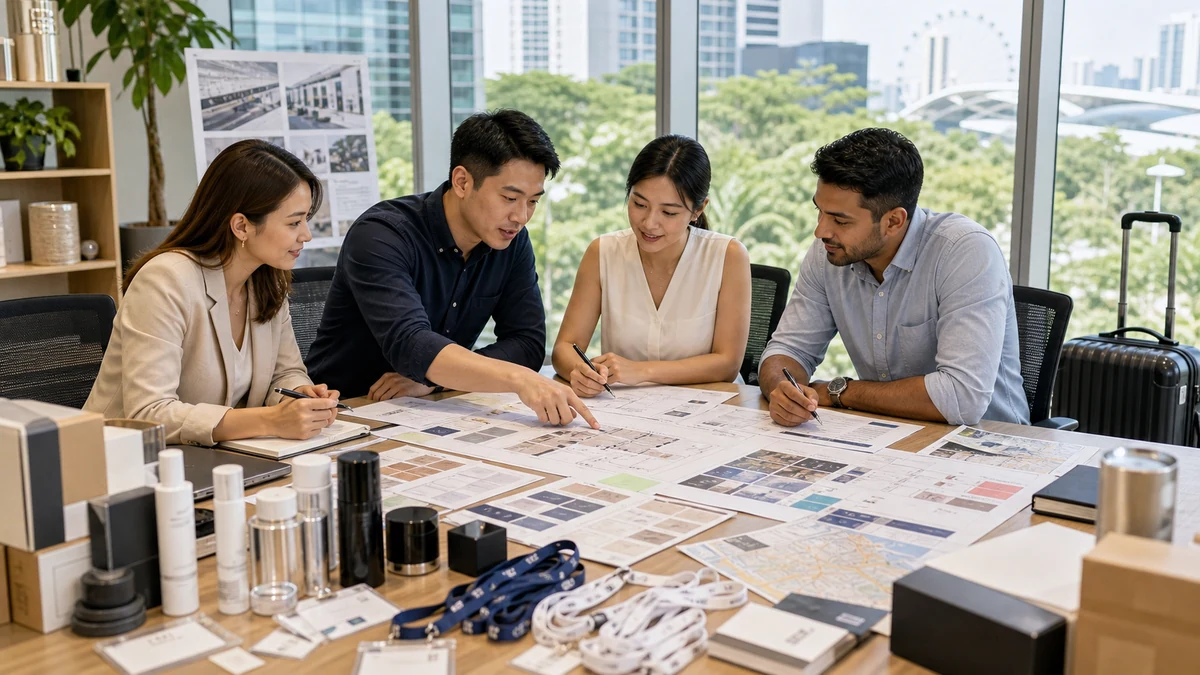
What makes Singapore EXPO different for exhibitors
Singapore EXPO is not only a booth hall. Official venue information describes 10 halls, 32 meeting rooms, and 123,000 sqm of indoor and outdoor event space. Singapore Tourism Board also highlights the Changi precinct location, EXPO MRT access, major expressways, parking, Wi-Fi, AV, restaurants, and sustainability credentials.
For exhibitors, that means the booth plan has to handle several visitor modes. Some visitors arrive from a conference session. Some come from another hall. Some are trade professionals with country-specific distribution questions. Some are public visitors at consumer-facing shows. Some compare suppliers during the day and revisit catalogs later.
A strong Singapore EXPO plan is practical: make the booth easy to find, make the product category obvious, prepare proof documents, protect language coverage, assign owners, and review what buyers asked every day.
15-point Singapore EXPO exhibitor checklist
Use this checklist before the show opens: route, message, proof, staff, meetings, samples, and follow-up should be ready before visitors arrive.
The checklist below is intentionally operational. It focuses on what exhibitors can prepare before the event and improve during the event. It does not replace the official exhibitor manual, organizer rules, service contractor instructions, safety requirements, or freight deadlines.
Run this list at least two weeks before the show, again before travel, and again the evening before the floor opens. Singapore events move quickly, so small misses become visible fast.
If your team is small, combine roles. Do not skip ownership. A person can own several items, but every critical item should have one named owner.
- Confirm hall, booth number, entrances, EXPO MRT route, parking, meeting rooms, and service access.
- Write one short location sentence for email, WhatsApp, calendar invites, and staff replies.
- Clarify the booth message: product category, buyer outcome, country fit, and next step.
- Prepare a 20-second aisle explanation and a deeper five-minute conversation path.
- Group products by category, use case, country relevance, or buyer role.
- Prepare product sheets, technical proof, sample policy, and distributor material.
- Mark which documents can be shared publicly and which require review.
- Assign greeter, qualifier, demo owner, specialist, meeting owner, and note owner roles.
- Plan language coverage and escalation paths for country-specific questions.
- Build a daily briefing and debrief rhythm.
- Prepare samples, chargers, adapters, screens, backups, and restock supplies.
- Create meeting buffers for visitors crossing halls or leaving sessions.
- Prepare follow-up templates by country, product, proof request, and buyer role.
- Check privacy, badge scanning, consent, and organizer rules.
- Review repeated questions each evening and adjust the booth before the next day.
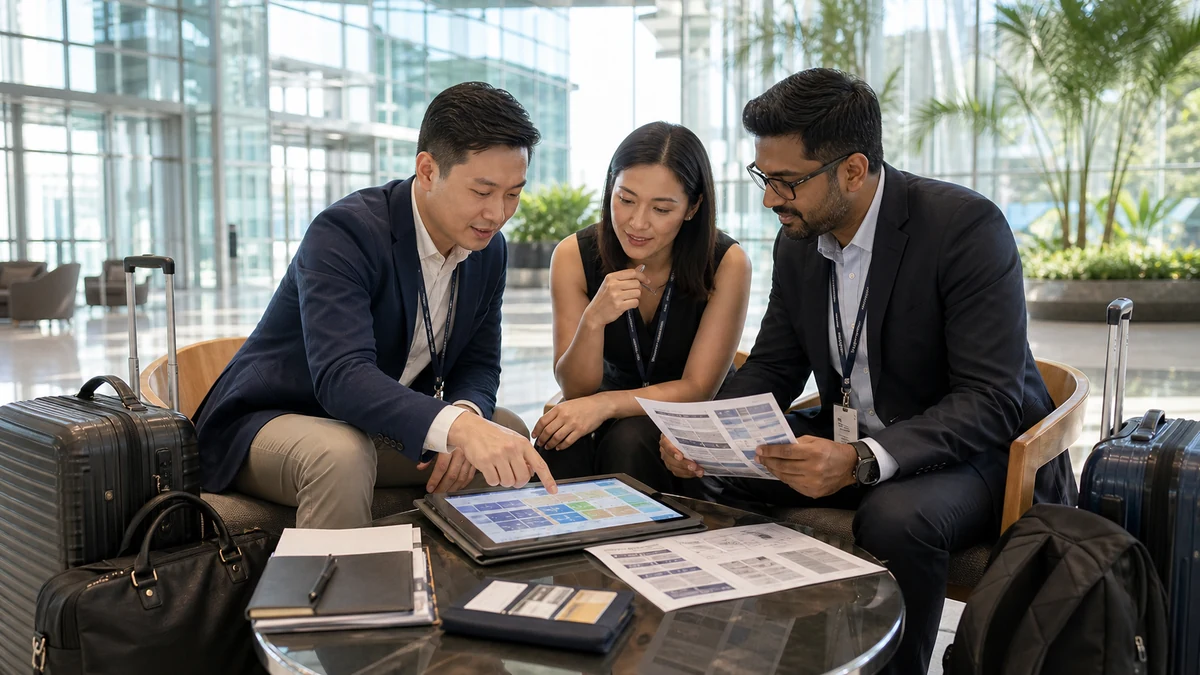
Plan hall movement, MRT access, and meeting routes
Before designing a booth script, map how visitors will reach you from EXPO MRT, parking, nearby halls, conference rooms, and competitor zones.
Start with the official floor plan and your booth number. Mark hall entrances, the route from EXPO MRT, parking or drop-off routes, meeting rooms, food areas, restrooms, organizer desks, competitor clusters, and partner booths. A buyer with a packed schedule needs a simple way to find you.
Write one short location sentence for email, WhatsApp, calendar invites, and staff replies. Include the hall, booth, nearby landmark, and meeting point. If the event spans several halls, include walking time and a backup meeting location.
For high-value meetings, add buffer time. A visitor may cross from another hall or finish a conference session late. A realistic schedule makes the team look organized and protects serious conversations.
Build a booth for Southeast Asian buyer comparison
A Singapore EXPO booth should explain category, buyer outcome, country fit, and next step before the visitor commits to a long conversation.
Use a plain front message. A clever slogan is weaker than a clear category plus benefit. Visitors may be comparing suppliers in English while thinking about local distribution, procurement rules, or end-customer needs in another language.
Create two paths: a fast aisle explanation and a deeper conversation path. The fast path should answer what the product is, who it helps, and why it is relevant. The deep path should cover proof, pricing process, samples, technical details, distributor terms, or meeting next steps.
Keep the booth entrance open. Do not let staff clusters, storage, chairs, or demo equipment block the first step into the stand. The best booth feels easy to enter and easy to leave with a clear next action.
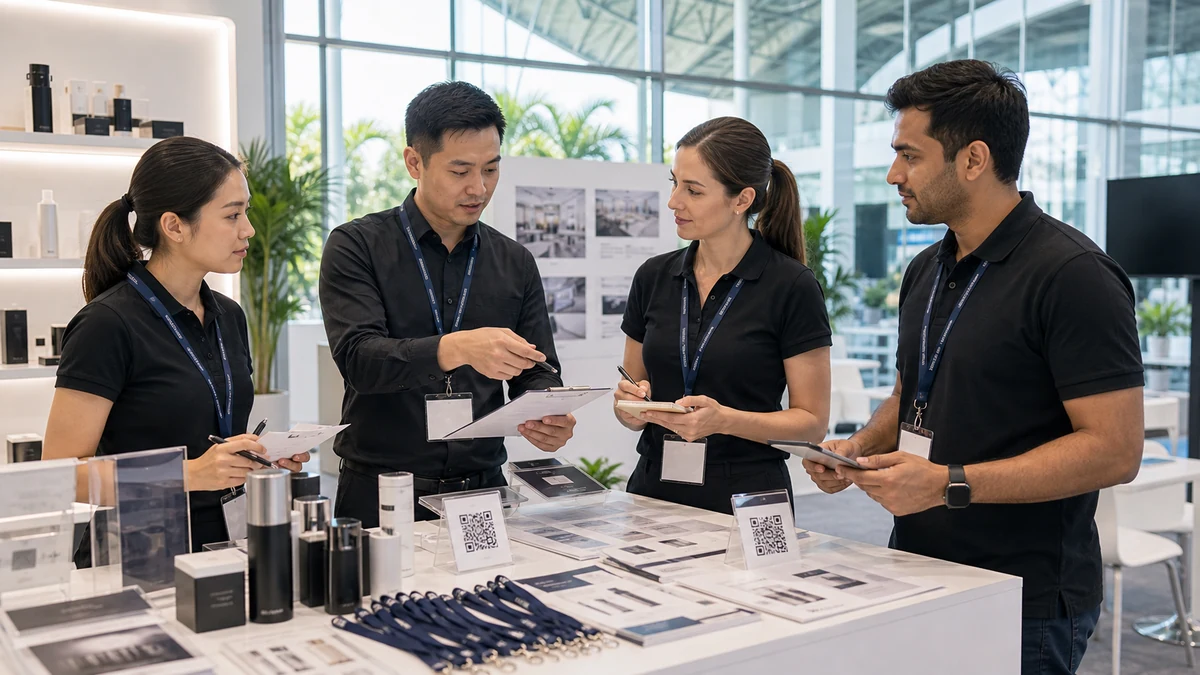
Prepare documentation, samples, and proof before travel
At Singapore EXPO, proof readiness often determines whether a visitor can move from interest to follow-up.
Prepare product sheets, technical specifications, sample policy, certification or safety documents, warranty notes, distributor criteria, quote process, service coverage, and logistics answers. If a document can only be shared after review, mark that clearly.
For food and hospitality categories, prepare sample handling, shelf life, packaging, supply consistency, and safety proof. For technology categories, prepare integration proof, security notes, implementation examples, and support model. For logistics and industrial categories, prepare service territory, warehouse fit, maintenance, and deployment timelines.
Also prepare the physical operations: freight labels, backup adapters, power, internet, demo devices, chargers, display repair tools, restock plan, cleaning supplies, staff badges, and emergency contact list.
Set a staffing rhythm for multilingual and regional questions
The staff plan should protect greeting, qualification, language coverage, specialist access, meeting discipline, and daily review.
Assign roles before the floor opens: greeter, qualifier, demo owner, specialist, country or distributor owner, meeting owner, and note owner. A small team can combine roles, but each responsibility should be explicit.
Train the team to ask simple qualifying questions: What country or market are you buying for? Are you evaluating as an importer, distributor, operator, reseller, or end user? Which product category matters? What proof would help you decide?
Use a morning briefing and evening debrief. In the morning, review meetings, VIPs, roles, proof documents, demo schedule, and supply gaps. In the evening, review repeated questions, missing materials, strong leads, language gaps, and changes for the next day.
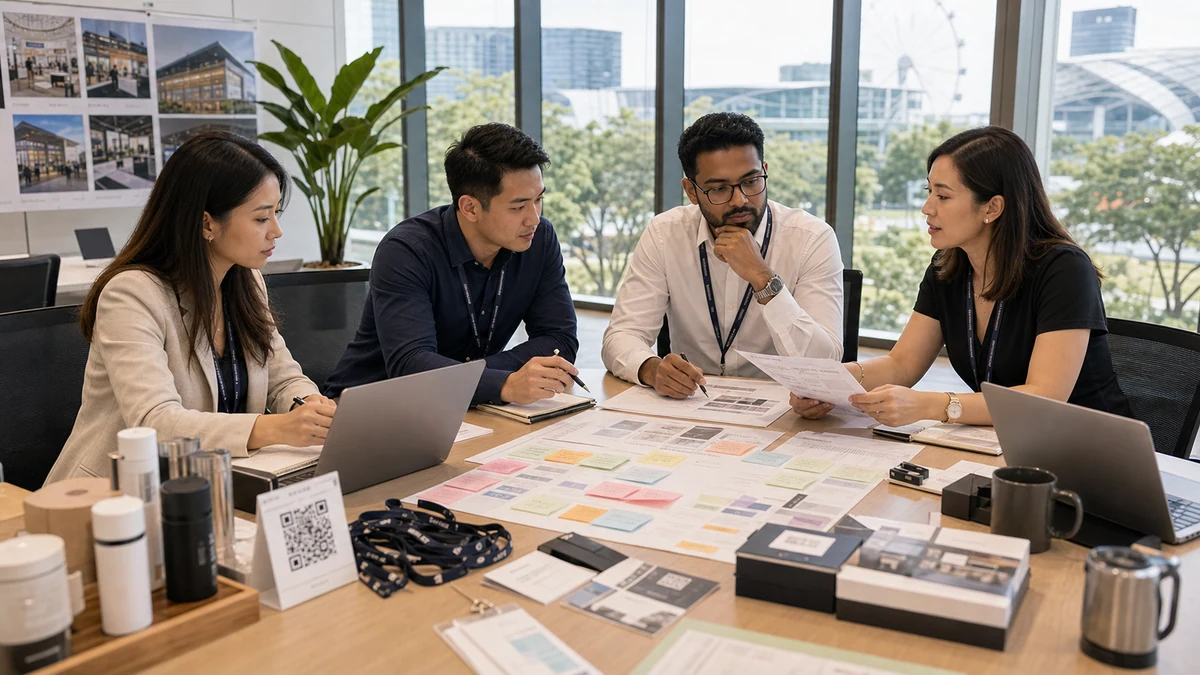
Singapore EXPO exhibitor mistakes to avoid
Most Singapore EXPO mistakes are not dramatic. They are ordinary planning gaps that hurt follow-up after a busy regional event.
The first mistake is vague positioning. If visitors cannot understand your category in a few seconds, they will keep walking. The second is treating every buyer as if they have the same country, channel, and proof needs.
The third mistake is missing documentation. If a serious buyer asks for sample, safety, technical, or distributor proof and the team cannot explain the next step, the opportunity cools down. The fourth is overloading one person with every serious conversation.
The fifth is exporting leads without context. A list of names is not enough. You need country, language, product interest, question type, proof request, owner, and next step.
A simple Singapore EXPO success playbook
A strong Singapore EXPO plan combines route clarity, proof readiness, staff ownership, daily learning, and buyer-specific follow-up.
Imagine a mid-sized exhibitor preparing for Singapore EXPO. Two weeks before the event, the team maps hall routes, creates a booth-location sentence, prepares country and product proof, checks samples, assigns roles, and writes a short demo script.
On day one, the booth front explains the category clearly. The greeter routes traffic. The qualifier asks country, buyer role, product interest, and urgency. The specialist handles technical depth. The meeting owner protects scheduled conversations. The note owner records proof requests and next steps.
That evening, the team notices repeated questions about ASEAN distribution, implementation timeline, and sample policy. The next morning, they move those answers closer to the booth front and adjust the demo script. That is how a venue checklist becomes better results during the event, not only after it.
Sources and quality note
This guide uses official Singapore EXPO and Singapore Tourism Board venue references, then turns those facts into practical exhibitor workflow guidance.
Event examples include ATxEnterprise, FHA-Food & Beverage, CeMAT SOUTHEAST ASIA, and MRO Asia-Pacific. Always adapt this guidance to the official exhibitor manual, organizer rules, contractor deadlines, safety requirements, privacy rules, and document approval workflow.
Singapore EXPO venue spaces | Singapore EXPO events | Singapore Tourism Board MICE venue profile | ATxEnterprise 2026 at Singapore EXPO | FHA-Food & Beverage 2026 at Singapore EXPO | CeMAT SOUTHEAST ASIA 2026 at Singapore EXPO | MRO Asia-Pacific at Singapore EXPO | UFI Global Exhibition Industry Statistics
Related Singapore EXPO planning guides
Use these guides to connect venue preparation, question capture, and follow-up.
Related guide
Singapore EXPO Exhibitor Guide
Turn the preparation plan into buyer-question capture and follow-up data.
Related guide
Trade Show Success Checklist
Use a broader checklist for turning booth visitors into customers.
Related guide
First-Time Trade Show Preparation
Prepare the basics before your first exhibition.
FAQ
What is the most important Singapore EXPO exhibitor tip?
Plan for regional buyer comparison, not just booth traffic. Make the booth easy to find, easy to understand, and ready with proof documents.
How early should exhibitors prepare?
Start at least two weeks before the show, then review again before travel and the evening before the floor opens.
What documents should be ready?
Prepare product sheets, specifications, sample policy, certificates or safety proof, distributor criteria, quote process, logistics notes, and service coverage.
How should booth staff be organized?
Assign greeting, qualification, demo, specialist, meeting, language, and note responsibilities before the floor opens.
Should this checklist replace the official exhibitor manual?
No. Always follow the official exhibitor manual, organizer rules, contractor deadlines, freight requirements, and venue safety instructions.
Last updated
Last updated: 2026-06-26.
Next step: turn Singapore EXPO booth conversations into a follow-up system
Once the preparation checklist is clear, design how the team will capture country questions, language needs, product proof requests, sample interest, and follow-up priority.