
LVCC exhibitor success guide
Las Vegas Convention Center Exhibitor Tips: How to Succeed at Large Multi-Hall Shows
A practical, non-promotional guide to succeeding at Las Vegas Convention Center: hall planning, booth setup, staffing rhythm, meeting flow, logistics discipline, and mistakes to avoid.
Summary
The Las Vegas Convention Center is not a normal small exhibit hall. Official venue information describes it as a 4.6 million-square-foot facility with about 2.9 million square feet of exhibit space, 225 meeting rooms, and large West and Central Hall lobby and registration areas. At that scale, exhibitors do not win by simply showing up with a nice booth.
Success at LVCC depends on planning for distance, fatigue, hall changes, timed meetings, freight discipline, booth staffing, and after-hours review. A visitor may see your booth, leave for another hall, attend a meeting, compare a competitor, and come back hours later. Your booth has to work even when the team is busy and the buyer is moving fast.
This guide is written for the exhibitor who wants practical LVCC trade show advice without a product pitch. Use it to prepare your booth plan, staff schedule, visitor path, meeting rhythm, and post-show operating checklist before the floor opens.
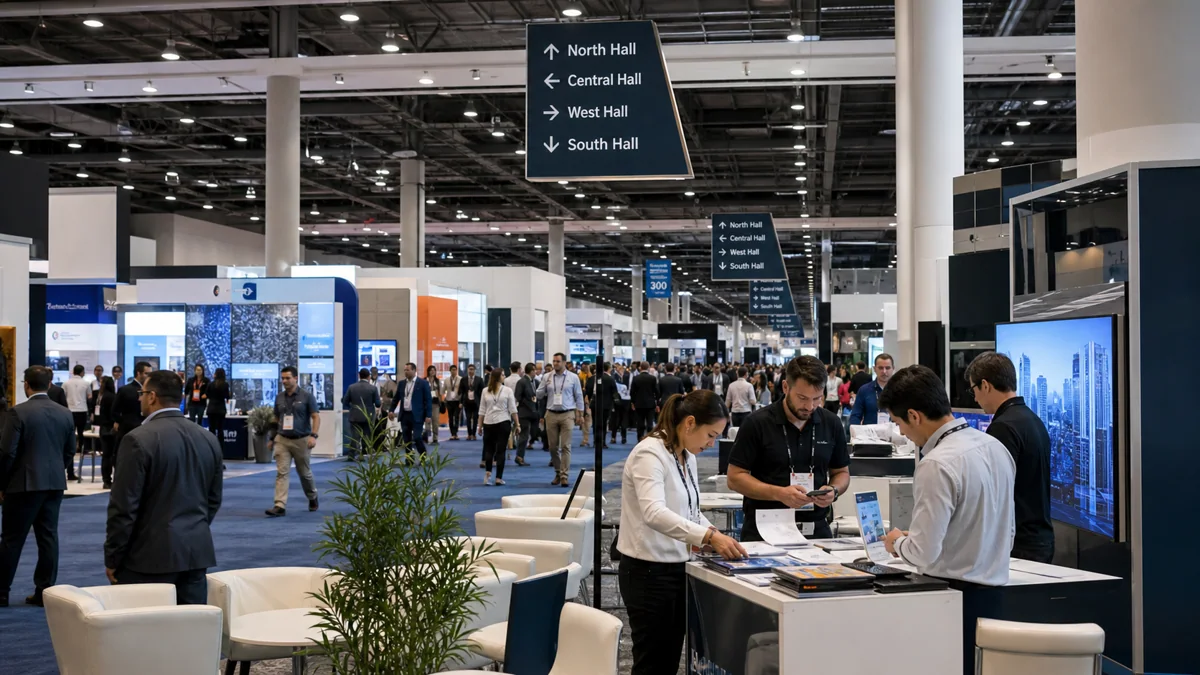
What makes the Las Vegas Convention Center different for exhibitors
LVCC rewards exhibitors who plan by hall, movement pattern, and visitor energy, not only by booth number.
A large LVCC show can stretch across multiple halls and meeting areas. For CES-style events, the official campus information describes use of North, South, Central, and West Halls. That means an exhibitor's booth may be part of a much larger route that includes scheduled meetings, press stops, product demos, food breaks, transportation time, and after-show review.
The practical consequence is simple: location matters, but location is not the whole strategy. A booth near a busy aisle may receive casual traffic. A booth farther from a main entrance may still perform well if the message is clear, the staff is prepared, meetings are scheduled, and visitors have a reason to return.
Think of LVCC as a large operating system. Your booth is one node. The visitor's day includes hall transfers, battery life, walking fatigue, appointments, and competing priorities. The exhibitors who perform best usually reduce friction at every step: easy-to-understand signage, fast demo explanation, clear next step, and disciplined follow-up notes.
Plan by hall before you plan booth tactics
Before designing scripts, giveaways, or booth activities, map the visitor's likely hall journey.
Start with the official floor plan, organizer map, and your booth location. Do not just mark your booth. Mark nearby entrances, high-traffic aisles, meeting rooms, food areas, transportation points, restrooms, press or VIP areas, and competitors. Then ask where your best visitors are likely to come from and where they will go next.
For a large show, your team should know which hall language to use. Saying 'we are near booth 4217' may not help a tired visitor. Saying 'we are near the Central Hall entrance closest to the registration lobby' or 'we are on the route between this demo area and the meeting rooms' can make the booth easier to find.
If your team has scheduled meetings, treat the walking route as part of the meeting. Build buffer time between appointments. Assign someone to watch for late arrivals. Keep short directions ready for text messages. A visitor who is already late will not read a long explanation.
LVCC hall-planning checklist
- Mark your booth, main entrances, registration zones, nearby landmarks, meeting rooms, and direct competitors.
- Write a one-sentence location description that a tired visitor can understand quickly.
- Create separate plans for casual aisle traffic, scheduled meetings, media or partner visits, and after-hours follow-up.
- Build walking buffer time into every meeting schedule.
- Prepare a short staff briefing on how to direct people from the nearest major hall or lobby.
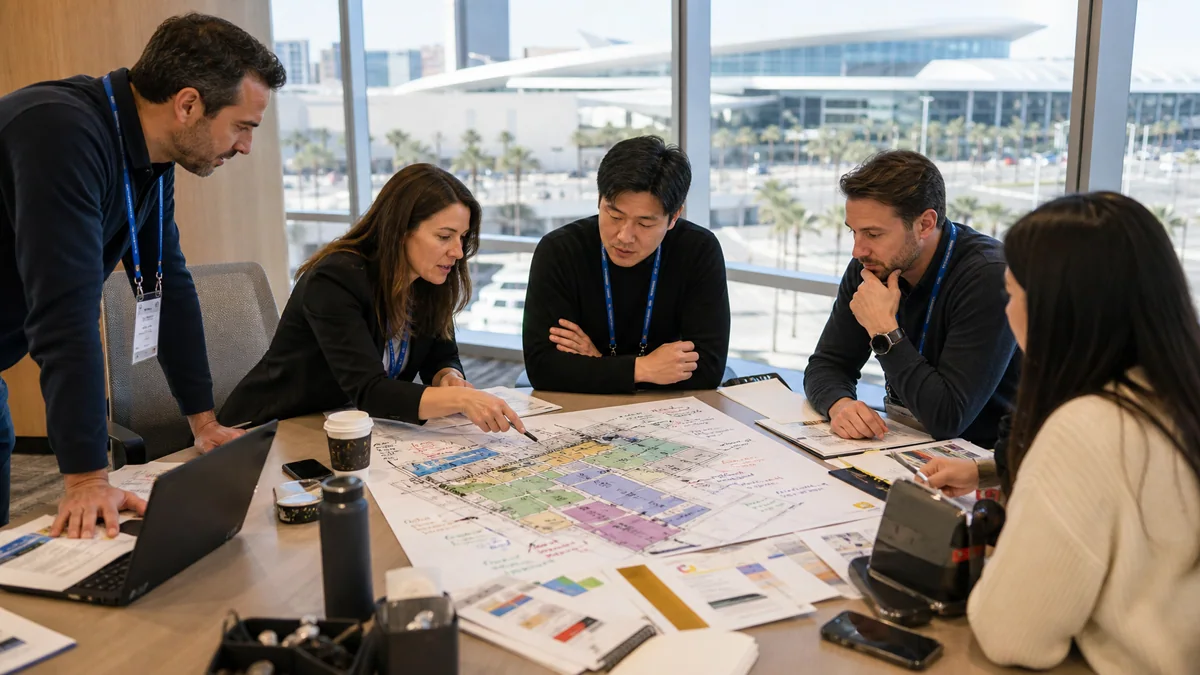
Build a booth that works for fast-moving LVCC aisles
At LVCC, the booth message has to be understood while the visitor is still walking.
A common mistake is designing the booth for people who have already decided to stop. Large-venue visitors often make the decision while walking past. Your first visible message should explain what you do, who it is for, and why the visitor should pause. Avoid clever slogans that require context.
The front edge of the booth should carry the simplest promise. Product detail can live deeper inside. If the first thing a visitor sees is a dense feature list, they may keep moving. If they see a clear category, use case, product result, or comparison point, they can decide faster.
Keep the booth physically easy to enter. Do not block the front with too many staff, counters, boxes, or chairs. If you have demos, decide which one is for passersby and which one is for qualified conversations. Mixing those two demo lengths can create congestion and make staff look unavailable.
| Booth element | Better LVCC choice | Why it matters |
|---|---|---|
| Front sign | Clear category plus outcome | Visitors decide before they stop. |
| Demo | One short aisle demo and one deeper qualified demo | Fast traffic and serious buyers need different experiences. |
| Collateral | Small handout with one next step | Visitors carry too much material at large shows. |
| Staff position | Open front edge, one greeter, one demo owner, one meeting owner | A blocked booth looks difficult to enter. |
| Storage | Hide boxes, water, bags, and extra brochures | Operational clutter reduces perceived confidence. |
Move-in, freight, and setup discipline
LVCC booth success often starts before the visitor ever sees the booth.
Large venues punish loose logistics. Late freight, missing adapters, unclear crate labels, and unassigned setup tasks can consume the team's energy before the first visitor arrives. Treat move-in as a project, not as an errand.
Create one owner for freight and one owner for booth readiness. The freight owner tracks crates, labels, carrier details, material handling instructions, and show-service deadlines. The booth-readiness owner checks power, internet, screens, samples, lighting, printed materials, staff badges, cleaning supplies, snacks, and emergency replacements.
Do not rely on one laptop, one cable, one payment device, one demo file, or one person who knows how everything works. Large shows create small failures. The goal is not perfection. The goal is resilience: if something breaks, the booth still opens on time and the team still knows what to do.
Setup items that deserve a named owner
- Freight labels, crate numbers, carrier contacts, and move-in timing.
- Power, internet, monitors, adapters, backup cables, and demo files.
- Printed materials, samples, badges, business cards, and staff uniforms.
- Cleaning kit, water, snacks, tape, scissors, chargers, and basic repair items.
- End-of-day checklist for restocking, lead review, meeting notes, and next-day priorities.
Staffing rhythm for large LVCC shows
A good LVCC staffing plan protects energy, role clarity, and response speed.
The worst staffing plan is 'everyone stand in the booth and talk to whoever comes by.' That creates uneven coverage, tired staff, missed meetings, and unclear ownership. At a large venue, the team should know who greets, who qualifies, who runs the short demo, who handles deep technical questions, who attends scheduled meetings, and who updates notes.
Rotate people before they are visibly tired. Long days, dry air, noise, and constant standing reduce attention. A tired staff member may still be polite, but they will miss details. Build short breaks, water, and quiet reset time into the schedule.
Every morning, run a ten-minute briefing. Review the day's meetings, VIPs, media or partner visits, demo focus, known objections, nearby competitor activity, and the exact follow-up rule. Every evening, run a short debrief before people scatter to dinners or events.
| Role | Primary job | What to avoid |
|---|---|---|
| Greeter | Stop the right people and route them quickly | Long technical explanations at the aisle edge |
| Qualifier | Identify fit, role, urgency, and next step | Treating every badge scan as equal |
| Demo owner | Run the short demo cleanly and consistently | Letting demos expand without qualification |
| Specialist | Handle technical, procurement, or partner depth | Getting trapped in casual traffic |
| Meeting owner | Protect scheduled conversations and notes | Leaving meeting outcomes in memory only |
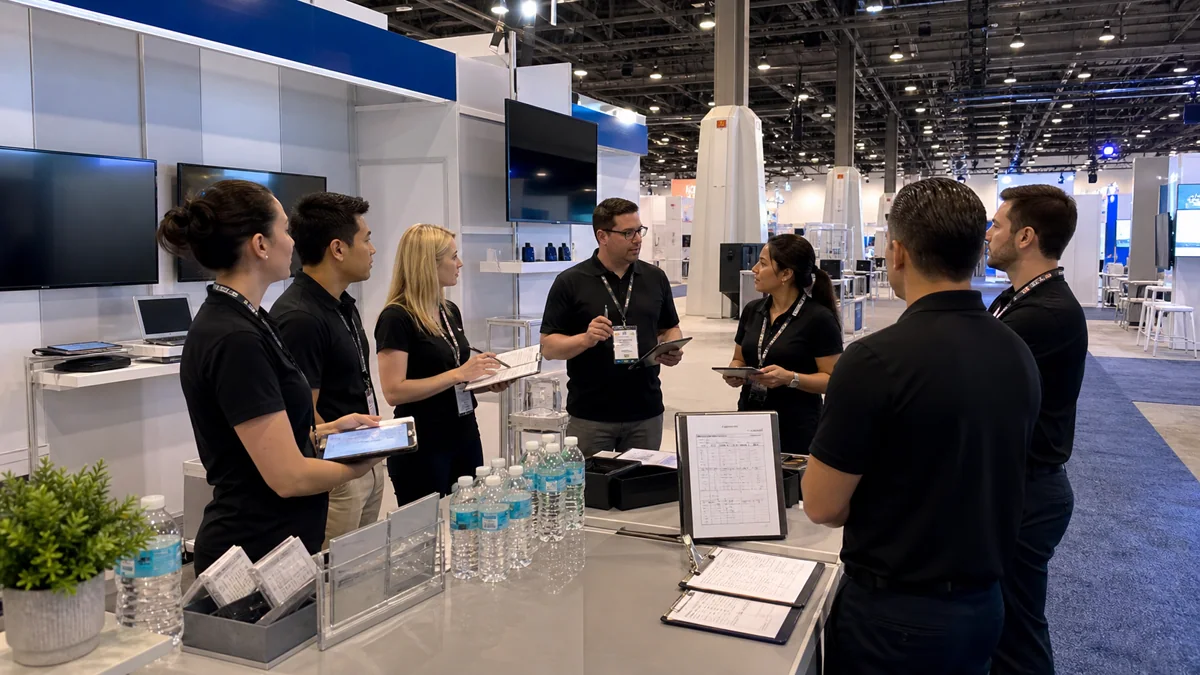
Common LVCC exhibitor mistakes to avoid
Most LVCC mistakes are not dramatic; they are small planning gaps multiplied by a large venue.
The first mistake is making the booth message too broad. If visitors cannot tell what problem you solve in a few seconds, the booth becomes background noise. The second mistake is overloading the team with long demos. A long demo may be useful, but only after a visitor is qualified.
The third mistake is treating the show floor as the whole event. Many serious decisions happen after hours in hotels, restaurants, rideshares, meeting rooms, and offices. If your team has no after-hours review process, high-intent conversations can become vague notes.
The fourth mistake is ignoring staff recovery. A team that is exhausted by day two will underperform even with a good booth. The fifth mistake is weak post-show sorting. If all leads are exported into one spreadsheet with the same priority, the show budget depends on memory instead of evidence.
Mistakes that quietly reduce show ROI
- Using a vague headline that does not identify the category or buyer problem.
- Running every visitor through the same long demo.
- Letting staff cluster at the booth entrance and accidentally block visitors.
- Skipping daily debriefs because everyone is tired.
- Failing to separate hot meetings, technical follow-ups, partner leads, media contacts, and casual scans.
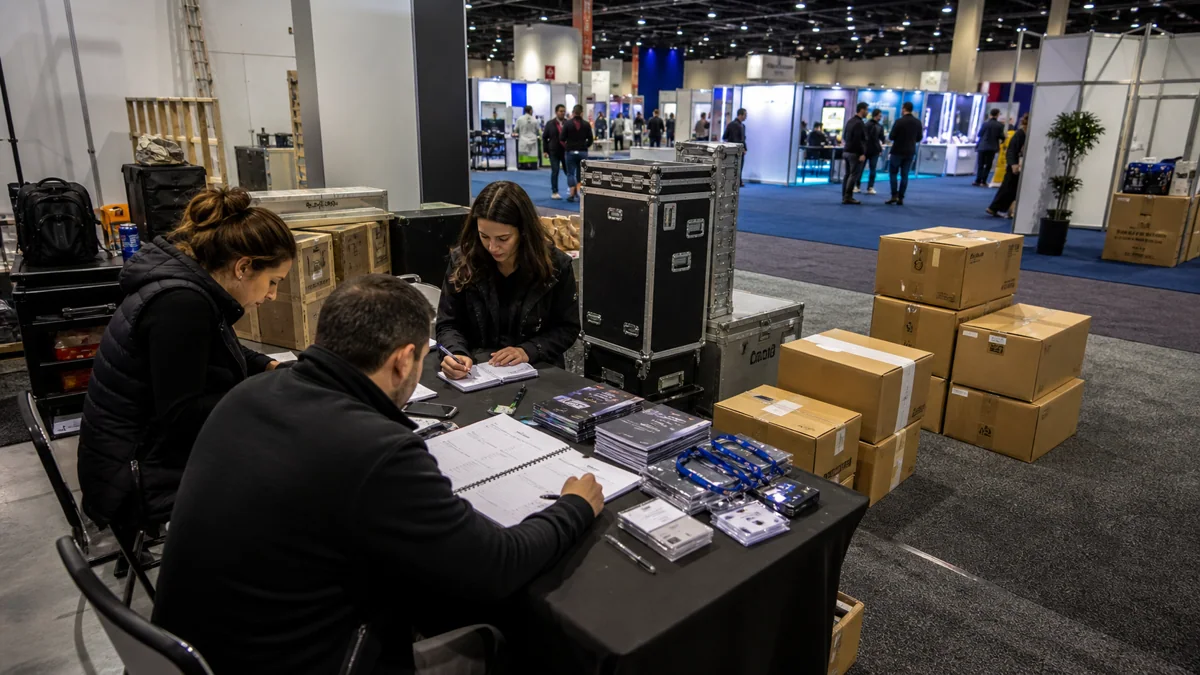
A practical LVCC success playbook
A strong LVCC plan combines hall awareness, simple messaging, disciplined staffing, and same-day review.
Here is a practical example. A mid-sized technology exhibitor is placed in a busy hall but not directly at the main entrance. Instead of relying only on aisle traffic, the team maps the closest landmarks, writes short walking directions, schedules meetings with buffer time, and prepares one short demo for passersby plus one deeper demo for qualified buyers.
The booth front uses one clear category statement and one proof point. The greeter does not try to explain everything. The greeter routes visitors into three paths: quick overview, scheduled meeting, or technical demo. The specialist stays available for the third path instead of answering every casual question.
At the end of each day, the team reviews meetings, serious questions, competitor comparisons, missing materials, and next-day adjustments. They restock the booth before leaving. They update the next morning's staff briefing with what actually happened, not what the pre-show plan assumed.
This playbook does not guarantee results. No venue guide can. But it improves the parts exhibitors can control: clarity, preparedness, energy, friction, and follow-up discipline.
Sources and quality note
This guide uses official venue and event references, then turns them into practical exhibitor planning advice.
Venue facts are based on the official Las Vegas Convention Center page from Vegas Means Business, including LVCC scale, exhibit space, meeting rooms, lobby areas, and map references. CES official campus and maps pages are used as examples of how a major LVCC event can span North, South, Central, and West Hall areas.
Industry context is informed by UFI's Global Exhibition Industry Statistics report page. The tactical advice in this article is editorial guidance for exhibitors and should be adapted to each show organizer's exhibitor manual, service contractor deadlines, safety rules, booth contract, union rules, privacy requirements, and budget.
Las Vegas Convention Center official page · CES LVCC Campus · CES maps and locations · UFI Global Exhibition Industry Statistics
Next LVCC planning guides
After the booth plan is clear, use these guides to plan question capture and follow-up.
LVCC planning
LVCC Exhibitor Guide: Capturing Buyer Questions
Plan booth QR, catalog QR, buyer questions, and post-show follow-up.
LVCC planning
Trade Show Preparation Checklist
Prepare booth logistics, staff, visitor questions, and follow-up.
LVCC planning
Trade Show Mistakes to Avoid
Common exhibitor mistakes that quietly reduce show ROI.
FAQ
What is the most important LVCC exhibitor tip?
Plan by hall movement, not just booth number. Large LVCC shows involve long walking routes, meeting schedules, and multiple halls, so your booth strategy should account for where visitors come from and where they go next.
How early should exhibitors plan LVCC booth logistics?
Start as soon as the organizer releases the exhibitor manual and floor information. Freight, power, internet, badge, setup, staffing, and meeting schedules should have named owners before move-in.
What should a booth sign say at LVCC?
Use a clear category and outcome statement. Visitors should understand what you offer and why they should stop while they are still walking down the aisle.
How should staff be organized at a large LVCC show?
Assign clear roles such as greeter, qualifier, demo owner, specialist, and meeting owner. Rotate breaks and run daily briefings and debriefs.
Should this guide replace the official exhibitor manual?
No. Use the official exhibitor manual and service contractor instructions as the authority for deadlines, safety, freight, booth rules, and required procedures.
Last updated
Last updated: 2026-06-12.
Next step: turn booth conversations into a follow-up system
Once the LVCC booth plan is clear, the next practical step is deciding how your team will capture visitor questions, product interest, and follow-up priorities after the conversation.