RealLink AI

Venue-based exhibitor question capture

KINTEX Exhibitor Guide: Capturing Export Buyer Questions at Korea's Largest Exhibition Center

A practical guide for exhibitors at KINTEX who need to turn Korean booth traffic, product demos, catalog scans, sample requests, certification questions, and export-buyer conversations into usable intent data.

Summary

A practical guide for exhibitors at KINTEX who need to turn Korean booth traffic, product demos, catalog scans, sample requests, certification questions, and export-buyer conversations into usable intent data.

At KINTEX, the strongest export lead signal is often the buyer question: certification, MOQ, sample policy, OEM/ODM fit, distributor rights, country availability, or proof that the Korean supplier is ready for overseas business.

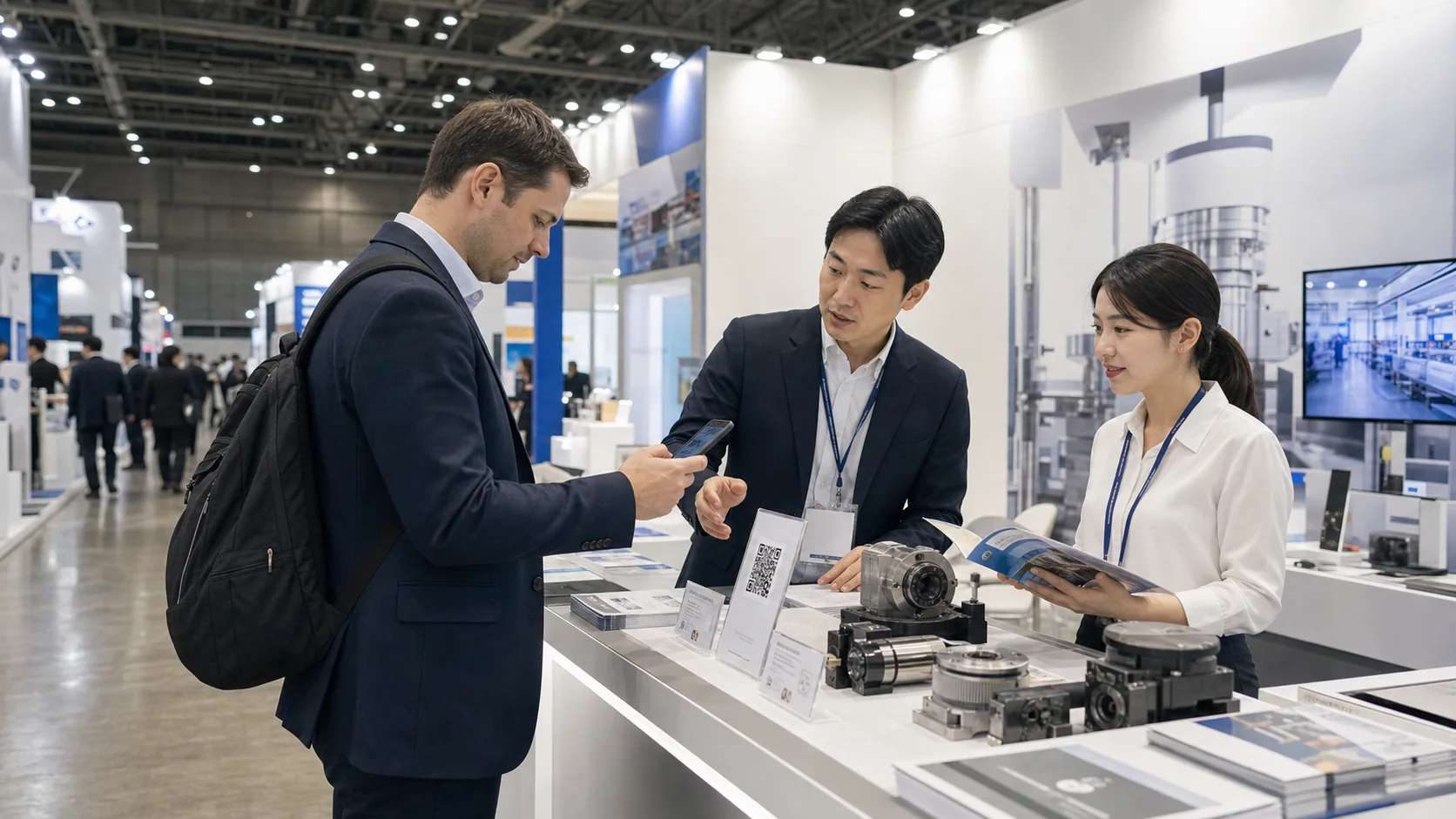
KINTEX exhibitor team using booth QR to answer buyer questions
At KINTEX, the strongest export lead signal is often the buyer question: certification, MOQ, sample policy, OEM/ODM fit, distributor rights, country availability, or proof that the Korean supplier is ready for overseas business.

Why KINTEX exhibitors should think beyond booth traffic

At KINTEX, the strongest export lead signal is often the buyer question: certification, MOQ, sample policy, OEM/ODM fit, distributor rights, country availability, or proof that the Korean supplier is ready for overseas business.

KINTEX presents itself as Korea's largest exhibition center with 108,011 square meters of exhibition area across KINTEX 1 and KINTEX 2. Its official hall overview lists 10 halls, movable partitions, substantial ceiling heights, a maximum 5 ton per square meter floor load in most halls, a connecting path between the two buildings, and large parking capacity.

That scale matters because a visitor may move between Hall 1 and Hall 10, attend a meeting-room session, compare several Korean suppliers, collect samples, and then review a catalog after leaving Ilsan. A badge scan can tell you who entered the booth; it cannot tell you whether the buyer cared about certification, label language, sample lead time, export paperwork, local distributor rights, or after-sales support.

For KINTEX exhibitors, the practical goal is to keep the question attached to the lead. Booth QR, product QR, catalog QR, sample QR, export-document QR, distributor-packet QR, and meeting follow-up QR should preserve what the visitor was trying to verify.

Where export buyer questions disappear at KINTEX

KINTEX questions disappear when Korean-language product material, interpreter notes, samples, meeting-room conversations, and post-show catalog reviews are not connected to the same buyer record.

The official KINTEX site shows a venue built for both exhibitions and conferences, with KINTEX 1 and KINTEX 2 halls plus conference-room areas. That mix is useful for organizers, but exhibitors need to manage several question moments at once: aisle conversations, scheduled buyer meetings, product demonstrations, sample handoffs, and late catalog scans.

A foreign buyer may ask one question at the booth, a second question through an interpreter, a third question when looking at a certification folder, and a fourth question after scanning the catalog from a hotel or office. If those moments become one flat lead record, the export team loses the signal that makes follow-up relevant.

The leak is especially serious for Korean exporters because the real barrier is often not interest. It is evidence: English documents, product specifications, HS code or export process, certificates, labeling, MOQ, delivery terms, sample rules, distributor exclusivity, OEM/ODM capability, or country-specific compliance.

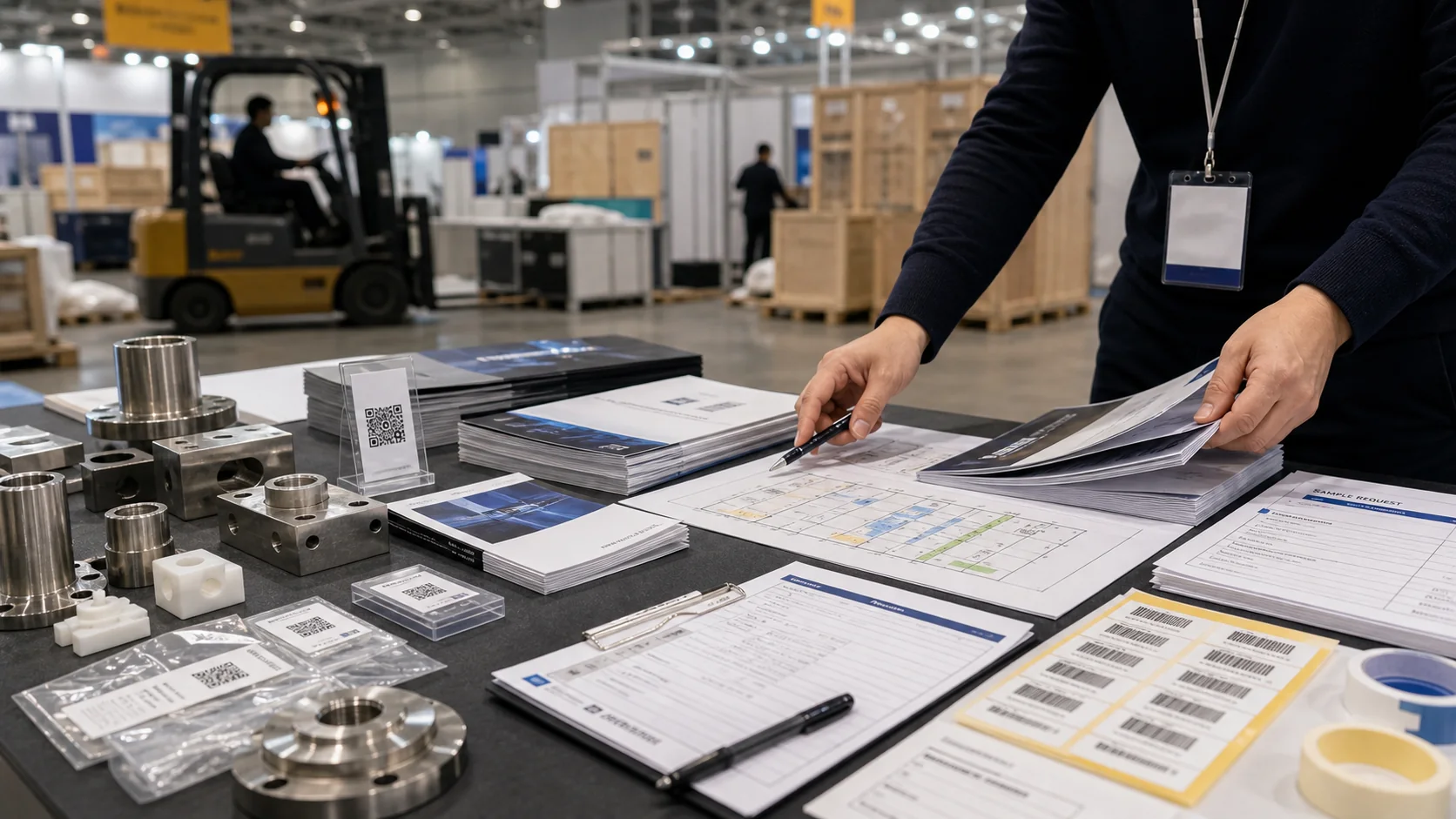
Where export buyer questions disappear at KINTEX
KINTEX questions disappear when Korean-language product material, interpreter notes, samples, meeting-room conversations, and post-show catalog reviews are not connected to the same buyer record.

Best QR placements for KINTEX exhibitors

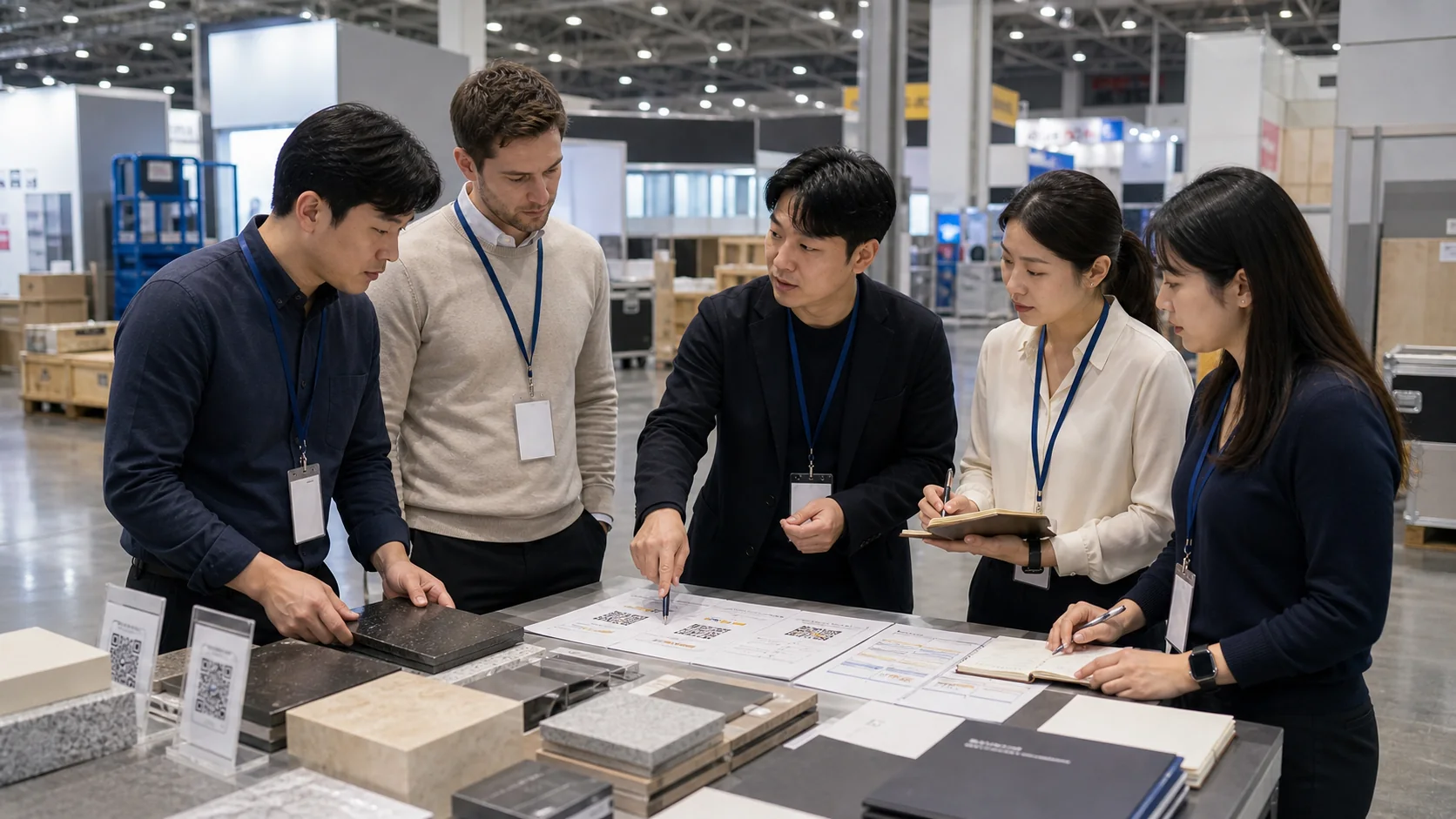
The best KINTEX QR map separates booth entry, product display, catalog page, sample label, certification folder, multilingual FAQ, distributor packet, and meeting follow-up.

A single homepage QR is too broad for a multi-hall venue. If the visitor scans beside a K-beauty serum, the answer page should understand that product and its ingredient, certification, sample, and distributor questions. If the visitor scans from an industrial machine, the answer page should prioritize specification, installation, maintenance, warranty, and delivery questions.

Place QR points where decisions happen: booth front signage for quick qualification, product tags for product-specific questions, catalog pages for post-show review, sample labels for buyer memory, certification folders for trust proof, meeting-room handouts for scheduled buyers, and distributor packets for channel discussions.

Each QR should answer something useful immediately and preserve intent for the team. The scan should not merely say 'visit our website.' It should help the buyer ask the next question in their own language and help the exhibitor see which product, proof request, country, or role created the lead.

Export buyer questions KINTEX exhibitors should capture

The most valuable KINTEX lead signals often involve certification, samples, MOQ, delivery, localization, distributor rights, product proof, OEM/ODM, and post-show decision owners.

Before the event opens, define the questions your team expects. KINTEX events can bring domestic visitors, overseas buyers, distributors, retailers, importers, procurement teams, engineers, government or association buyers, and content partners into the same venue. Their questions are different and should not be treated as the same lead.

K-beauty and K-food buyers may ask about ingredients, packaging, shelf life, labeling, certificates, samples, retail readiness, and country restrictions. Industrial buyers may ask about tolerance, installation, spare parts, warranty, training, and heavy-equipment logistics. Technology and content buyers may ask about integration, localization, licensing, data handling, and partner support.

Treat every serious question as intent data. A visitor asking for a sample policy, English certificate, distributor terms, or OEM/ODM capacity is often deeper in evaluation than someone who only collects a brochure.

Question categoryExample buyer questionWhat it reveals
Certification and trustCan you provide English certificates, test reports, ingredient notes, or quality documents?The buyer needs proof before internal approval.
Sample and MOQWhat is the sample process, minimum order quantity, lead time, and shipping constraint?Product evaluation or first-order planning is active.
Distributor fitDo you already have an exclusive distributor in my country?Channel conflict and territory strategy matter.
LocalizationDo you have English, Japanese, Chinese, Arabic, or local-language labels and documents?Market-entry readiness is being checked.
OEM/ODM and technical fitCan you customize formula, packaging, specification, integration, or installation?The buyer is evaluating deeper commercial fit.
Export buyer questions KINTEX exhibitors should capture
The most valuable KINTEX lead signals often involve certification, samples, MOQ, delivery, localization, distributor rights, product proof, OEM/ODM, and post-show decision owners.

Question-matched proof checklist

A useful KINTEX follow-up matches proof to the question: certificates for trust questions, sample rules for product evaluation, export documents for overseas buyers, and distributor material for channel questions.

Prepare proof before the booth opens. KINTEX exhibitors often need to show Korean product quality in a form that foreign buyers can actually evaluate. That means product specifications, certificates, test reports, ingredient or material notes, English summaries, sample request rules, MOQ and lead-time ranges, warranty terms, export process notes, and approved case examples.

Separate public proof from controlled proof. Some documents can sit at the booth. Others may require NDA, sales manager approval, technical owner review, or legal approval. If the team does not know which proof can be shared, follow-up slows down and the buyer may move to a supplier with clearer documentation.

The best proof system is question-matched. Certification questions receive certificates and test reports. Sample questions receive sample policy and shipping constraints. Distributor questions receive channel criteria and country availability. Technical questions receive specifications and owner contact.

  1. Product specifications, certificates, test reports, ingredient or material notes, quality process, warranty terms, and approved case examples.
  2. Sample policy, MOQ range, lead-time range, shipping limits, export document workflow, and customs or logistics owner.
  3. English and localized summaries for catalog pages, labels, manuals, safety notes, and distributor conversations.
  4. Channel policy, country availability, distributor criteria, exclusivity rules, partner support, and after-sales information.
  5. Quote workflow, meeting owner, technical owner, compliance owner, and approved follow-up assets for post-show response.

Post-show follow-up using buyer questions

After KINTEX, follow-up should be prioritized by country, language, product category, proof request, sample interest, distributor fit, and urgency.

A generic thank-you message is weak after a KINTEX export conversation. The first follow-up should reference the buyer's question: certificate, sample, MOQ, lead time, packaging, ingredient, installation, warranty, distributor rights, or OEM/ODM requirement.

Segment leads into practical lanes. Certificate and compliance questions go to quality or regulatory owners. Sample and quote requests go to sales operations. Distributor questions go to channel owners. Technical specification questions go to specialists. Localization requests go to marketing or export documentation owners.

Late catalog scans are useful. A visitor may scan from a hotel near Goyang, a Seoul office, an airport lounge, or an overseas internal review after returning home. Those scans reveal which product details survived the initial booth conversation.

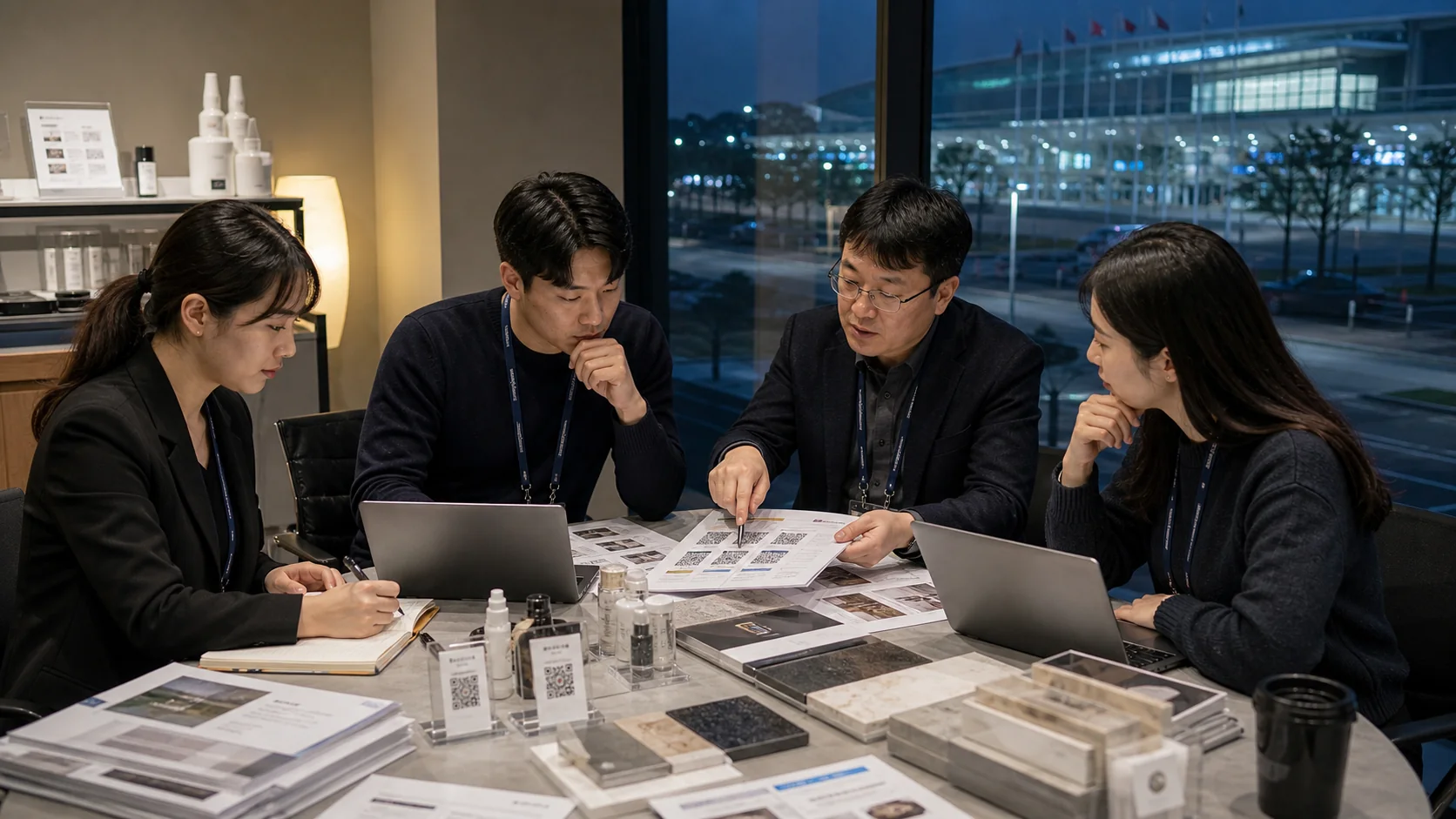
Post-show follow-up using buyer questions
After KINTEX, follow-up should be prioritized by country, language, product category, proof request, sample interest, distributor fit, and urgency.

Sources and quality note

This guide uses official KINTEX exhibition hall, conference room, directions, and event references, then turns those facts into practical exhibitor workflow guidance.

Venue context includes the official KINTEX exhibition hall, conference room, directions, and event information. Always adapt this guidance to the official exhibitor manual, organizer rules, contractor deadlines, booth construction rules, safety requirements, privacy rules, and document approval workflow.

FAQ

Why should KINTEX exhibitors use more than one QR code?

Because product, sample, certification, catalog, distributor, and meeting questions happen at different moments. Separate QR points preserve context.

What buyer questions matter most at KINTEX?

Certification, sample policy, MOQ, delivery, export documents, localization, distributor rights, OEM/ODM fit, and technical proof are especially valuable.

Where should QR codes be placed?

Use booth entry, product display, catalog page, sample label, certification folder, multilingual FAQ card, distributor packet, and meeting follow-up.

How should follow-up be prioritized after KINTEX?

Prioritize by product, country, language, proof request, sample interest, distributor fit, technical depth, and urgency.

Does RealLink AI replace sales or export teams?

No. RealLink AI captures and organizes buyer questions. Human teams still handle pricing, contracts, compliance, technical approval, and distributor decisions.

Last updated

Last updated: 2026-06-15.

Turn KINTEX scans into buyer-question data

Want your booth, catalog, demo, or sample QR to answer buyer questions during and after the show? Create a RealLink AI answer point.

Create my AI Pricing