
NECC Shanghai preparation checklist
NECC Shanghai Exhibitor Checklist: 15 Preparation Tips for China Trade Shows
A pure NECC Shanghai exhibitor checklist for booth routes, sample logistics, China buyer proof, interpreter workflow, documents, staffing, and follow-up.
Summary
This is a pure, non-promotional checklist for NECC Shanghai exhibitors. Use it to prepare hall routes, sample logistics, booth clarity, China buyer proof, interpreter workflow, documents, staff roles, meeting buffers, and post-show follow-up.
The official venue scale matters: 500,000 square meters of exhibition area, large indoor halls, outdoor area, conference rooms, truck access, and major Shanghai transport connections. Preparation should be practical, not decorative.
What makes NECC Shanghai different for exhibitors
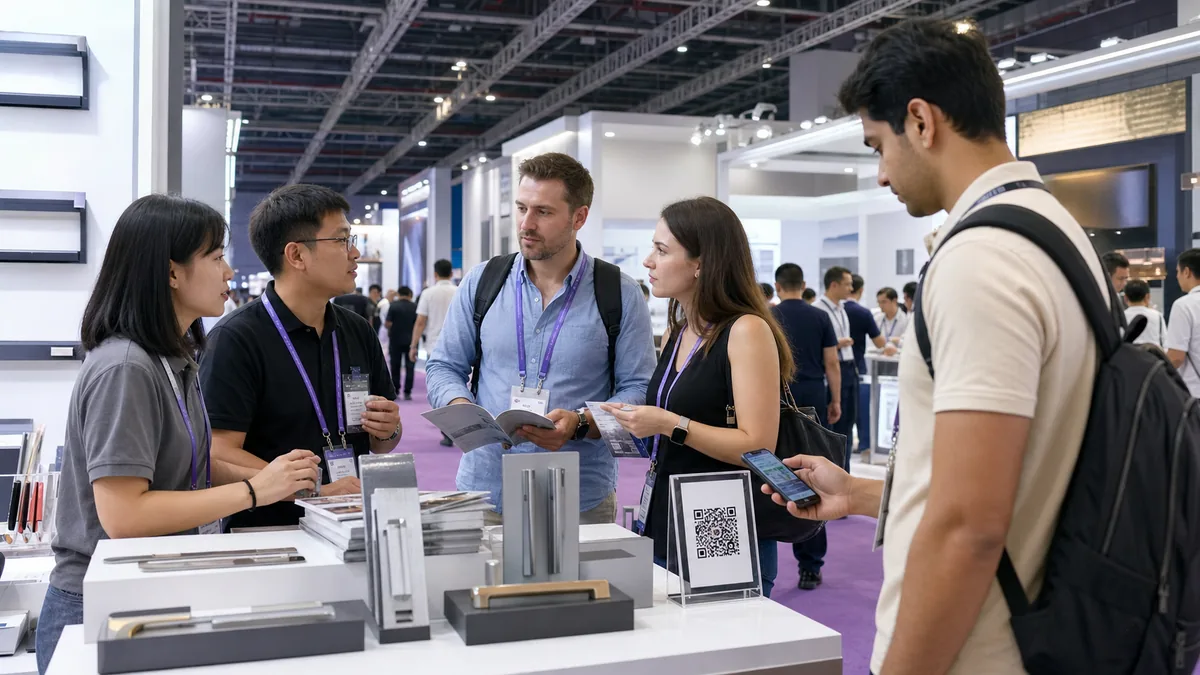
NECC Shanghai rewards exhibitors who prepare for scale, long walking routes, sample-heavy conversations, export documents, language support, and buyer comparison.
A large venue gives a business access to more buyers, but it also increases friction. Visitors may compare many suppliers, move between distant halls, carry samples, attend meetings, and leave quickly if the stand is hard to understand.
The booth should make three things clear in seconds: what product category you serve, which buyer problem you solve, and what proof or next step is available. Without that clarity, buyers may take a catalog and never return.
Use the checklist below before the event, before setup, and at the end of each show day. It is not a replacement for the official exhibitor manual or organizer rules.
15-point NECC Shanghai exhibitor checklist
Prepare route, samples, proof, interpreters, staff roles, document sharing, and follow-up before visitors arrive.
This checklist is built for exhibitors who must handle product comparison, sourcing questions, sample requests, and cross-language buyer conversations. It should be adapted to your organizer's rules and your company's approval process.
- Confirm hall, stand number, entrance, badge pickup, setup deadline, freight window, storage, metro route, hotel route, and meeting point.
- Write one clear booth-location sentence for email, calendar, chat, and staff scripts.
- Define the stand message: product category, buyer result, proof available, sample path, and next step.
- Group samples by product line, MOQ, customization, certification, export market, and buyer role.
- Prepare catalog pages for MOQ, sample policy, certification status, capacity, packaging options, and contact owner.
- Mark public documents, controlled documents, NDA-only documents, and manager-approved documents.
- Assign greeting, qualification, sample, technical, interpreter, document, meeting, and follow-up roles.
- Prepare interpreter briefing notes for product names, specifications, MOQ, payment terms, lead time, and escalation phrases.
- Set meeting buffers for long walking routes, transport delays, and buyer comparison schedules.
- Prepare sample request forms, business cards, QR cards, document folders, chargers, adapters, and display backups.
- Check organizer rules for booth build, safety, photography, badge scan, freight, and privacy.
- Create follow-up templates by product line, buyer country, MOQ question, sample request, certification request, and distributor inquiry.
- Review repeated questions at the end of each day and move missing answers into booth copy or staff briefing.
- Protect controlled information: do not share pricing, confidential specs, or legal documents without approval.
- Assign a post-show owner for every serious sample, quotation, certification, distributor, or meeting request.
Plan hall access, transport, freight, and meeting routes
Your team should know the correct gate, hall, stand number, metro route, hotel route, loading plan, freight timing, storage area, and meeting point.
Because NECC Shanghai is large, time lost in movement becomes a business cost. Write one short location sentence for invitations, staff scripts, calendar notes, and chat messages. Include hall, stand number, nearby entrance, and product category.
Prepare a route plan for buyers coming from Hongqiao, Pudong, hotels, metro, and other halls. Add meeting buffers. A serious buyer who arrives late because of hall distance should still have enough time for a useful conversation.
Prepare samples and catalog proof around buyer decisions
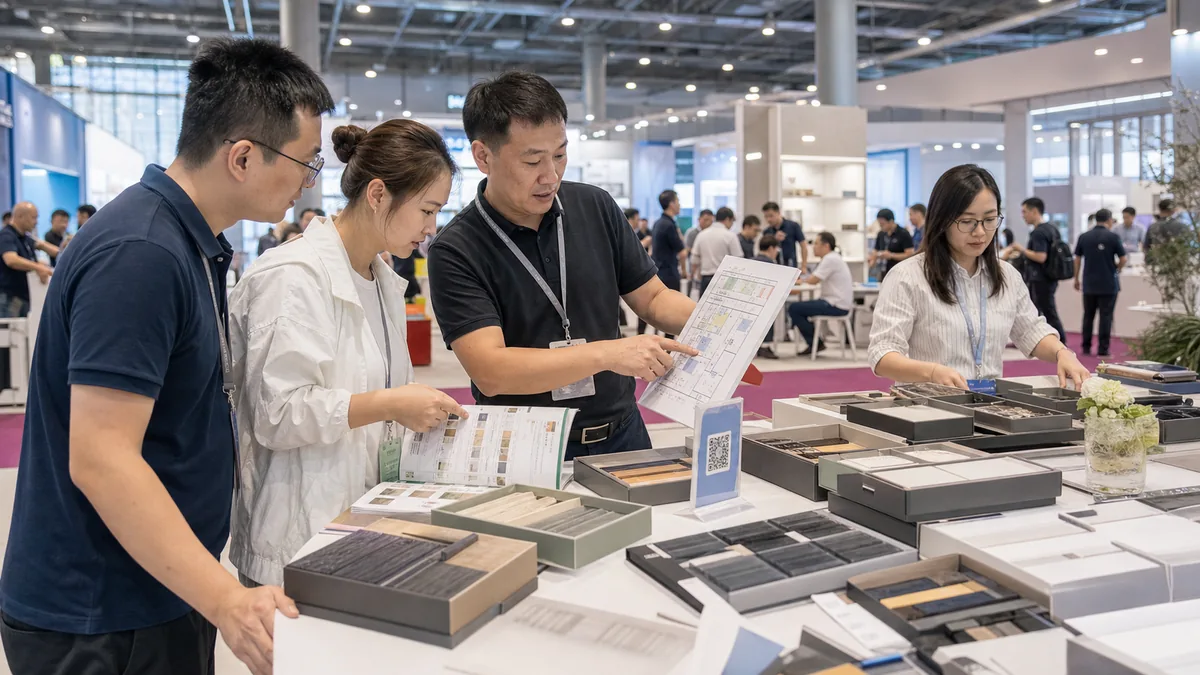
Samples should be grouped by product line, MOQ, customization, certification, export readiness, and buyer role.
Do not treat samples as decoration. Label them by the question they answer: material, size, packaging, production method, certification, use case, country fit, or price tier. Keep backup samples and a note for which samples can leave the booth.
Catalogs should make the next question easy. Add clear sections for MOQ, sample policy, certification status, production capacity, packaging options, export market, and contact owner. If a question requires approval, say who will follow up.
Assign staff roles before the hall opens
Divide greeting, qualification, sample explanation, technical questions, interpreter support, document control, meeting scheduling, and follow-up notes.
A large China trade show can overload a small team. If everyone tries to do everything, serious questions are missed. Give each staff member a role and a backup role.
Brief the team every morning: priority buyers, meetings, documents that can be shared, controlled files, sample limits, interpreter flow, and escalation owners. Debrief every evening and adjust booth copy, sample placement, and follow-up priority.

NECC Shanghai mistakes to avoid
Common mistakes include unclear booth category, weak sample labels, no interpreter plan, missing proof, vague MOQ answers, no document-control rule, and generic follow-up.
Do not assume visitors will ask every question out loud. Many buyers will scan, compare, photograph, and leave if the booth is not clear. Make the stand understandable from the aisle.
Do not let sensitive documents circulate without approval. Decide in advance what can be shown, what can be emailed, what needs NDA, and what requires a manager.
Sources and quality note
This checklist uses official CIIE and NECC venue information and turns it into practical preparation steps.
Always follow the official exhibitor manual, organizer rules, venue guidance, freight instructions, stand construction deadlines, safety requirements, data rules, and your internal approval process.
CIIE venue information | NECC Shanghai venue profile | CIIE navigation to NECC Shanghai | UFI exhibition industry statistics
Related guides
Related guides
NECC Shanghai Exhibitor Guide: Capturing China Buyer Questions Across a Mega Exhibition Complex
A NECC Shanghai exhibitor guide for capturing China buyer questions, MOQ requests, sample interest, distributor inquiries, QR scans, and follow-up.
Related guides
Trade Show Preparation Checklist
Prepare visitor questions, booth roles, privacy notes, QR destinations, and follow-up.
Related guides
Trade Show Mistakes to Avoid
Avoid weak QR destinations, missing notes, unclear roles, and generic follow-up.
FAQ
What is the most important NECC Shanghai preparation step?
Make product category, sample path, MOQ rules, proof documents, and follow-up owner clear before the hall opens.
How early should exhibitors prepare?
Start several weeks before the show, then re-check routes, documents, samples, interpreters, staff roles, and follow-up templates before setup.
What documents should be ready?
Product specs, sample policy, certification status, factory profile, export market notes, MOQ rules, packaging options, and controlled document rules.
Does this replace the official exhibitor manual?
No. Always follow the official manual, organizer rules, venue guidance, freight instructions, safety rules, and privacy requirements.
Last updated
Last updated: 2026-06-21.
Next step: connect NECC Shanghai conversations to follow-up
After the checklist is ready, design how the team will capture sample, MOQ, certification, distributor, and follow-up questions.