
Canton Fair Complex preparation checklist
Canton Fair Complex Exhibitor Checklist: 15 Practical Tips for Export Sourcing Shows
A pure, non-promotional checklist for exhibitors preparing for Canton Fair Complex: hall movement, booth clarity, sample control, export documents, MOQ answers, OEM/ODM readiness, staff roles, logistics, and daily improvement.
Summary
Canton Fair rewards exhibitors who prepare for high-volume sourcing traffic, product comparison, sample requests, export documents, MOQ discussions, OEM/ODM questions, and country-by-country follow-up.
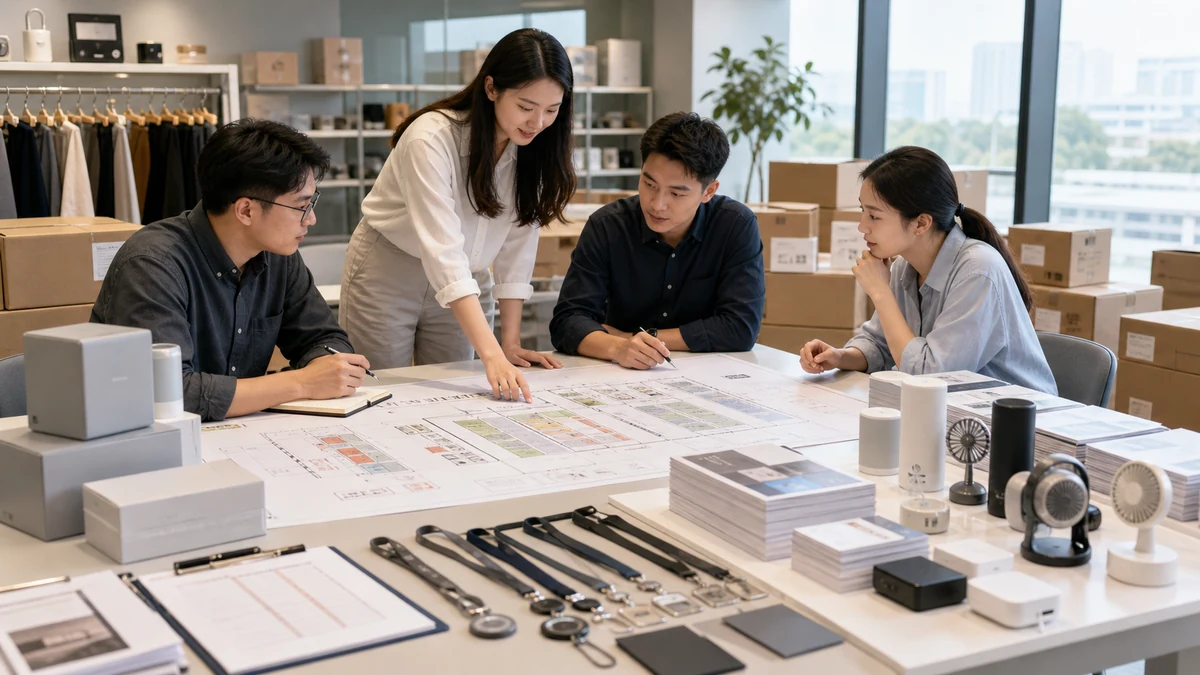
What makes Canton Fair Complex different for exhibitors
Canton Fair is not a casual networking event. Buyers arrive to compare suppliers, check prices, evaluate samples, and shortlist partners. The official fair positioning as a major comprehensive international trade event means exhibitors should expect serious commercial questions from many countries.
The venue context also changes the booth plan. Long aisles, many product categories, repeated buyer comparison, and after-hours catalog review mean that your message, samples, documents, and follow-up owners must be ready before the first visitor arrives.
A good plan is operational: make the category obvious, make samples easy to handle, make MOQ answers consistent, make documents available, assign staff roles, and review repeated questions every day.
15-point Canton Fair exhibitor checklist
Use this checklist before the show opens: route, booth message, samples, documents, MOQ, staff roles, meetings, logistics, and follow-up should be ready before buyers arrive.
This checklist is intentionally practical. It does not replace the official exhibitor manual, organizer rules, booth construction guidance, contractor deadlines, freight rules, customs requirements, safety rules, or privacy rules.
Run it at least two weeks before the show, again before setup, and every evening during the fair. Canton Fair performance often improves when the team adjusts the booth based on real buyer questions.
The goal is not to make the booth bigger. The goal is to make the booth easier to understand, easier to trust, and easier to follow up after the buyer compares many suppliers.
- Confirm hall, booth number, entrance, setup deadline, freight rules, badge pickup, storage, and meeting area.
- Write one short booth-location sentence for email, WhatsApp, calendar invites, and staff scripts.
- Clarify the booth message: product category, buyer result, export readiness, sample policy, and next step.
- Prepare a 20-second aisle explanation and a five-minute buyer evaluation flow.
- Group products by use case, buyer role, country fit, material, price tier, or application.
- Prepare product specs, MOQ ranges, sample rules, packaging options, certificates, and test reports.
- Separate documents for importers, distributors, retail buyers, technical buyers, and private label buyers.
- Mark which documents are public, controlled, NDA-only, or manager-approved.
- Assign greeting, qualification, demo, sample, document, OEM/ODM, distributor, meeting, language, and follow-up roles.
- Prepare sample labels, spare samples, display backups, adapters, chargers, cleaning tools, and repacking materials.
- Add meeting buffers for buyers moving between halls, supplier visits, shuttle routes, hotels, and group schedules.
- Create follow-up templates by product, country, MOQ, sample request, OEM/ODM question, certificate request, and distributor inquiry.
- Check privacy rules, photo rules, badge-scan rules, consent language, freight deadlines, customs limits, and safety requirements.
- Review repeated questions every evening and adjust booth copy, proof placement, sample script, and staffing for the next day.
- Assign owners for samples, quotes, documents, technical proof, OEM/ODM review, distributor conversations, and urgent follow-up.
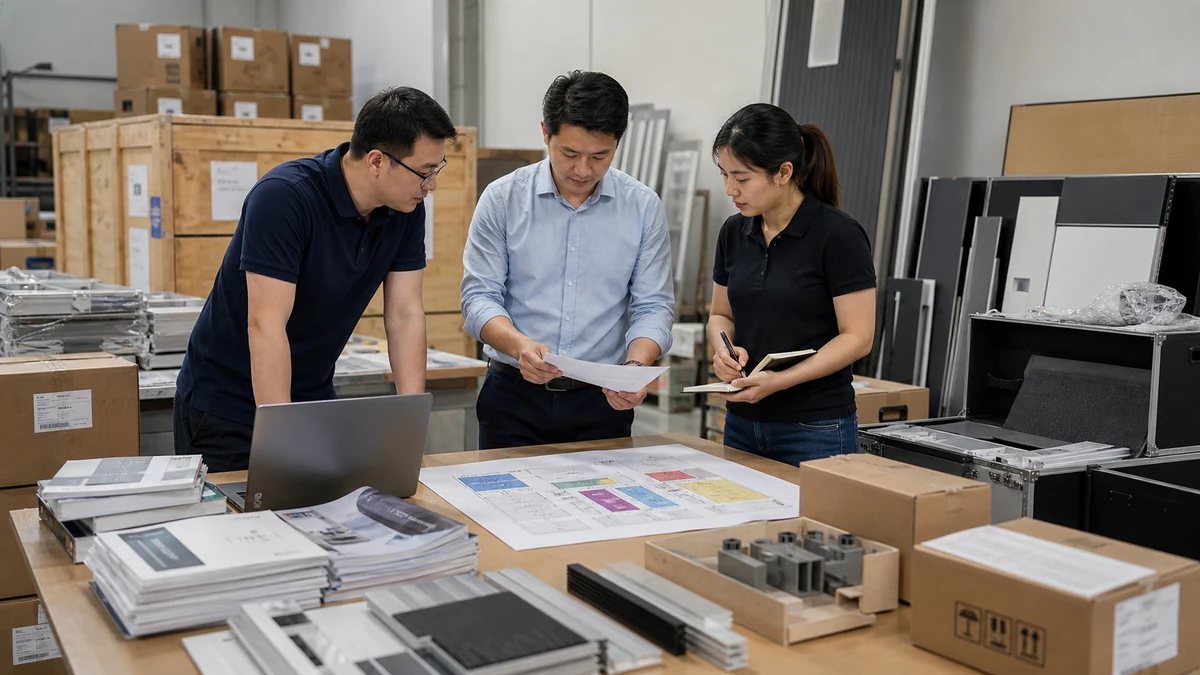
Plan hall access, samples, freight, and meeting routes
A Canton Fair plan should include hall location, booth number, entrance, hotel route, meeting area, sample storage, freight timing, backup materials, and daily restocking.
Write one short location sentence for every team member and every pre-show invitation. It should tell the buyer which area to enter, which booth to find, and how to identify the product category quickly. If a buyer has trouble finding the booth, the sales conversation starts weaker.
Prepare sample logistics carefully. Decide which samples stay on display, which can be handed to buyers, which need labels, which require repacking, and which should be protected from damage. Keep enough catalogues, business cards, adapters, chargers, cleaning tools, and display backups.
Add time buffers between meetings. Buyers may arrive late because they are moving from another hall, a hotel shuttle, a previous supplier, or a group visit. A tight meeting schedule can make the team rush the most qualified questions.
Make the booth easy to evaluate in 20 seconds
A Canton Fair booth should make product category, buyer result, sample policy, MOQ range, OEM/ODM readiness, and next step clear before the buyer asks.
The first twenty seconds matter. Buyers walking past many suppliers need a clear signal: what you sell, who it is for, what is ready for export, and why they should stop. Avoid a booth that only shows a logo and a wall of mixed products.
Organize products by buyer decision, not only by internal product line. Group by use case, price tier, country fit, material, application, or customer role. Put the most important sample and proof near the conversation point.
Prepare a 20-second aisle explanation and a five-minute evaluation flow. The short version gets buyers to stop; the longer version confirms sample, MOQ, OEM/ODM, documents, and follow-up owner.
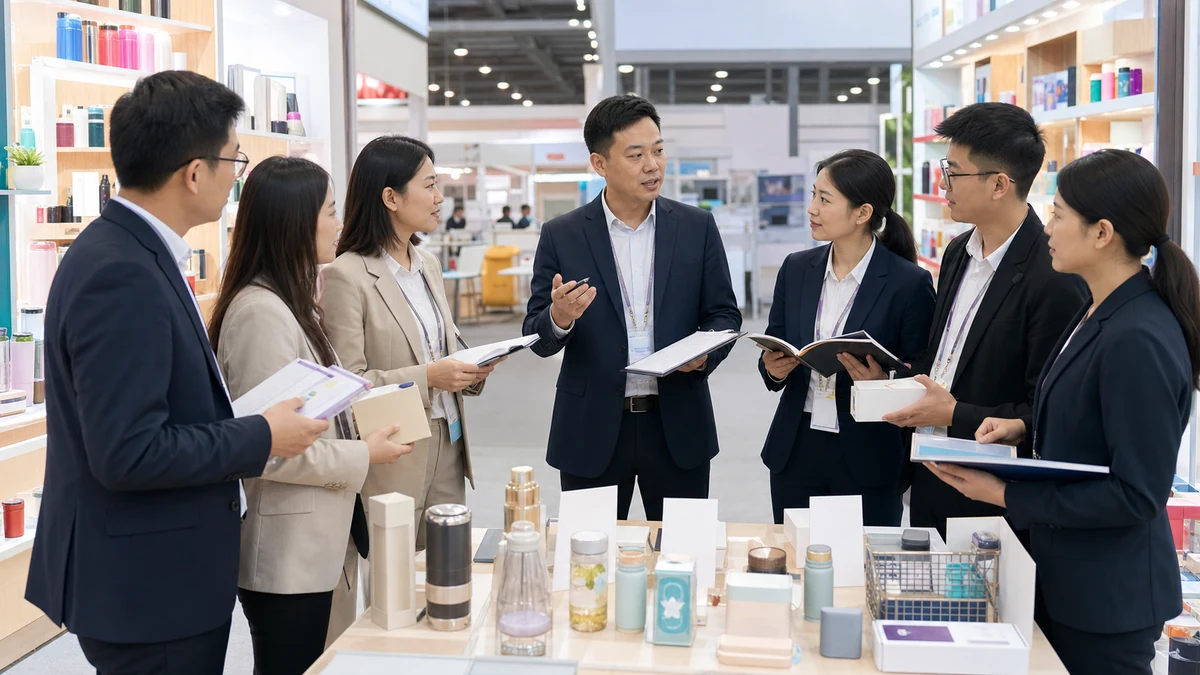
Prepare export documents, samples, and OEM/ODM materials
Before Canton Fair, prepare product specs, MOQ ranges, sample rules, packaging options, certificates, test reports, export cases, shipping notes, and distributor criteria.
Do not wait until a qualified buyer asks for documents. Put approved materials where booth staff can access them quickly: printed summaries, digital folders, sample policies, packaging examples, country notes, and product specification sheets.
Separate buyer roles. Importers need documents and logistics. Distributors need territory and support terms. Retail buyers need packaging and shelf proof. Technical buyers need specifications and test reports. Private label buyers need OEM/ODM examples and design limits.
Make approval rules clear. Some files may be public; others may need manager review, NDA, legal approval, or technical owner confirmation. The team should know what can be sent immediately and what needs review.
Assign staff around repeated buyer questions
A Canton Fair team should divide greeting, qualification, demo, sample control, document handling, OEM/ODM questions, distributor inquiries, meeting scheduling, language support, and follow-up notes.
Do not expect every staff member to remember every detail. One person should greet and qualify; one should manage samples; one should handle documents; one should handle technical or OEM questions; one should own distributor conversations; one should record follow-up.
Brief the team every morning. Review priority products, target countries, sample limits, document approval rules, meeting schedule, escalation rules, and common questions from the previous day.
Debrief every evening. If many buyers ask the same question, change the booth copy, move the proof forward, add a small explanation card, prepare a better answer, or assign a specialist to that topic.
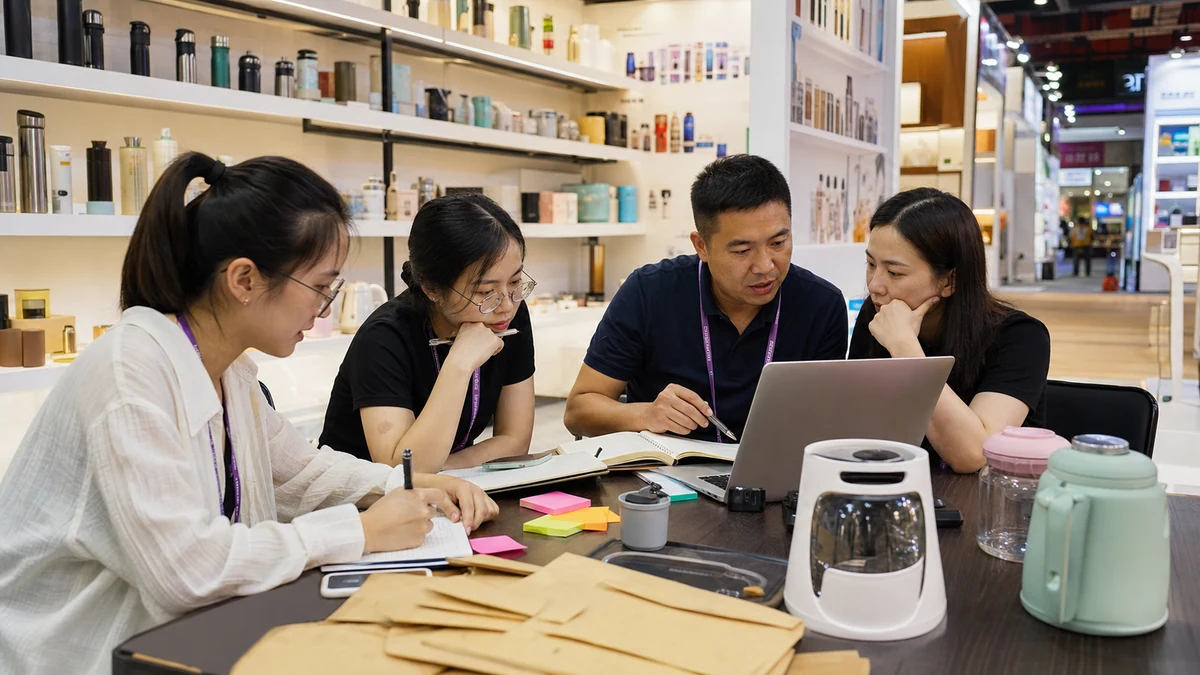
Canton Fair mistakes to avoid
Common mistakes include vague booth messaging, unclear MOQ, uncontrolled samples, missing certificates, weak OEM/ODM examples, no country notes, no owner for follow-up, and generic thank-you emails.
The first mistake is assuming buyers will understand the product without help. In a high-volume sourcing environment, category clarity is a competitive advantage. If the buyer cannot understand the offer quickly, they keep moving.
The second mistake is treating every lead the same. A buyer asking about sample shipment is different from a buyer asking about distributor territory, and both are different from a buyer asking only for a brochure. Follow-up should reflect the question.
The third mistake is postponing documentation. If your team cannot send MOQ, certificate, sample, packaging, or technical proof soon after the conversation, a competitor may become the easier supplier to evaluate.
Sources and quality note
This guide uses official Canton Fair and Canton Fair Complex references, then turns those venue facts into practical exhibitor workflow guidance.
Always adapt this guidance to the official exhibitor manual, organizer rules, booth construction guidance, contractor deadlines, freight rules, customs constraints, safety requirements, privacy rules, and document approval workflow.
Canton Fair official introduction | Canton Fair official website | Canton Fair Complex venue operator | UFI Global Exhibition Industry Statistics
Related Canton Fair planning guides
Use these guides to connect venue preparation, buyer questions, and follow-up.
FAQ
What is the most important Canton Fair preparation step?
Prepare for comparison. Buyers will compare suppliers, so make category, MOQ, samples, documents, and follow-up ownership clear before the show opens.
How early should exhibitors prepare?
Start at least two weeks before the show, then re-check route, samples, documents, staff roles, and follow-up templates before setup.
What documents should be ready?
Product specs, MOQ range, sample rules, packaging options, certificates, test reports, export cases, shipping notes, and distributor criteria.
How should staff roles be divided?
Assign greeting, qualification, demo, sample control, documents, OEM/ODM questions, distributor inquiries, meeting scheduling, language support, and follow-up notes.
Does this checklist replace the official exhibitor manual?
No. Always follow the official exhibitor manual, organizer rules, contractor deadlines, booth construction rules, freight, customs, privacy, and safety requirements.
Last updated
Last updated: 2026-06-18.
Next step: turn Canton Fair booth conversations into a follow-up system
Once the preparation checklist is clear, design how the team will capture MOQ, sample, OEM/ODM, certificate, distributor, and country questions.