
Singapore | Customer self-service
How Singapore SMEs Can Reduce Repetitive Customer Enquiries
Turn repeated enquiries into a maintained answer system, clear channel roles, useful question patterns, and responsible human handoff.
Summary
Singapore SMEs can reduce repetitive customer enquiries by building a small maintained answer system before adding more channels. Log real questions, group them by intent and language, approve one source answer, assign each group to the right channel, and keep live, sensitive, unusual, or high-impact decisions with a person.
The workflow should also reflect the Personal Data Protection Act. Designate an operational DPO, explain the purpose of collection, request only what the journey needs, review vendors and overseas processing, protect access to enquiry logs, set retention rules, and make privacy and human contact routes easy to find.

The quick answer
Do not treat repeated enquiries as an inbox problem. Treat them as evidence that the customer journey lacks a clear, maintained answer at the moment of need.
A Singapore SME may hear the same questions through its website, phone, email, WhatsApp link, trade counter, packaging, quotation process, business card, exhibition booth, and distributor network. Adding another channel can increase the number of places staff must monitor without making the answer easier to find.
The practical solution is a shared answer system with clear channel roles. Stable questions can be answered from approved business information. Live availability, private account matters, final prices, commercial negotiation, complaints, and unusual exceptions move to staff or an official connected system.
Why the Singapore context matters
High digital adoption makes self-service plausible, but customers also notice disconnected channels and weak data handling quickly.
IMDA reported that 95.1% of Singapore SMEs had adopted at least one measured digital area in 2024. SME AI adoption rose from 4.2% in 2023 to 14.5% in 2024, and Customer Service was among the most common functions where AI-using firms applied the technology. Those figures show active experimentation, not automatic suitability for every customer journey.
A digitally familiar customer expects the answer path to work. A QR code that opens a generic homepage, an automated answer that contradicts the current delivery policy, or a booking link that makes the customer start again adds friction. The test is whether the person reaches an accurate answer or appropriate staff member with fewer unnecessary steps.

Build a ten-day enquiry log
Capture the wording, language, touchpoint, answer source, and next action before deciding which tool to install.
For ten working days, record questions from phone calls, email, website forms, messages, quotations, counters, packaging, exhibitions, and post-purchase support. Keep the original wording and language where appropriate. Group questions by meaning rather than by exact sentence.
Useful clusters may include opening hours, minimum order, delivery area, lead time, product compatibility, setup, warranty process, collection instructions, quotation requirements, distributor contact, export documents, and human follow-up. Beside each cluster, name the approved answer owner, mark whether the fact changes in real time, and record the official next action.
- Keep original customer wording and language when appropriate.
- Group by intent, not by exact phrase.
- Name the owner and maintained source for each answer.
- Mark live, private, contractual, and exception-heavy questions.
- Record the official next step for each cluster.
Separate stable answers from live decisions
Self-service is strongest for approved explanations; staff and connected systems remain responsible for current status, judgment, and commitments.
Stable answers can explain normal opening hours, product categories, published specifications, preparation, collection steps, general delivery coverage, warranty process, quotation requirements, and the normal response window. An answer page can also link to an official booking, payment, catalogue, manual, or contact route.
Do not let a static answer claim that an item is in stock, a delivery date is guaranteed, a time slot is available, a quotation is final, or a particular exception is approved. Those facts require current systems or authorised staff. Similarly, complaints, payment disputes, private order details, and binding commercial terms should move to a person.
Write the boundary in plain language for staff and customers. The system may answer approved routine questions, state when it does not know, and show the next official route. It should not imitate access or authority that it does not have.
| Enquiry type | Useful self-service role | Human or connected boundary |
|---|---|---|
| Product information | Explain approved specifications, uses, setup, and care | Suitability judgment, safety exception, or disputed defect |
| Quotation preparation | List the information and documents required | Final scope, discount, negotiation, and binding price |
| Delivery or collection | Explain normal areas, windows, and preparation | Live stock, route, timing, and exception approval |
| Exhibition or distributor enquiry | Explain product range and route the next step | Commercial terms and territory decisions |
| Existing customer issue | Show the official support process | Private account, payment, complaint, or identity-sensitive details |
Create one maintained source of truth
Translation, AI, FAQ, staff scripts, and QR destinations should begin from the same approved business meaning.
Write a concise source answer for every recurring cluster. The first sentence should resolve the immediate question. The next sentence should explain the most important condition. The final line should point to the official action. Link to maintained terms when the full policy matters instead of copying a long document into every response.
Assign owners by subject. Operations may own lead time, collection, and delivery. Product staff may own specifications and setup. Sales may own qualification and quotation requirements. The business owner may approve warranty, complaint, and escalation language. Set a review date for every answer that can change, and exclude private records, credentials, confidential calculations, unapproved terms, and vendor secrets.
- One approved meaning before translation.
- One owner for each answer category.
- Explicit dates, units, currencies, time zones, and conditions.
- A visible next step and human exception route.
- No unnecessary personal or confidential data in the source.
Give every touchpoint one clear job
Use the channel where the enquiry begins instead of forcing every customer through a generic homepage or one messaging inbox.
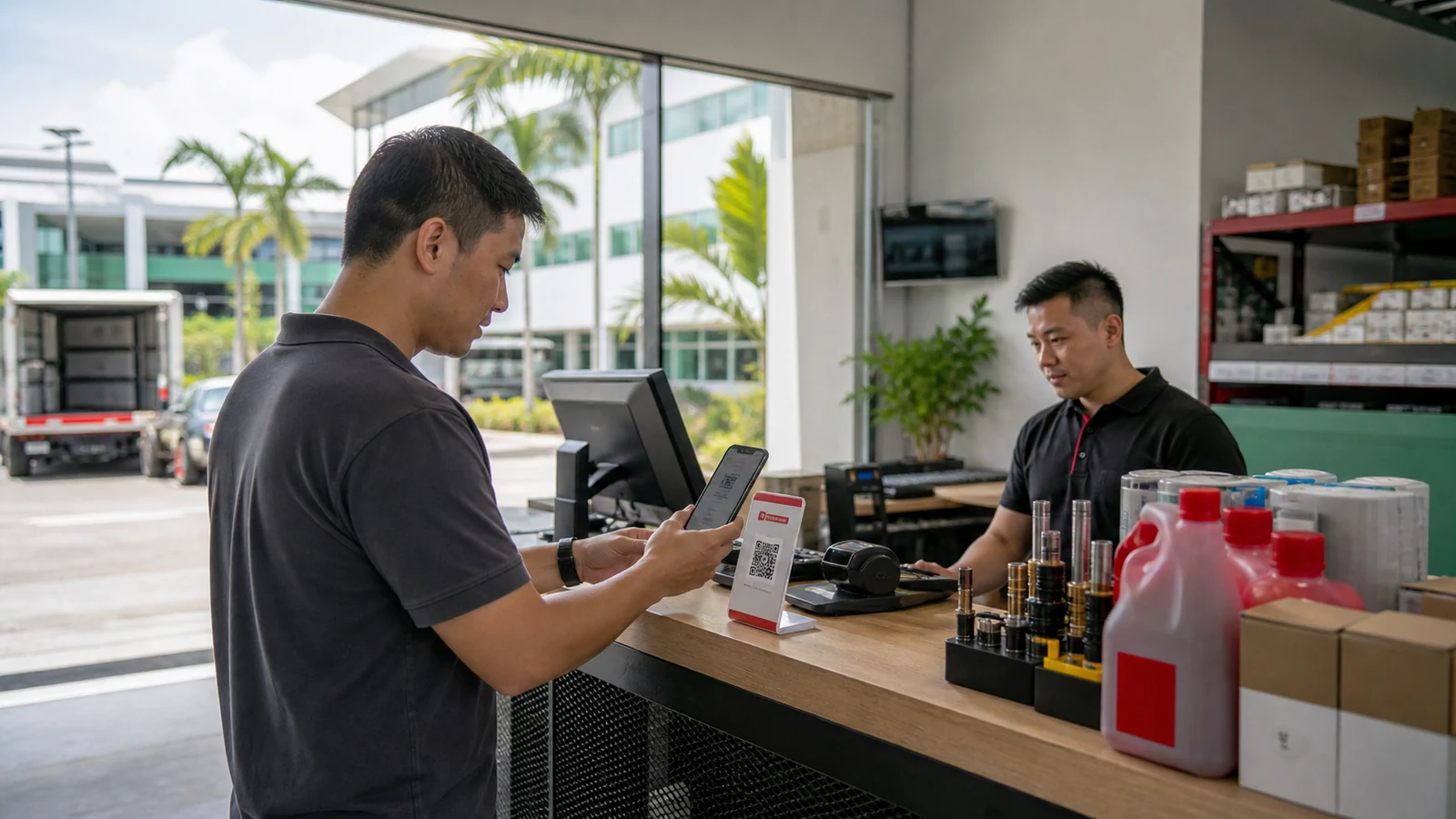
A focused FAQ works when customers know the subject and can browse. Website chat or an interactive answer page helps when a visitor does not know which page contains the answer. A public mobile answer page behind a QR code or direct link is useful on packaging, a brochure, business card, exhibition display, collection counter, or after-hours message.
Use an authenticated or direct human route for private order, payment, account, and complaint matters. Use an official connected booking or inventory system when the customer needs live status. An answer page can explain how to use those systems and link to them, but should not claim to control their data unless a real integration exists.
Keep critical information visible without a scan when safety, physical access, or urgent contact depends on it. QR access can extend a product guide or answer follow-up questions, but it should not hide essential warnings or emergency information.
| Touchpoint | Useful role | Common failure |
|---|---|---|
| Website | Service fit, product context, quotation preparation, next steps | A generic chatbot with stale answers |
| Packaging or product insert | Setup, care, warranty process, official manual | Hiding essential safety information behind a scan |
| Trade counter or collection point | Routine product, collection, and support guidance | No clear human exception route |
| Exhibition booth or business card | Product-fit questions and regional follow-up preparation | Treating every scan as a qualified lead |
| After-hours link | Stable answers and next staffed response window | Implying live support that is not present |
Make multilingual answers operationally consistent
Translate only after the business meaning, important conditions, units, and next step are clear.
Singapore SMEs may receive English, Chinese, Malay, Tamil, and regional language enquiries, as well as code-switching and different product terms. Preserve the original wording in the enquiry log when appropriate, then group it under the correct business intent.
Maintain approved terminology for product names, model references, distributor roles, units, delivery terms, warranty language, and quotation status. Test whether a translation preserves the difference between an estimate and a commitment, normal lead time and a guaranteed date, general product fit and a final suitability decision.
When wording could affect a contract, price, eligibility, complaint, or safety outcome, link to maintained official terms or route the customer to staff. Multilingual access should reduce language friction, not multiply ambiguous commitments.
Turn PDPA obligations into design decisions
Purpose, minimisation, protection, retention, transfer, access, and correction should be visible in the actual enquiry workflow.
The PDPC lists accountability, notification, consent, purpose limitation, accuracy, protection, retention limitation, transfer limitation, access and correction, and breach notification among the core data-protection obligations. Translate those headings into operating questions before launch.
Tell customers why a question and related technical data are collected or used. Do not request a name, phone number, order number, identity document, or detailed private history when a general product answer does not need it. If contact details are optional for follow-up, explain what the customer will receive.
Limit access to enquiry logs, use appropriate account controls, review vendor security, and decide when raw questions and contact details are no longer needed. If longer-term trend analysis is useful, consider whether aggregated or de-identified records can support it with less exposure.
Accuracy also applies operationally. A wrong opening hour is inconvenient; a wrong delivery condition, warranty step, or product specification may affect a customer decision. Give high-impact answers a named source owner, update date, correction process, and clear human route.
| PDPA area | Operational question | Practical evidence |
|---|---|---|
| Accountability | Who owns the process and customer contact route? | Named DPO, owners, policy, and review record |
| Notification and purpose | What does the customer understand before collection? | Plain notice near the question input |
| Minimisation | Are we asking only for what this journey needs? | Short fields and an optional contact path |
| Protection and retention | Who can see the data and when is it removed? | Access controls, vendor review, and retention schedule |
| Transfer | Where do vendors and subprocessors handle data? | Vendor inventory, contract review, and transfer assessment |
| Access and correction | How can an individual contact the organisation? | Published DPO or privacy contact and internal response process |
Make the DPO and vendor review operational
Singapore organisations must designate at least one DPO and make the DPO business contact information public; the role needs a real view of the data flow.
The DPO does not need to write every answer or operate every channel. The role should understand what personal data flows through the service, what notices customers see, which staff can access the information, which vendors and subprocessors are involved, how long records remain, how requests are handled, and how incidents are escalated.
Prepare a one-page data-flow sketch. Show customer entry points, information collected, processing and storage locations, staff access, analytics, retention, deletion, external videos, booking links, and handoff into email or phone. This makes hidden third-party data flows easier to spot.
For every vendor, ask where data is processed, what the vendor uses it for, whether customer content is used for model improvement, which subprocessors are involved, what deletion controls exist, and how incidents are reported. Overseas processing requires a real transfer review, not a vague assumption that a cloud service is automatically suitable.
Publish a monitored business contact for privacy enquiries. Staff should know how to route access, correction, withdrawal, complaint, and deletion requests instead of answering them casually through an unverified public message.
Measure customer effort and information quality
The useful outcome is not more automated messages; it is accurate resolution, appropriate handoff, and better business information.
Record a baseline for repeated calls, unanswered after-hours enquiries, missing quotation details, distributor follow-ups, collection questions, product setup requests, and website exits. After launch, compare routine-question resolution, completed next steps, human handoffs, corrections, and the time required to maintain approved information.
Group questions by intent, touchpoint, and language. A multilingual cluster may reveal that one market uses a different product term, needs a clearer distributor route, or misunderstands a warranty condition. Use those patterns to improve packaging, sales material, staff scripts, web pages, and quotation forms.
Review unanswered and low-confidence questions first. Add a better source, narrow the scope, or improve the handoff. Stronger-sounding wording is not a substitute for missing or outdated business knowledge.
| Measure | Useful interpretation | Avoid assuming |
|---|---|---|
| Routine questions resolved | Shows whether approved self-service is useful after quality review | Every answer was correct |
| Human handoffs | Shows where live information or judgment is needed | Every handoff is a failure |
| Question clusters by language | Reveals terminology and market information gaps | Language alone identifies buying intent |
| Completed next steps | Connects answers to quotation, manual, collection, or contact routes | Every click became a sale |
| Corrections and maintenance effort | Shows the cost of keeping the system dependable | Automation runs without ownership |
A 30-day rollout for a Singapore SME
Start with one customer journey, one accountable owner, one data-flow review, and the languages that journey actually needs.
During week one, collect enquiries and choose a journey such as product support, quotation preparation, collection information, exhibition follow-up, or after-hours questions. During week two, approve answers, terminology, owners, prohibited subjects, human handoff, notice, retention, and vendor information. During week three, test and launch from one or two touchpoints. During week four, correct the content and decide whether expansion is justified.
Test in real mobile conditions. Open the page from the physical QR placement, use cellular data, try the languages and code-switching customers use, and test vague wording, spelling differences, dates, units, and out-of-scope requests. Confirm that the human contact and privacy routes are monitored.
At day thirty, review customer outcomes and data responsibility together. A path that collects too much information, produces stale answers, or creates unmanageable review work is not ready to scale. A narrow path with current answers, clear notice, appropriate handoff, and useful question patterns is a stronger foundation.
- Days 1-5: collect enquiries by touchpoint, intent, and language.
- Days 6-10: approve answers, terms, owners, and handoffs.
- Days 11-15: complete DPO, vendor, notice, access, retention, and transfer review.
- Days 16-23: test and launch one customer journey.
- Days 24-30: review accuracy, customer effort, question gaps, and data handling.
Sources and official guidance
- IMDA: Singapore Digital Economy Report 2025 highlights
- PDPC: Data Protection Obligations
- PDPC: Register Your Data Protection Officer
- PDPC: Advisory Guidelines on Personal Data in AI Systems
- PDPC: Data Protection Practices for ICT Systems
This article is operational guidance, not legal, privacy, safety, or compliance advice. Check current requirements and professional obligations for the business, location, and customer journey before implementation.
FAQ
What counts as a repetitive customer enquiry?
It is a question with the same business intent appearing repeatedly across phone, web, email, messages, QR access, packaging, counters, quotations, or exhibitions, even when the wording or language differs.
Which enquiries can a Singapore SME automate first?
Start with approved stable information such as hours, normal process, product specifications, quotation preparation, collection steps, warranty process, and official next-step links.
Which enquiries should stay human?
Keep live stock, final prices, delivery commitments, commercial negotiation, complaints, private account matters, payment issues, safety concerns, and unusual exceptions with staff or official connected systems.
Does a Singapore SME need a DPO?
The PDPC states that an organisation must designate at least one DPO and make the DPO business contact information available to the public. The role should be operational, not merely a name on a page.
Can the answer path support several languages?
Yes, but the SME should approve the business meaning first, maintain important terminology, test dates and units, and route contractual, ambiguous, or high-impact questions to a person.
What should the SME check with an overseas AI vendor?
Check purposes, processing and storage locations, subprocessors, model-improvement use, access, security, retention, deletion, incident terms, contracts, and the basis for overseas transfer requirements.
Last updated
Last updated: 2026-07-14. Country, privacy, platform, and pricing details should be rechecked before implementation.
Continue with the country guide
Review the wider customer-service framework for Singapore before choosing the next workflow to automate.