RealLink AI

DWTC exhibitor success guide

Dubai World Trade Centre Exhibitor Tips: How to Succeed at Dubai Trade Shows

A practical, non-promotional guide for exhibitors preparing for Dubai World Trade Centre: venue movement, importer and distributor expectations, booth setup, documentation, staffing rhythm, logistics, and daily improvement.

Summary

Dubai World Trade Centre is a busy international trade show venue where exhibitors often meet importers, distributors, retailers, enterprise buyers, government-adjacent buyers, and regional partners in the same event. Official DWTC information highlights flexible venues, halls, meeting rooms, concourse access, metro connectivity, parking, and event services that support large-scale shows.

That environment creates opportunity, but it also creates pressure. Visitors may compare products across multiple halls, move between a booth and a meeting room, attend a conference session, then return later with a country-specific or document-specific question. A strong DWTC plan has to manage movement, proof, language, staff energy, and follow-up discipline.

This guide is a pure practical Dubai World Trade Centre exhibitor guide. It does not promote RealLink AI in the main advice. Use it to plan booth setup, hall movement, documentation, importer and distributor conversations, staffing, logistics, and common mistakes before you travel to Dubai.

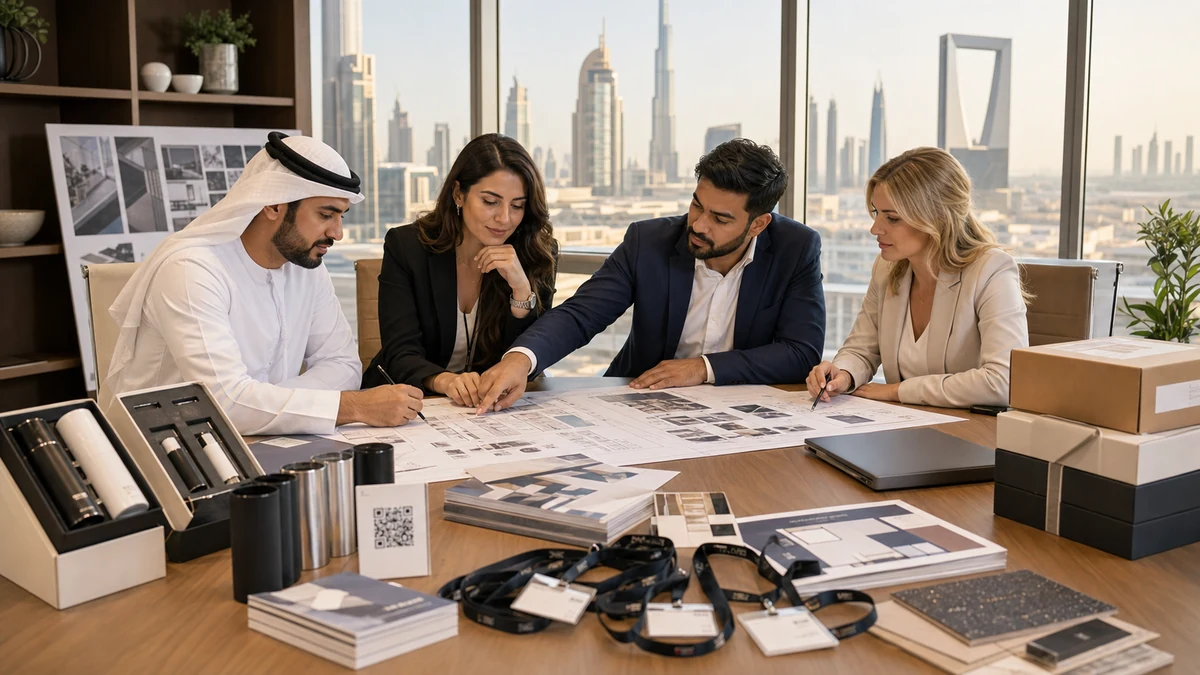
Dubai World Trade Centre exhibitor team preparing a booth
A diverse team prepares samples, documents, and booth flow before visitor traffic begins.

What makes Dubai World Trade Centre different for exhibitors

DWTC rewards exhibitors who prepare for international visitors, import questions, distributor screening, premium meetings, and fast multi-hall movement.

Dubai is a regional trade hub. A visitor may represent the UAE, Saudi Arabia, Qatar, Oman, Kuwait, Africa, South Asia, Europe, or a distributor network that covers several markets. That means your booth message should not assume one country, one language, or one buying process.

Major DWTC events also create different buyer modes. At a technology show, visitors may ask about integration and implementation risk. At a food show, they may ask about halal, labeling, shelf life, samples, and import documents. At a construction show, they may ask about technical specifications, local standards, durability, safety, and project fit.

Good exhibitors treat the venue as a serious comparison environment. They write simple booth messages, prepare country-ready proof, assign meeting roles, and use daily review to adjust before the next morning.

Plan DWTC hall movement before booth tactics

Before finalizing signage or demos, map how qualified visitors will move through halls, concourses, meeting rooms, metro access, and nearby competitor zones.

Start with the organizer floor plan and your exact hall and booth number. Mark nearby entrances, concourse paths, meeting rooms, country pavilions, food areas, restrooms, freight or service access, competitor clusters, and the route from the metro or major parking areas. Your booth number is only useful if a visitor can reach it easily.

Write one short location sentence that your team can use in email, WhatsApp, calendar invites, and booth replies. Dubai events often involve international visitors with packed schedules. A clear route saves time and reduces missed meetings.

Add walking buffers to scheduled meetings. A buyer may need to cross halls, bring a colleague, stop at another booth, or take a call. Short buffers make the booth team look disorganized even when the product is strong.

DWTC hall-planning checklist

  1. Mark hall, booth, entrances, concourse paths, metro route, parking route, meeting rooms, and service access.
  2. Identify nearby competitor clusters, country pavilions, media zones, and partner booths.
  3. Write one short booth-location sentence for email, calendar, WhatsApp, and staff replies.
  4. Build walking buffer time into every important meeting.
  5. Prepare a backup route for visitors arriving from another hall or entrance.
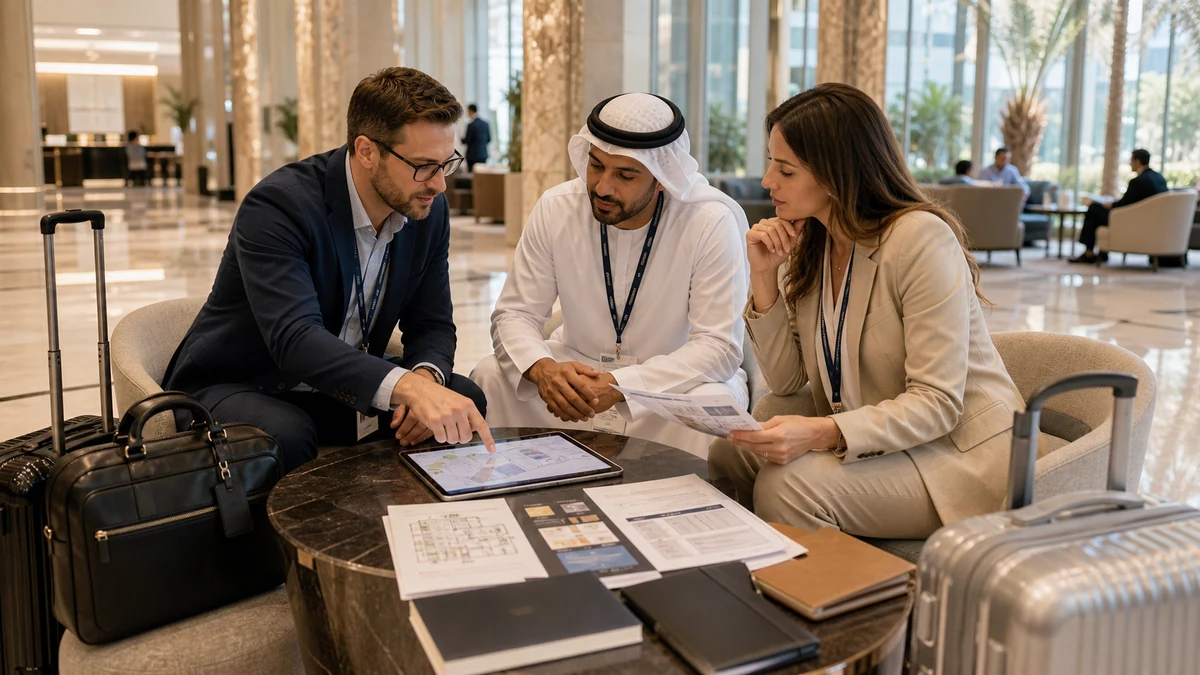
DWTC hall movement planning for exhibitors
An exhibitor team maps hall routes, concourse paths, meeting rooms, metro access, and nearby competitor zones.

Build a booth for importer and distributor comparison

A DWTC booth should make category, market fit, proof, and next step clear before the visitor commits to a longer conversation.

The front of the booth should explain the product category and buyer outcome in plain language. Avoid clever headlines that only make sense to the internal team. International visitors are moving quickly and may be comparing several suppliers in one afternoon.

Use a two-speed booth. The first speed is a short orientation for visitors passing the aisle. The second speed is a deeper discussion for buyers who need samples, documents, technical proof, distributor terms, or a meeting with a regional owner.

Keep the booth entrance open. Boxes, staff groups, chairs, or counters at the front make the stand feel closed. A clear entry point helps visitors ask quick questions and helps your team route them correctly.

Booth choices that work well at DWTC

  1. One clear front message: category plus buyer result.
  2. Visible product grouping by country, use case, industry, or buyer role when useful.
  3. A dedicated proof area for certificates, sample policy, technical sheets, and distributor material.
  4. A small reserved meeting zone for serious buyers and partners.
  5. A clean entrance with visible staff roles and no storage clutter.

Prepare import, sample, and distributor documentation before the show

At Dubai shows, documentation readiness is often part of the buying decision, not an administrative detail.

Prepare documents before travel: product datasheets, certificates, halal or quality proof when relevant, label explanations, warranty notes, sample policy, MOQ, quote process, distributor criteria, shipping limits, and country-specific answers. Decide which documents can be shared publicly and which require human review.

Operational planning matters too. Confirm freight timing, crate labels, service contractor deadlines, power, internet, adapters, badge access, product samples, cleaning supplies, repair kits, and restock responsibility. Dubai events can be intense, and small operational gaps create large distractions.

Assign named owners. One person owns logistics. One person owns documentation. One person owns meetings. One person owns distributor conversations. One person owns end-of-day review. Clear ownership prevents every issue from becoming a team-wide interruption.

Documents and operations to prepare

  1. Product datasheets, certificates, quality proof, label explanations, warranty notes, and sample policy.
  2. Distributor criteria, territory policy, partner support, regional owners, and onboarding steps.
  3. Quote process, MOQ, lead time, shipping limits, and payment or commercial process explanations.
  4. Freight labels, service deadlines, power, internet, adapters, demos, monitors, chargers, and backups.
  5. Badges, uniforms, printed material, samples, water, cleaning supplies, and evening restock plans.

Set a staffing rhythm for multilingual buyer conversations

DWTC staffing should protect language coverage, specialist access, meeting discipline, and end-of-day learning.

Define roles before the floor opens: greeter, qualifier, short-demo owner, technical specialist, importer or distributor owner, meeting owner, and note owner. A small team can combine roles, but the responsibility should still be explicit.

Language matters. Many conversations may happen in English, but Arabic and other languages can affect comfort, trust, and speed. Know who can handle which language and when to move from greeting to specialist support.

Run a morning briefing and evening debrief. In the morning, review scheduled meetings, VIPs, role assignments, proof documents, supply gaps, and common objections. In the evening, review what buyers asked, what materials were missing, which conversations need same-day follow-up, and what changes before tomorrow.

Staff roles to assign

  1. Greeter: welcome and route the right visitors quickly.
  2. Qualifier: identify buyer role, country, channel, product interest, and urgency.
  3. Demo owner: deliver a consistent short overview.
  4. Specialist: handle technical, import, certification, or project-depth questions.
  5. Meeting owner: protect scheduled conversations and written next steps.
Dubai trade show booth staff briefing
A manager assigns greeting, language coverage, demo, meeting, technical, and documentation roles.

Common DWTC exhibitor mistakes to avoid

Most DWTC mistakes are ordinary planning gaps amplified by international traffic, documentation expectations, and regional buyer diversity.

The first mistake is using a booth message that does not explain category or market fit. The second is treating all visitors as if they come from the same country or channel. The third is preparing samples but not sample policy, MOQ, shipping, or follow-up ownership.

The fourth mistake is not preparing proof. A serious buyer may ask for certification, labeling, durability, warranty, installation, or distributor documentation. If the team starts searching during the conversation, confidence drops.

The fifth mistake is skipping daily review. Dubai events can include evening meetings, dinners, and travel-heavy days, but the team still needs a short review before details disappear.

Mistakes that quietly reduce DWTC return

  1. Using a vague headline that does not explain the buyer outcome.
  2. Blocking the booth entrance with counters, chairs, boxes, or staff clusters.
  3. Letting every visitor receive the same long demo.
  4. Not assigning a clear owner for distributor and importer questions.
  5. Exporting all leads into one list without country, product, proof request, or priority.
DWTC exhibitor logistics and operations review
The team reviews samples, import paperwork, service items, meetings, and next-day changes.

A practical DWTC success playbook

A strong DWTC plan combines route clarity, proof readiness, role discipline, and daily correction.

Imagine a mid-sized exporter preparing for a Dubai trade show. Before travel, the team maps the hall route, writes a short booth-location sentence, prepares product and country proof, creates a short demo and a deep meeting path, and assigns owners for greeting, qualification, technical questions, distributor conversations, meetings, and notes.

On day one, the booth front explains the product category and regional value in plain language. The greeter routes visitors. The qualifier asks about country, channel, product interest, and urgency. Specialists handle import or technical depth. The meeting owner writes next steps before the buyer leaves.

That evening, the team notices that buyers keep asking for a sample policy, distributors need clearer territory language, and several meetings ran late because the walking buffer was too short. The next morning, the team adjusts the script, moves the sample policy closer to the display, and expands meeting buffers.

That discipline helps at DWTC. Success is not only a large stand or a busy aisle. It is the ability to reduce friction, answer serious questions, and improve the plan before the event is over.

Sources and quality note

This guide uses official DWTC and event references, then turns those facts into practical exhibitor planning advice.

Venue facts are based on official Dubai World Trade Centre venue, halls, pavilion, and meeting-room pages. GITEX GLOBAL, Gulfood, and Big 5 Global official DWTC pages are used as event examples for technology, food, construction, and regional trade demand.

Industry context is informed by UFI's Global Exhibition Industry Statistics report page. The tactical advice is editorial guidance and should be adapted to each event organizer's exhibitor manual, service contractor rules, safety requirements, privacy requirements, and budget.

FAQ

What is the most important DWTC exhibitor tip?

Plan for international buyer comparison, not just booth traffic. Make the booth easy to find, easy to understand, and ready with proof documents.

How should exhibitors prepare for importer questions?

Prepare import documents, certificates, sample policy, MOQ, shipping limits, regional pricing context, and an owner for country-specific questions.

How should booth staff be organized?

Assign greeter, qualifier, demo owner, specialist, importer or distributor owner, meeting owner, and note owner roles before the floor opens.

What mistakes should DWTC exhibitors avoid?

Avoid vague booth messaging, blocked entrances, one-size-fits-all demos, missing proof documents, and flat lead lists without country or question context.

Should this guide replace the official exhibitor manual?

No. Use the official exhibitor manual, organizer rules, and service contractor instructions for deadlines, safety, freight, booth rules, and required procedures.

Last updated

Last updated: 2026-06-14.

Next step: turn DWTC booth conversations into a follow-up system

Once the venue plan is clear, decide how the team will capture importer questions, distributor interest, product questions, sample requests, and follow-up priority. The companion guide explains that workflow.

Read the DWTC buyer-question guide