
Phone coverage alternatives
Answering Service Alternatives for Small Businesses: 8 Options Compared
Choose phone coverage by the calls you need to protect, the answers customers can find without calling, and the work your team must still own.
Quick answer
There is no single substitute for an answering service. The useful alternatives are improved voicemail and callbacks, missed-call text-back, booking or quote forms, a focused FAQ, a public self-service answer page, an in-house coverage rota, selective live overflow, and an AI voice receptionist.
Choose by contact reason. Stable information can move to self-service. Structured requests can move to a form or callback queue. Urgent, emotional, high-value, or exception-heavy calls still need a person with authority. Many small businesses need a hybrid, not one tool forced across every call.
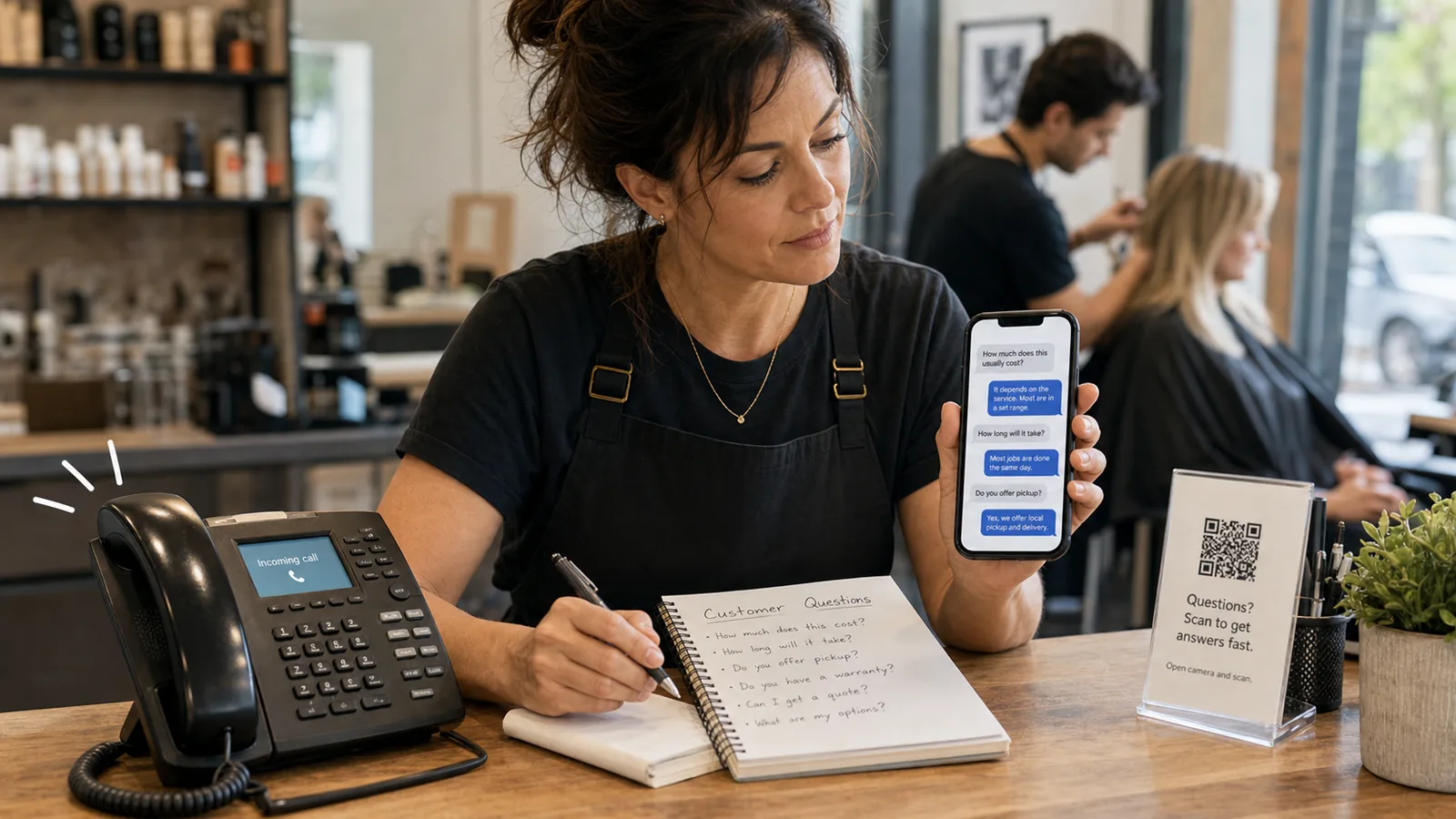
Audit the coverage gap before choosing a replacement
An answering service solves a coverage problem. Define that problem by time, contact reason, and required authority.
Review one normal week of calls, missed calls, voicemail, and callback notes. Do not begin with the vendor category. For each legitimate contact, record why the person called, when the call arrived, what information was needed, and what outcome followed.
| Field | Question to answer | Why it matters |
|---|---|---|
| Contact reason | Hours, service area, quote, scheduling, existing job, complaint, urgent request, or other? | Shows which calls are repeatable. |
| Coverage gap | Busy period, lunch, field work, evening, weekend, or holiday? | Prevents paying for coverage when the gap does not exist. |
| Required authority | Can a script answer, or must someone approve a price, exception, refund, or commitment? | Separates information from decisions. |
| Live data | Does the answer require the current schedule, inventory, job record, or customer account? | Reveals integration and handoff needs. |
| Outcome | Answered, booked, quoted, called back, abandoned, or unresolved? | Creates a baseline for the pilot. |
Label each reason with one route: self-service, structured request, scheduled callback, or live human. If you cannot agree on the route internally, an external service will not fix the ambiguity. It will simply inherit it.
Compare 8 answering service alternatives
The options differ most in channel, judgment, response speed, and maintenance burden.
| Alternative | Best fit | Strength | Main limitation |
|---|---|---|---|
| 1. Better voicemail and a defined callback window | Low call volume and owner-operated teams | Sets a truthful next step with almost no new system | Fails when the mailbox is not monitored or the promise is vague |
| 2. Missed-call text-back | Callers who need acknowledgement and a simple route | Can point to hours, a request form, or a monitored reply channel | Automated texts require careful consent, message, and opt-out review |
| 3. Booking or quote-request form | Structured appointments and estimates | Collects the fields needed for an informed response | A long form or an unmonitored queue becomes another dead end |
| 4. Focused FAQ or service-information page | Stable questions about hours, area, process, and policies | Works before and after phone hours and is easy to update | Customers must find the right page and trust that it is current |
| 5. Public self-service answer page | Customers asking varied questions from links, signs, cards, or QR codes | Lets people ask in their own words from the point of confusion | Does not answer calls or make decisions requiring live business data |
| 6. In-house shared coverage rota | Teams with enough staff and a limited peak window | Keeps product knowledge and authority inside the business | Interruptions move to another employee unless shifts are protected |
| 7. Live overflow or after-hours answering | Valuable calls that need listening, triage, or reassurance | Provides human handling only where the gap is expensive | Needs scripts, escalation rules, message standards, and quality review |
| 8. AI voice receptionist | Predictable incoming call types with clear routing rules | Can provide immediate phone coverage for approved tasks | Needs testing, disclosure, human escape routes, and strict boundaries |
These options can work together. A business might publish accurate answers, collect quote details through a short form, use a callback block twice a day, and buy live overflow only during its busiest two hours. That is still a complete coverage design.
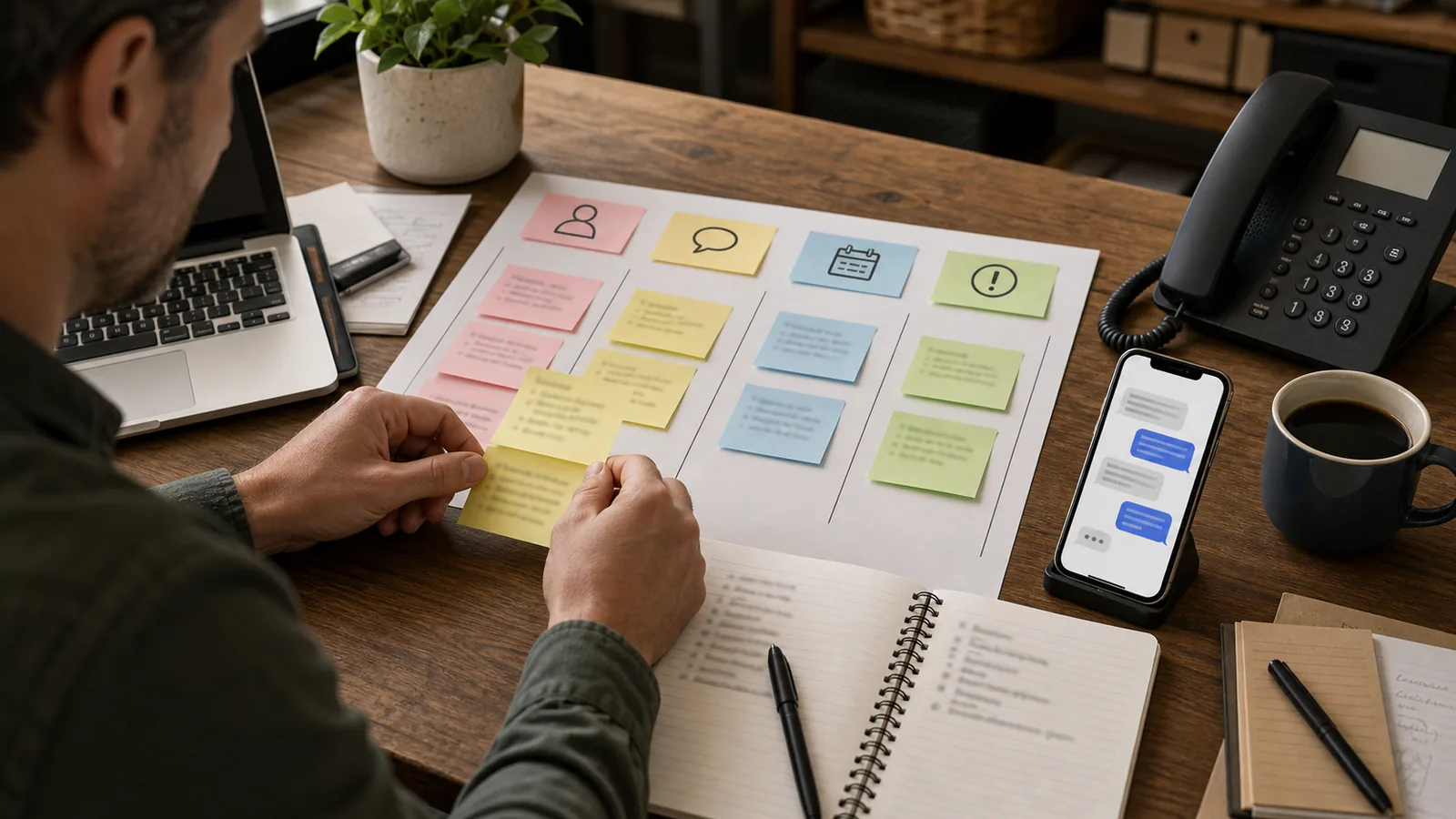
Compare total operating cost, not only the monthly price
The cheapest subscription can be expensive when it creates rework, and live help can be economical when it protects valuable calls.
Use a simple monthly worksheet. Add the vendor fee, usage charges, setup work, staff review time, integration work, and the cost of correcting bad messages or duplicate intake. Then subtract only outcomes you can observe, such as fewer repeat calls, faster qualified callbacks, more completed requests, or less interruption during billable work.
Ask every provider or internal owner the same questions:
- What counts as a call, minute, message, transfer, or completed task?
- What happens during a surge or after the included allowance?
- Can the system transfer, schedule a callback, or only take a message?
- Which business systems can it access, and with what permissions?
- Who reviews errors, updates scripts, and handles complaints?
- How quickly can the business export its data or leave the service?
Do not invent a revenue value for every call. Mark high-value opportunities separately and review real outcomes after the pilot.
Match the option to the call, not the business label
One company can have four different contact reasons that need four different routes.
Stable information: Put accurate hours, location, service area, preparation steps, and policy basics on a mobile page. Mention that route in voicemail and on the public profiles customers already use.
Structured action: Use a short booking or quote-request flow when staff need the same fields every time. Say whether the request is confirmed immediately or reviewed later.
High-value or exception-heavy conversation: Preserve a human route. A live service or protected in-house callback block may be worth more than broad coverage if the caller needs judgment or negotiation.
Predictable phone-first questions: Test an AI voice receptionist only with approved scenarios and an obvious path to a person. It should say what it can do and recover safely when it cannot answer.
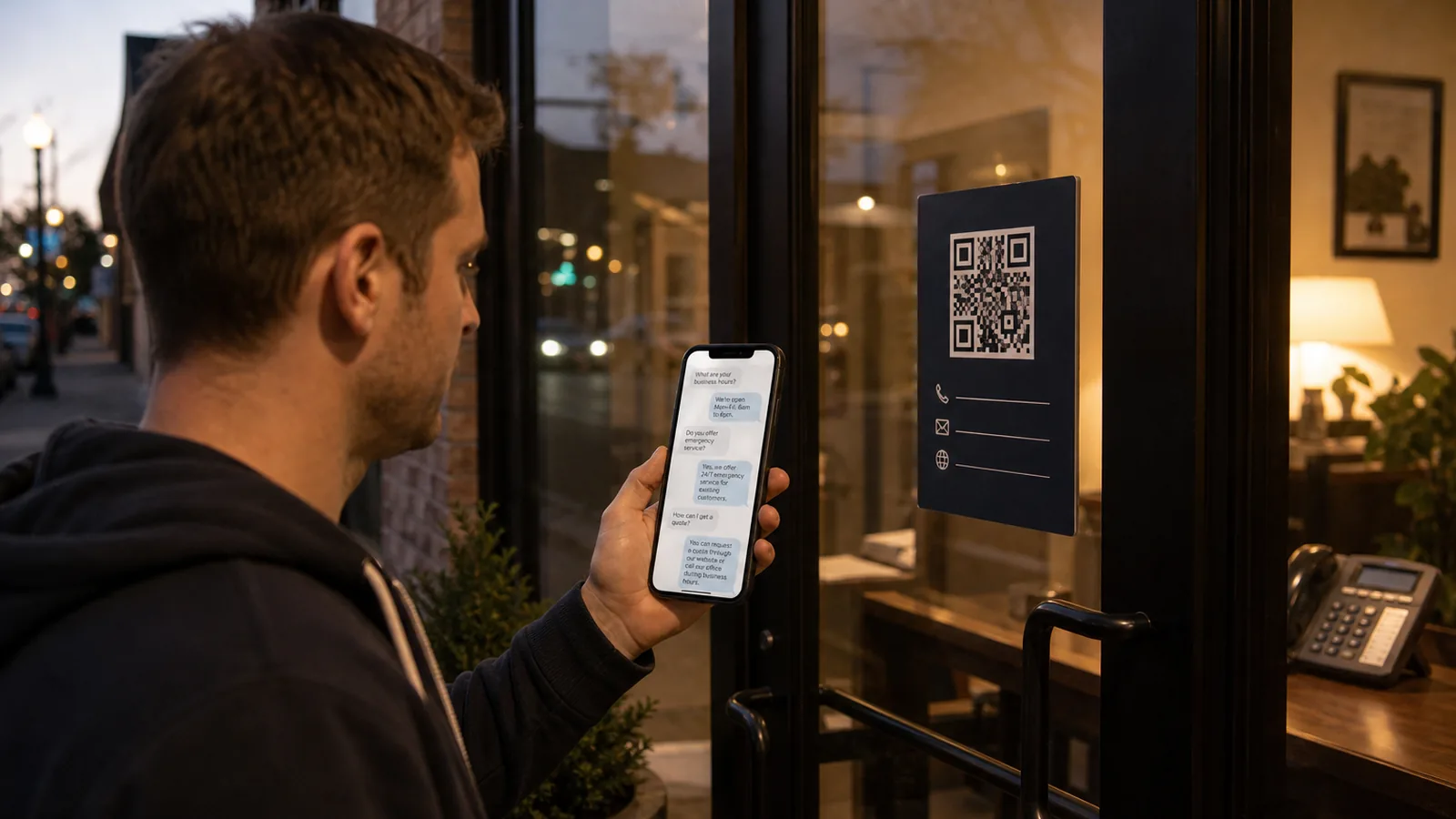
Questions from physical materials: A focused link or QR answer page can help before the customer chooses to call. The printed prompt should say what opens after the scan, and a normal contact option should remain available.
Run a 30-day pilot without changing every channel
Test one coverage gap and a defined set of contact reasons before expanding.
- Days 1-7, baseline: record contact reason, arrival time, response time, next step, and outcome using the current process.
- Days 8-14, prepare: update public hours and core answers, write the callback promise, define human-only topics, and test every destination on mobile.
- Days 15-28, operate: route only the selected contact reasons through the alternative. Review failed answers and handoffs each business day.
- Days 29-30, decide: compare outcomes with the baseline and choose whether to keep, revise, expand, or stop.
Measure useful outcomes: messages with enough context, callbacks completed within the stated window, requests completed, repeated questions avoided, transfers that reached the right person, complaints, and unresolved topics. Fewer calls alone is not success if customers simply gave up.
Privacy, control, and customer-experience checks
Collect the least information needed for the next step and keep authority boundaries visible.
The FTC's business guidance recommends knowing what personal information a business receives, keeping only what it needs, limiting access, protecting retained information, and planning for incidents. Apply those principles to voicemail, forms, call summaries, transcripts, and vendor dashboards.
- Do not request payment details, passwords, or sensitive identifiers in voicemail or general chat.
- Tell customers whether they are interacting with automation or a person.
- Define which topics require a human and how that handoff works.
- Confirm who can access recordings, transcripts, contact details, and exports.
- Document retention and deletion responsibilities before launch.
- Review automated text-back against the current rules that apply to the workflow.
Google's Business Profile guidelines also say the listed phone number should connect to the individual business location and remain under the business's direct control. Keep public phone, hours, website, and service information aligned with the route you test.
Official sources and review note
This guide uses official guidance for the operating checks above. It does not provide legal, privacy, or compliance advice.
- U.S. Small Business Administration: Market research and competitive analysis
- Federal Trade Commission: Protecting Personal Information, A Guide for Business
- Federal Communications Commission: Stop unwanted robocalls and texts
- Google Business Profile Help: Guidelines for representing your business
- W3C: How to Meet WCAG 2.2
FAQ
What is the best alternative to an answering service?
The best fit depends on the missed moment. Stable information belongs in self-service, structured requests can use forms or callbacks, and urgent or exception-heavy calls need live people.
Can automation replace an answering service?
It can replace selected tasks, not every conversation. Define approved contact reasons, live-data limits, and a human handoff before automating phone coverage.
Is missed-call text-back a good idea?
It can provide a useful next step when the inbox is monitored and the message is reviewed against applicable consent and messaging requirements. It should not become an unsolicited promotional sequence.
Should I hire a live answering service or build self-service first?
Build accurate public answers first when repeated questions dominate. Add live coverage where calls require urgency, emotion, authority, or high-value judgment.
How does RealLink AI fit?
RealLink AI is a public answer page for links and QR codes. It can handle common questions from business-provided information, but it is not a phone answering service.
Last updated
Last updated: 2026-08-08. The page was restructured around coverage-gap diagnosis, total operating cost, and a measurable pilot. Official source links were rechecked.
Next guide
Compare an AI phone receptionist, a human answering service, and a self-service answer page as three distinct operating models.