
MTCC buyer-question capture guide
Metro Toronto Convention Centre Exhibitor Guide: Capturing Canadian and Cross-Border Buyer Questions
A practical guide for turning MTCC booth, catalog, product sample, and meeting QR scans into buyer questions your team can use for Canadian and cross-border follow-up.
Summary
At Metro Toronto Convention Centre, the valuable signal is not only who stopped at the booth. The valuable signal is what they asked about: Canadian compliance, bilingual material, distributor rights, U.S.-Canada shipping, pricing, samples, or enterprise proof.
Use QR codes on booth signs, catalogs, samples, proof cards, and meeting follow-up cards to let visitors ask questions while the topic is fresh, then use those questions to prioritize post-show outreach.
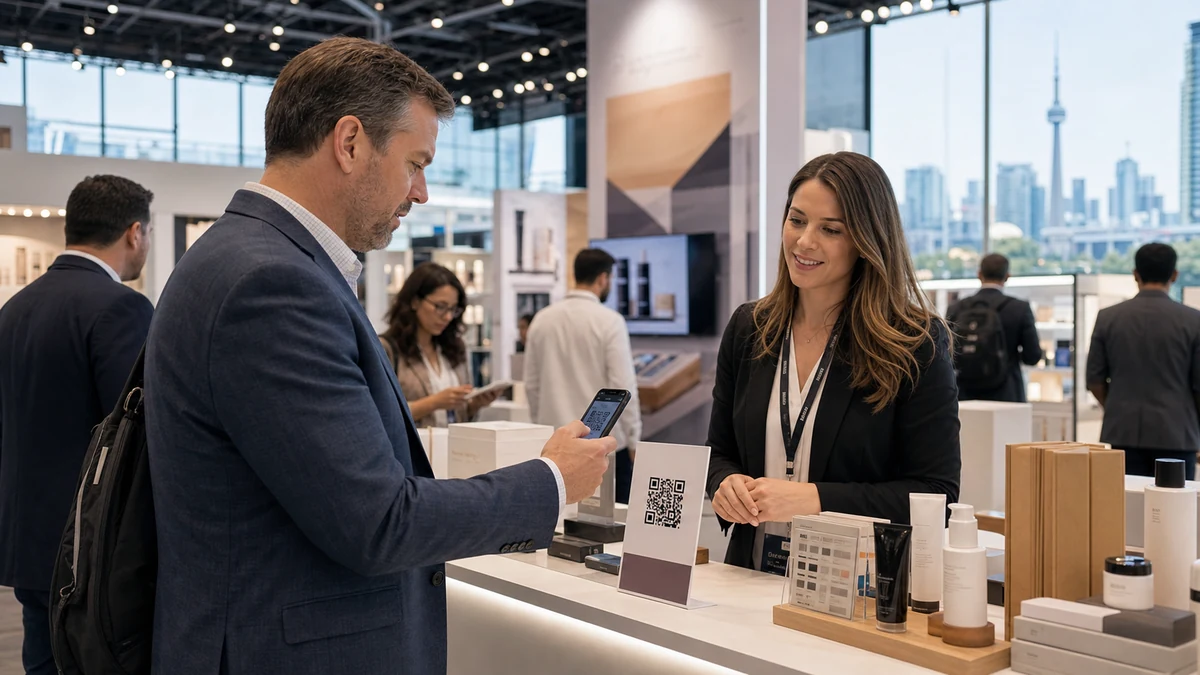
Why MTCC exhibitors should think beyond booth traffic
Downtown Toronto can bring high-quality visitors, but a badge scan alone rarely explains what they wanted.
A visitor may scan a badge because the booth was busy, because a colleague asked for a brochure, or because they were collecting suppliers before a later meeting. That is useful, but it is incomplete. The question they ask after the scan tells you whether they care about Canadian rollout, cross-border shipment, bilingual support, retail readiness, or enterprise review.
For MTCC exhibitors, this matters because the same event can include local Canadian teams, U.S. visitors, international delegates, distributors, media, and conference attendees. The list of names will look similar in a CRM. The questions will not.
Where buyer questions disappear at MTCC
Questions often disappear when visitors move between buildings, meetings, transit, hotels, and after-show plans.
A visitor may hear a product explanation in the South Building, walk to a meeting room, leave through Union Station, and scan the catalog later from a hotel or train. If the QR code leads only to a homepage, the visitor has to translate their own question into navigation. Many will not.
The leak is worse when the buyer question is specific: Can you ship samples to Vancouver? Do you support French packaging? Can a U.S. distributor handle Canadian returns? Do you have privacy documentation? These questions need a direct answer path, not a generic landing page.
Best QR placements for MTCC exhibitors
Each QR placement should match the moment of the question: booth entry, product display, sample, proof card, catalog, or meeting follow-up.
Place one QR at the booth entrance for the broad Canadian market fit question. Put another beside the product display for specifications, model comparison, safety, warranty, and usage questions. Put a QR on the line sheet for pricing, MOQ, retail readiness, and distributor criteria.
Use a separate QR on the shipping or compliance card for U.S.-Canada logistics, labeling, privacy, certification, and warranty territory. If French-language follow-up matters, create a visible path for that as well. The goal is not more QR codes. The goal is less guessing after the scan.
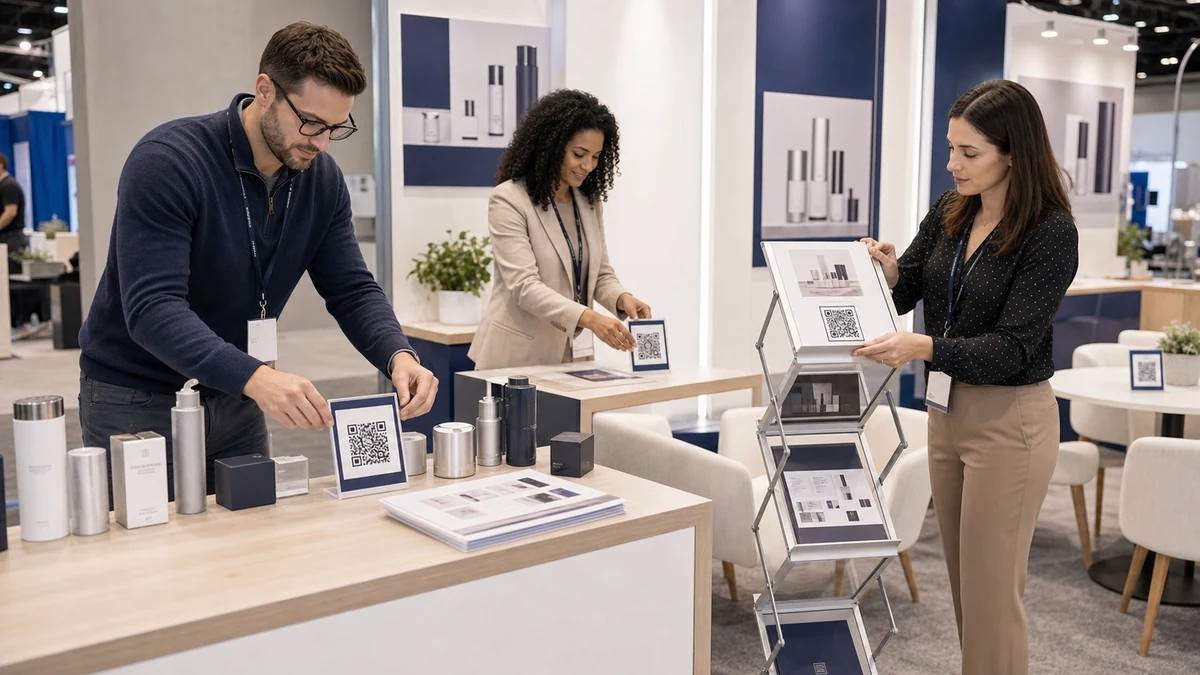
Canadian and cross-border buyer questions worth capturing
The questions that feel operational during the show often become the best post-show segmentation data.
If ten visitors ask about Canadian service coverage, the booth message needs more local proof. If Quebec buyers ask for French material, follow-up should not be English-only. If U.S. visitors ask about returns, the team needs a border answer before the next day. If distributors ask the same territory question, channel policy needs to be clearer.
Sort questions by role and topic while the show is still running. A buyer who asks about sample lead time should not receive the same follow-up as a visitor who asks about enterprise security or retail packaging.
| Situation | Question to expect | Preparation or follow-up |
|---|---|---|
| Canadian market fit | Can this be sold, serviced, labeled, or supported in Canada? | Send Canada proof, local service note, warranty territory, and owner. |
| U.S.-Canada shipping | How do samples, returns, duties, and lead times work across the border? | Send shipping assumptions, sample route, return note, and logistics contact. |
| Bilingual follow-up | Do you have French material or support for national Canadian teams? | Send English/French summary and language-specific follow-up owner. |
| Distributor interest | Can we represent this by region, province, sector, or channel? | Send channel criteria, territory rules, margin logic, and next meeting link. |
| Enterprise review | Can procurement, privacy, security, or implementation teams review this? | Send proof checklist, technical note, and account owner handoff. |
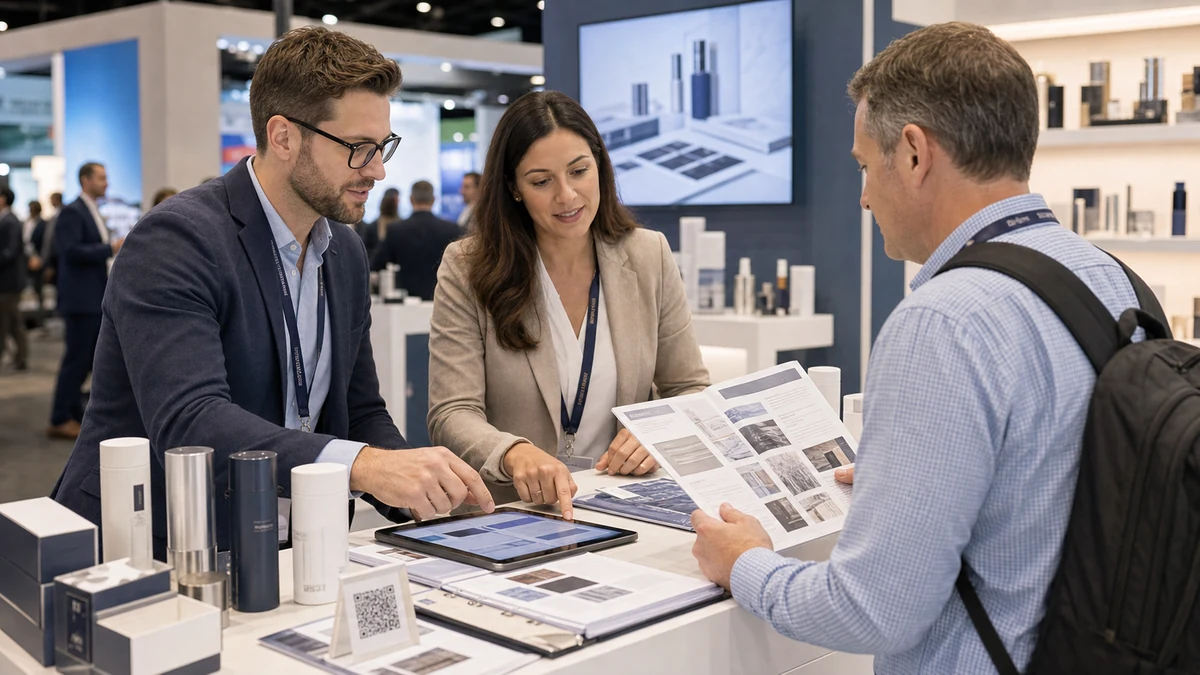
Create the question categories before the first scan
The best data comes when the team names question categories before the show opens.
Use simple categories: Canadian market fit, U.S.-Canada shipping, French or bilingual material, distributor interest, sample request, retail readiness, compliance proof, enterprise review, pricing, and meeting request. Each QR source should have a label that says where the question began.
This makes the export useful. Instead of one list of anonymous scans, you can see that product-display scans produced specification questions, line-sheet scans produced distributor questions, and shipping-card scans produced border questions. That is information your sales team can actually use.
Question-matched proof checklist for MTCC follow-up
Do not answer every serious question with the same brochure. Match the proof to the question.
A Canadian compliance question should trigger compliance evidence. A distributor question should trigger channel criteria. A French-language request should trigger bilingual material. A shipping question should trigger assumptions, not a vague promise. A sample question should trigger a clear sample policy and owner.
This is where MTCC follow-up can become sharper than a normal trade-show email. The message can begin with the exact thing the visitor asked, then attach the proof that reduces friction.
| Situation | Question to expect | Preparation or follow-up |
|---|---|---|
| Question about labeling | What packaging or label changes are needed for Canada? | Packaging note, bilingual copy status, compliance owner. |
| Question about samples | Can you send samples after the Toronto show? | Sample policy, address capture, timeline, responsible owner. |
| Question about channel | Can we distribute this in Ontario, Quebec, or another region? | Territory rules, distributor criteria, margin discussion path. |
| Question about privacy | Can we review data handling before a pilot? | Security or privacy note, procurement-ready contact, meeting owner. |
| Question about retail rollout | Can this fit our category, margin, and season? | Line sheet, case proof, Canadian buyer summary. |
Use buyer questions to write better post-show emails
The strongest follow-up after MTCC is not 'nice meeting you.' It is 'you asked about U.S.-Canada sample shipping, so here is the answer.'
Within 24 hours, group questions into urgent deals, distributor interest, proof requests, sample requests, bilingual follow-up, and nurture. Send the specific answer first, then the broader material. If the question came from a product display QR, mention the product. If it came from a shipping card, mention the shipment concern.
This approach also shows where the booth message failed. If visitors repeatedly ask the same basic question, the sign, catalog, or opening line should change before the next MTCC show.

How RealLink AI can help MTCC exhibitors
After the booth, catalog, or sample QR is scanned, RealLink AI can act as a public AI answer page that answers visitor questions and records what people asked.
For MTCC exhibitors, RealLink AI can connect booth signs, product displays, catalogs, sample cards, and follow-up cards to an AI answer page trained on your product, pricing rules, shipping assumptions, compliance notes, meeting links, and approved business information. Visitors ask in their own language and get a direct answer instead of searching a website.
The business value is not only answering simple questions. The collected questions become intent data: which product created interest, which proof was missing, which language was needed, which buyer wanted samples, and which follow-up should happen first.
Official sources and quality note
This article uses official Metro Toronto Convention Centre venue, rooms, access, and exhibitor move-in information as factual grounding. Binding booth, freight, labor, safety, service, and schedule rules should always be confirmed in the event organizer manual and MTCC exhibitor resources.
MTCC Rooms and Spaces | MTCC How to Get Here | MTCC Exhibitor Move-In and Move-Out Services | MTCC About Our Facility
FAQ
Is this guide only for technology exhibitors?
No. It works for product brands, exporters, service providers, manufacturers, food companies, education teams, and B2B suppliers that need better post-show follow-up.
How many QR codes should an MTCC booth use?
Use enough to separate intent: booth entry, product display, catalog or line sheet, shipping or compliance proof, sample request, and meeting follow-up. Do not create extra codes without a clear purpose.
Can buyer questions replace badge scans?
No. Badge scans still identify people. Questions explain what they care about, so the two signals are stronger together.
When should RealLink AI be introduced to visitors?
Put it behind a practical scan moment: product details, sample questions, shipping answers, meeting follow-up, or bilingual support. The visitor should feel that the QR helps them, not that it is a generic promotion.
Last updated
Last updated: 2026-06-28.
Hire an AI Sales Rep for your next trade show
Your booth, catalog, and product samples can answer buyer questions in multiple languages and turn those questions into follow-up data.