
New Zealand | AI chatbot decision guide
AI Chatbot for New Zealand Small Businesses: What It Should and Should Not Answer
A useful chatbot does not try to sound knowledgeable about everything. It answers approved, stable questions well, checks live facts in the right system, and gives uncertain or consequential requests to an accountable person.
Summary
An AI chatbot for a New Zealand small business should begin with a narrow, low-risk job: answer approved public questions, clarify what the customer needs, and route the next action. It should not invent current stock, confirm bookings without a connected source, issue final quotes, approve refunds, interpret unusual safety conditions, or make promises that only a staff member can authorise. Before comparing tools, audit real enquiries and classify them as stable information, live operational facts, human judgement, complaints, or urgent matters.
Build the first version from owned sources with named reviewers and expiry dates. Tell customers when they are interacting with automation, minimise the personal information collected, offer an accessible human route, and check where the provider stores or processes information. New Zealand businesses and organisations need a privacy officer, and overseas disclosure can engage Information Privacy Principle 12. Run a 30-day pilot on one customer journey and measure useful resolution, corrections, handoff completion, repeat contact, accessibility, and staff time saved rather than chat volume alone.

Start with the customer job, not the chatbot feature list
The right first question is which customer task should become easier, not which model, avatar, or automation feature looks most advanced.
Choose one journey where repeated questions slow a customer down and the correct answers already exist. An equipment supplier might begin with product-document locations and quote preparation. A property-maintenance company might begin with service-area checks, appointment preparation, and the correct route for an existing job. A training provider might begin with public course information and enrolment prerequisites. A narrow job makes accuracy, ownership, and value observable.
Collect two to four weeks of real enquiries from phone notes, email, forms, website search, staff messages, and existing FAQs. Remove names, addresses, order numbers, recordings, and other identifying details that are not needed for analysis. Keep the wording of the question, the source used to answer it, whether the answer changed, the next action, and whether a customer had to contact the business again. This reveals the work behind the conversation.
Do not assume every conversation is suitable for automation. Some customers want reassurance, negotiation, an exception, or help explaining an unusual situation. Some need an accessibility adjustment or prefer the phone. The pilot goal is not to deflect the largest possible number of people. It is to remove avoidable waiting while preserving a dependable path for work that benefits from a person.
Write a one-sentence pilot outcome before vendor selection. A useful example is: customers can find approved preparation and document information at any time, and requests needing current availability reach the correct queue with enough context for one follow-up. That outcome is testable. A goal such as provide world-class AI support is not.
- Pick one customer journey with repeated, answerable questions.
- Use anonymised real enquiries rather than imagined FAQ prompts.
- Record the source, next action, repeat contact, and eventual outcome.
- Preserve phone and accessible alternatives.
- Define a customer outcome that can be tested in 30 days.
Classify every question by evidence, freshness, and authority
Stable public information, current operational facts, authorised decisions, complaints, and urgent issues need different answer rules.
Stable public information is the safest starting category. It can include normal opening hours, broad service areas, public product specifications, standard preparation, common delivery steps, document locations, and the information normally needed to request a quote. Even stable information needs an owner and review date. Seasonal hours, discontinued models, changed coverage, and revised instructions can make yesterday's safe answer wrong.
Current operational facts belong to a current system or a person who can check it. Stock, booking availability, job status, delivery position, a customer's balance, and a crew's capacity change during the day. A chatbot without a reliable authorised connection should explain how confirmation works and gather minimal context; it should not turn a usual pattern into a confirmed fact. Connected tools still need failure handling when data is missing, stale, or contradictory.
Human judgement includes final quotes, suitability for unusual conditions, complaints, refunds, contract changes, exceptions, accessibility arrangements, and any decision with material safety or financial consequences. Automation may explain the general process and collect a useful summary, but it should not close the matter. Urgent requests require a route the business is genuinely staffed and trained to handle; a chatbot should never imply emergency monitoring when none exists.
Create an authority map in plain language. For each question family, record the approved source, maximum answer age, allowed claims, prohibited claims, information that may be collected, destination queue, response expectation, and owner. The map is more valuable than a long script because it gives content, support, sales, operations, and the vendor one shared operating boundary.
| Question class | Typical example | Safe first response | Do not let the chatbot |
|---|---|---|---|
| Stable public information | Hours, broad coverage, document location, standard preparation | Answer from an approved dated source | Use an undated draft or contradict the website |
| Current operational fact | Stock, appointment, job status, delivery position | Check an authorised live source or route for confirmation | Present a usual pattern as confirmed |
| Human judgement | Final quote, exception, unusual suitability, refund | Explain the process and hand off with context | Approve, guarantee, or bind the business |
| Complaint or dispute | Damaged goods, cancellation, poor service | Acknowledge and route to an accountable owner | Argue, assign fault, or promise a remedy |
| Urgent or safety matter | Time-sensitive issue within or outside service scope | Show the real staffed route or appropriate public service | Pretend the chat is continuously monitored |

Build a small approved source pack before writing answers
A chatbot cannot be more dependable than the sources, ownership, and update process behind its answers.
Start with ten to twenty question families, not the entire shared drive. For each one, create a source record with a direct answer, important conditions, next action, owner, approver, effective date, review date, and links to the authoritative document or system. Use customer language in the answer and internal identifiers only in the source record. If two documents disagree, stop the answer until the owner resolves the conflict.
Write answers in three layers. The first sentence should directly answer the ordinary question. The second should name the condition that commonly changes the answer. The third should tell the customer what to do next. This pattern is easier to scan on a phone and easier to test than a long policy paragraph. It also makes uncertainty visible instead of hiding it behind fluent wording.
Treat marketing claims as evidence-controlled content. The New Zealand Commerce Commission explains that traders must not mislead customers or give false information, and claims need an appropriate basis. A chatbot repeating an unsupported best, guaranteed, always, compliant, or made-in claim does not make it safer. Keep evidence for material claims, name limitations, and route unusual interpretations to staff.
Use a publication checklist. Check prices and whether they include GST, measurement units, product versions, regional coverage, time zones, closure dates, contact routes, accessibility, translations, and links. Read the answer aloud as if the customer had no prior context. Then ask a staff member who handles the work to test both the ordinary case and the most common exception.
- One approved source record per question family.
- Direct answer, condition, and next action in that order.
- Named owner, approver, effective date, and review date.
- Evidence retained for material product and service claims.
- Stop the answer when sources conflict or have expired.
Compare chatbot tools on control and handoff, not fluency
A convincing demo is less important than source control, uncertainty handling, privacy settings, accessibility, and a complete exit to a person.
Ask every vendor to demonstrate your own anonymised scenarios. Include a routine question, an ambiguous question, an outdated source, a request for current availability, an unusual quote, a complaint, and an urgent issue outside scope. Watch whether the tool asks a useful clarifying question, cites or identifies its source, states uncertainty, refuses an unauthorised promise, and offers a workable next step. A rehearsed product tour cannot answer those questions.
Inspect how content is added and changed. Can staff limit the tool to approved pages and documents? Can a source be disabled immediately? Are answer history, source references, and change logs available? Can different roles publish and approve? What happens when a webpage and uploaded document disagree? Can the system distinguish public information from authenticated customer data? These controls determine the ongoing workload.
Test the handoff as carefully as the answer. Confirm what the customer sees, what context reaches staff, which queue receives it, how ownership is assigned, and whether the customer has to repeat the issue. Check the route after hours and on mobile. A handoff is not complete because an email was sent; it is complete when the right person can see, own, and act on enough information.
Review the full cost. Include subscription charges, usage limits, USD conversion where relevant, integration work, source maintenance, answer review, staff training, privacy and security checks, escalation work, and exit. Ask how data and content can be exported or deleted. A low monthly price can still create expensive manual correction if control and reporting are weak.
| Evaluation area | Vendor evidence to request | Failure signal |
|---|---|---|
| Answer control | Your scenarios, source references, expiry and conflict handling | Fluent answers with no visible basis |
| Human handoff | End-to-end test into the real staff queue | Generic contact link or lost transcript |
| Privacy and security | Data flow, access, retention, deletion, subprocessors, incident process | Vague assurances without settings or terms |
| Accessibility | Keyboard, screen reader, zoom, mobile, language and phone alternatives | Chat widget is the only route |
| Operations | Roles, change history, correction workflow, export and exit | One administrator and no audit trail |
| Commercial fit | Complete recurring and implementation cost | Price shown without usage and maintenance assumptions |
Map the data flow before inviting customer questions
Know what the chatbot collects, where it travels, who can access it, how long it remains, and how a customer can exercise privacy rights.
New Zealand's official business guidance says privacy responsibilities continue to apply when a business uses AI and recommends checking what information goes into a tool, whether personal or sensitive information can be avoided, where information is stored, who receives it, and how long it is retained. Begin with public questions and anonymous testing. Do not ask for a name, phone number, email, address, order reference, or free-text history unless the next action genuinely requires it.
Draw the data flow from the customer's device to the chatbot provider, model provider, analytics, integrations, email, CRM, staff device, backup, and deletion process. Record purpose, field, legal basis or authority to be checked, location, access role, retention, deletion trigger, and incident owner. The diagram can be simple, but it must reflect the actual configuration rather than a vendor's generic architecture.
The Privacy Act requires every New Zealand business or organisation to have a privacy officer. In a small firm this can be an internal person who understands the business and its obligations. Give that person visibility of the pilot, supplier review, privacy statement, access and correction process, complaints, incidents, and material configuration changes. A title without time, access, or authority does not create oversight.
If personal information is disclosed outside New Zealand, Information Privacy Principle 12 may apply. The Office of the Privacy Commissioner explains the conditions for overseas disclosure and provides a decision framework. Do not infer compliance from the provider having a familiar brand or a New Zealand customer. Check the actual recipient, contractual protections, comparable safeguards, customer authorisation where relied on, and whether the arrangement is truly a disclosure under the circumstances.
- Default the public answer route to no personal information.
- Map providers, models, integrations, storage locations, and staff access.
- Set retention and deletion for transcripts and handoff records.
- Give the privacy officer real oversight of the pilot.
- Check Information Privacy Principle 12 for relevant overseas disclosure.
Make automation, limitations, and alternatives visible
Customers should know when they are interacting with AI, what it can do, and how to reach an accessible human route without solving a puzzle.
Use plain opening language. Identify the business, explain that the customer is using an automated answer service, name the type of information it can provide, and offer the human or phone route. Do not imitate a staff member or invent a personal name. If a transcript or contact detail will be retained, explain the purpose at the point where it is requested and link to the relevant privacy information.
Design for a phone screen first. Keep the input, send control, answers, source links, and handoff visible at zoom. Support keyboard navigation, screen readers, sufficient contrast, clear focus, and readable error messages. Do not require chat for a customer who uses assistive technology or simply prefers another channel. Test with slow connections and without optional scripts where practical.
Language support needs operational ownership. A tool that can produce te reo Maori or another language is not automatically accurate for local names, tikanga, technical terms, conditions, or customer commitments. Use reviewed terminology for supported journeys, state when a translation is automated, preserve the original enquiry for staff where appropriate, and provide a person when meaning is uncertain.
Set an honest response expectation. If staff review handoffs only on business days, say so with the time zone. If the channel is not for emergencies, say that before the customer enters a long message. If a live agent is unavailable, do not leave the customer in an endless queue. Trust is built by a predictable boundary more than by a human-like typing animation.
- Disclose automation in clear customer language.
- State scope, staffed hours, time zone, and urgent-use boundary.
- Provide keyboard, screen-reader, mobile, phone, and human alternatives.
- Review terminology for every language the business actively supports.
- Never use human-like presentation to hide a system limitation.
Design a handoff that carries context without over-collecting
The customer should not have to repeat a useful conversation, but staff should receive only the information needed for the next action.
Define handoff triggers before launch. Trigger on customer request, repeated uncertainty, unsupported source, current-system dependency, negative sentiment, complaint, accessibility need, material decision, or safety language. Do not rely only on a confidence score. A tool may sound confident when it lacks authority, and a customer may remain polite while the route repeatedly fails.
Collect structured context late, not at the beginning. Ask what the customer wants to achieve, relevant product or service family, location or timing where necessary, preferred reply channel, and the smallest identifier staff need. Explain why each personal field is required. Keep passwords, card data, identity documents, sensitive personal information, and lengthy confidential descriptions out of a general chat route.
Create a shared receiving queue with an owner, backup, priority rule, and response target. The staff view should show the customer's question, answers already given, sources used, uncertainty, consent or notice context where relevant, and requested next step. It should not bury the issue in a transcript. Summaries can help, but staff need access to the original wording when nuance matters.
Close the feedback loop. Staff should mark whether the answer was correct, a source was missing, a source was stale, a routing rule failed, or the customer needed judgement. Corrections should update the approved source and related channels, not just the single transcript. Review recurring handoffs weekly during the pilot because they reveal both product demand and operational gaps.
| Handoff trigger | Context to carry | Owner action |
|---|---|---|
| Current fact needed | Requested item, timing, location, source already checked | Verify in the current system |
| Quote or suitability | Use case, constraints, relevant product family, contact preference | Qualified staff reviews and asks targeted follow-up |
| Complaint | Customer wording, affected service, desired next step | Acknowledge, assign, and follow the complaint process |
| Accessibility or language need | Preferred channel or language and requested adjustment | Provide a workable human alternative |
| Unsupported or conflicting answer | Question, sources attempted, conflict or gap | Stop publication and resolve the source |
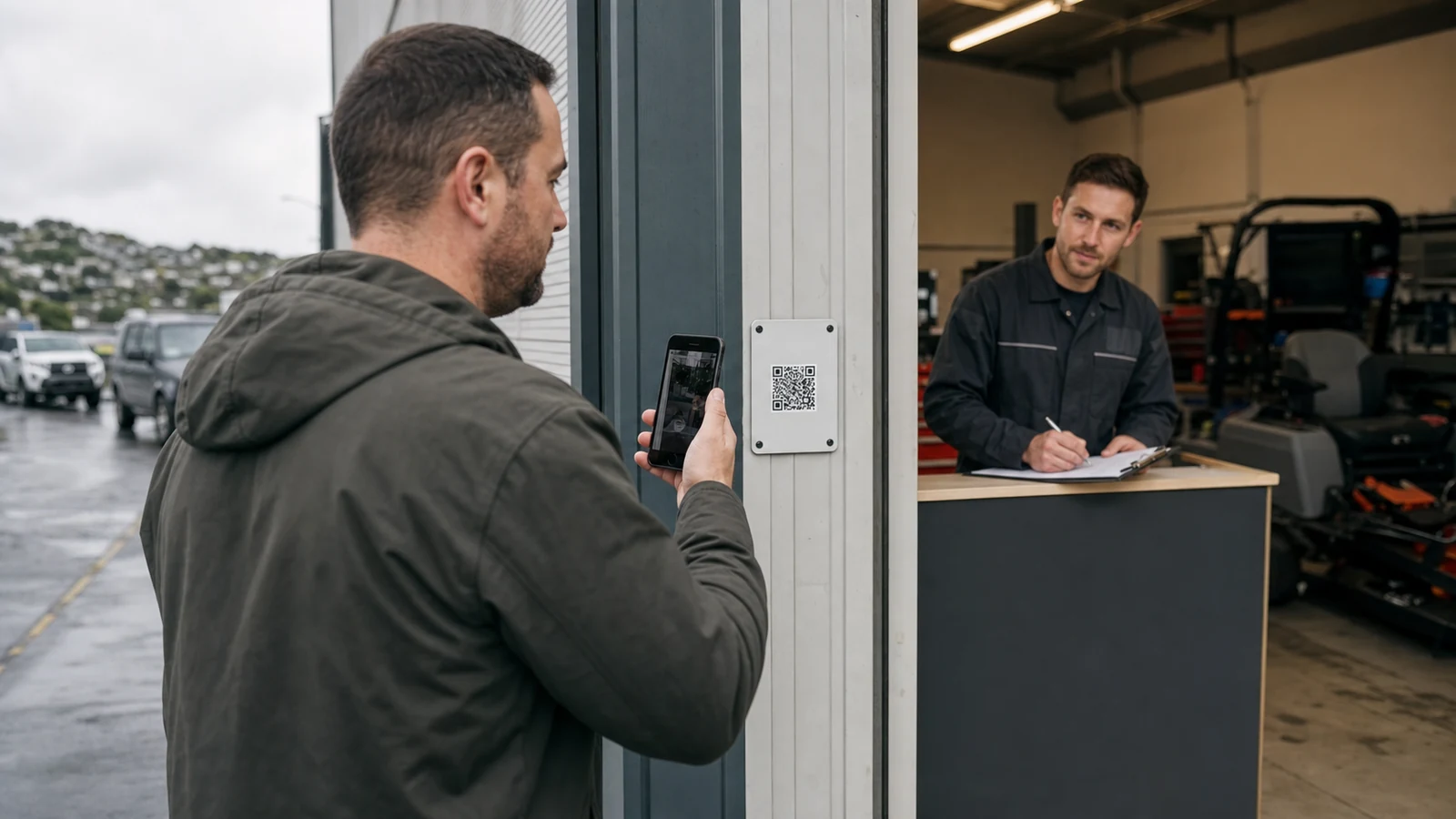
Test security and abuse paths before public launch
A public chatbot needs limits for malicious prompts, sensitive disclosures, account access, impersonation, and unexpected integrations.
Use a public knowledge route that is separated from authenticated customer records unless there is a clear need and a properly designed identity and authorisation flow. A customer asking for public installation guidance does not need the same system access as someone checking an order. Each added connector expands the data and actions exposed if permissions, prompts, or integrations fail.
Test prompt injection and social engineering. Ask the chatbot to reveal hidden instructions, private documents, previous conversations, administrator details, discounts, confidential prices, and restricted links. Try requests framed as a manager, developer, urgent customer, or supplier. Test long inputs, uploaded files if allowed, unusual languages, links, and content copied from webpages. The safe result is a controlled refusal and useful next route.
Protect administration with multi-factor authentication, least-privilege roles, separate publisher and reviewer permissions where possible, and rapid access removal. Review logs for source changes, configuration, exports, and unusual use. Document incident steps: stop the affected route, preserve necessary evidence, assess information and customers affected, notify the correct owner, correct the cause, and meet any applicable notification obligations.
Do not make the chatbot a security support channel unless it is designed and staffed for that purpose. Publish the appropriate contact for suspected account compromise, fraud, or harmful content. Avoid giving attackers detailed internal explanations in public answers. Staff should know how to recognise a security report and move it out of the ordinary customer-service queue.
- Separate public knowledge from authenticated records and actions.
- Test hidden-instruction, data-extraction, impersonation, and prompt-injection attempts.
- Use MFA, least privilege, change logs, and rapid access removal.
- Create an incident owner and containment checklist.
- Publish the correct security-reporting route.
Run a 30-day pilot and measure useful outcomes
Measure whether customers reach a correct next step with less effort, not whether the chatbot produces many messages.
Begin with one journey, a limited source pack, and a small group of trained staff. In week one, test internally and with invited users. In week two, expose the route on one page or QR touchpoint and review every conversation sample that reaches a handoff. In weeks three and four, correct source gaps, simplify confusing answers, and compare outcomes with the pre-pilot baseline. Do not expand scope while basic corrections remain unresolved.
Track answer usefulness, unsupported-answer rate, source-conflict rate, handoff completion, time to first useful staff action, repeat contact within a defined period, abandonment, accessibility failures, privacy incidents, and staff maintenance time. Sample quality matters more than an impressive containment percentage. A conversation contained by giving the wrong answer is a failure even if no ticket was created.
Analyse questions by intent, not just keyword. Ten different phrasings may reveal one missing delivery condition. A rise in can you, does it fit, how soon, what happens if, and who confirms questions can reveal buying friction. Feed those findings into the website, product documents, quote process, onboarding, and staff training. The chatbot should help improve the underlying customer information, not become a permanent patch over it.
At day 30 choose one of four outcomes: continue as scoped, correct and repeat, expand one adjacent question family, or stop. Record the reasons, unresolved risks, monthly operating effort, and next review date. Stopping a weak pilot is useful evidence. Expanding because usage looks high, without checking accuracy and customer effort, is not.
| Metric | What it reveals | Misleading shortcut |
|---|---|---|
| Useful resolution | Customer reached a correct answer or next action | Conversation marked closed |
| Unsupported answer rate | Scope and source-control failures | Model confidence alone |
| Handoff completion | Whether the right queue received actionable context | Email notification sent |
| Repeat contact | Whether the first route actually helped | Chat sessions counted in isolation |
| Maintenance time | Ongoing cost of dependable content | Subscription price only |
| Accessibility and privacy issues | Whether the route works responsibly | Average satisfaction score alone |
Use a go-live checklist that a small team can maintain
Go live only when source ownership, answer limits, privacy, security, accessibility, handoff, and correction work as one operating system.
A small business does not need a large AI governance committee. It does need named decisions. Assign a business owner, content owner, privacy officer, technical administrator, handoff owner, and backup. One person can hold several roles, but the responsibilities should be written and understood. Give each owner time to review the channel and authority to stop an unsafe answer.
Before launch, verify every public answer against the current source, expire or disable weak content, test all handoff triggers, and check staffed response windows. Test mobile, keyboard, screen reader, zoom, slow connection, and the phone alternative. Review the privacy notice, supplier terms, data locations, access roles, retention, deletion, incident process, and exit. Confirm that marketing claims have evidence and that pricing and availability limitations are visible.
After launch, schedule a weekly pilot review and a monthly operating review. Sample ordinary and difficult conversations, look for questions the tool should never have answered, and check source freshness. Review staff access and vendor changes. Re-run critical scenarios after model, prompt, connector, source, or policy changes. A chatbot is a customer-facing publication system, so silent technical changes can create editorial changes.
The simplest dependable design is often the best first version: approved public information, visible automation disclosure, no unnecessary personal data, an honest handoff, and question insights that improve the source material. Add live systems or actions only when the customer benefit is clear and the business can own the additional authority, privacy, security, and failure handling.
- Named business, content, privacy, technical, and handoff owners.
- Approved sources with expiry and emergency disable controls.
- Visible automation disclosure and accessible alternatives.
- Tested privacy, security, retention, deletion, and incident handling.
- End-to-end handoff with response ownership.
- Weekly pilot review and repeat testing after material changes.
Sources and official guidance
- Business.govt.nz: Safe and smart AI use
- Business.govt.nz: How to implement AI in your business
- Office of the Privacy Commissioner: Complying with the Privacy Act
- Office of the Privacy Commissioner: Principle 12 - Disclosure outside New Zealand
- Commerce Commission: Your rights as a consumer and business obligations
This article is operational guidance, not legal, privacy, safety, or compliance advice. Check current requirements and professional obligations for the business, location, and customer journey before implementation.
FAQ
What should an AI chatbot answer for a New Zealand small business?
Start with approved, stable public information such as normal hours, broad service coverage, document locations, standard preparation, and quote requirements. Add current facts only through a reliable authorised source. Send final quotes, exceptions, complaints, safety matters, and consequential decisions to an accountable person.
Does every New Zealand business need a privacy officer?
The Office of the Privacy Commissioner says every New Zealand business or organisation needs a privacy officer. In a small business the role can be held internally, but the person needs familiarity with the business and privacy obligations plus oversight of complaints, access, correction, supplier, and incident processes.
Can a chatbot confirm stock or bookings?
Only if it has an authorised, sufficiently current connection and clear failure handling. Without that, it should explain the confirmation process and collect minimal context for staff. A normal pattern or cached answer should never be presented as a confirmed booking, stock position, or delivery promise.
Should a small business tell customers that the chatbot uses AI?
Yes. Clear disclosure helps customers understand the interaction and its limits. State what the automated route can do, when staff respond, which matters need a person, and how to use an accessible alternative. Do not imitate a named employee or hide automation behind human-like presentation.
How long should a chatbot pilot run?
Thirty days is long enough for many small teams to test one narrow journey across normal operating patterns. Establish a baseline first, review frequently, and measure useful resolution, corrections, handoffs, repeat contact, accessibility, privacy, and maintenance time rather than volume alone.
What should a New Zealand business check if chatbot data is processed overseas?
Map the actual recipients, storage and processing locations, contracts, access, retention, deletion, and subprocessors. Check whether Information Privacy Principle 12 applies and which condition is relied on. Use current official guidance and appropriate professional advice for the specific data flow.
Last updated
Last updated: 2026-07-24. Country, privacy, platform, and pricing details should be rechecked before implementation.
Next: reduce repetitive enquiries at the source
Use the New Zealand enquiry-reduction guide to audit recurring questions, improve owned information, and decide which customer routes need self-service, a current system, or staff.